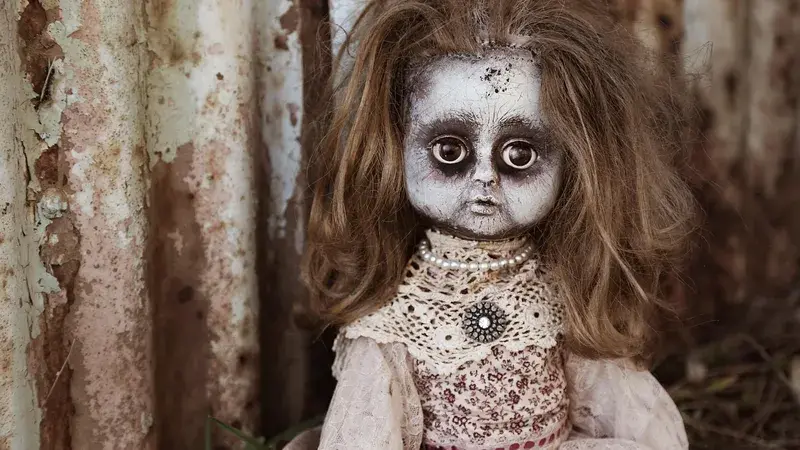
Robert the Doll sits in a climate-controlled glass case at the Fort East Martello Museum in Key West, Florida—a small, pale figure in a white sailor suit that has attracted more correspondence than most of the island's living residents. He receives letters daily: apologies from strangers, requests for forgiveness, and confessions of misfortune. Some visitors claim that a single photograph taken without permission triggered years of bad luck. Others swear they saw the doll's expression change. The museum's collection contains over one thousand of these letters, catalogued and archived, each one a testimony to either a genuine haunting or one of the most effective folklore traditions ever created.
This article is part of our comprehensive Key West ghost tours guide, where we explore the stories—verified, disputed, and ambiguous—that have shaped Key West's reputation as one of America's most haunted destinations.
A Doll, A Child, and Two Origin Stories
The documented timeline of Robert the Doll begins in 1904 in a Victorian home at 534 Eaton Street in Key West. Robert Eugene Otto, called Gene by his family, was a young boy when he received a doll: approximately 40 inches tall, stuffed with straw, dressed in a white sailor suit with a sailor hat, manufactured by the Steiff Company in Germany. The doll had a face of considerable character—large button eyes, a slight frown—that modern observers describe as uncanny in its expressiveness. Gene gave the doll his own name and kept it as an inseparable companion.
Two origin stories surround the doll's arrival. The first, more conventional version holds that Gene's grandfather purchased Robert during a family trip to Germany, selecting the Steiff doll as a gift for the boy. The second, far darker narrative claims that a Bahamian servant in the Otto household gave Robert to Gene, possibly with the intent of placing a curse upon the family. This version carries whispers of mistreatment, of servants forced to endure disrespect and poor conditions, and of spiritual retaliation through an object imbued with malevolent intention. The Bahamian cultural context matters here: in Caribbean folk traditions descended from West African practices, objects can serve as vessels for intention—protective or harmful depending on the will of the person who prepares them. Some accounts suggest the servant's curse was directed at the Otto family's treatment of household staff, a detail that frames Robert less as a random haunting and more as spiritual justice.
Neither origin story has been definitively verified. What remains is the strange fact that the Otto family apparently encouraged both narratives without clarifying which was true—a detail that suggests either genuine uncertainty or strategic ambiguity.
Childhood Incidents in the Eaton Street Home
The earliest documented disturbances involve Gene and Robert's strange relationship in the Otto household. Multiple sources—neighbors, servants, family friends—reported that Gene conversed with the doll in two distinct voices: his own child's voice and a deeper, separate voice that seemed to belong to Robert himself. Gene did not play alone with the doll; he appeared to be having genuine conversations with an entity that responded in kind. Neighbors claimed to see the doll positioned differently in the second-floor windows at different times, despite no one visiting the room. Furniture was discovered overturned in spaces where Gene and Robert had been left alone together. When Gene's parents confronted him about the disorder, he had a consistent explanation: "Robert did it."
The servants in the household refused to be alone in rooms containing the doll. Accounts suggest they experienced an acute sense of being watched, of hostile presence. One maid reportedly refused to return to the house unless Robert was removed from the vicinity. The Ottos did not remove him.
Most striking are descriptions of the turret room on the second floor, where Robert spent his days propped in a chair facing the street. Visitors to the home reported an atmosphere of oppression in that space—a feeling of malevolence that had no obvious source. Gene's parents seemed to tolerate Robert's presence despite Anne's (Gene's mother's) reported revulsion. The doll remained. For related history, see our captain tony's saloon: key west's most.
Gene Otto: Artist, Husband, and Robert's Keeper
Gene Otto grew into adulthood carrying Robert with him. He studied art at the Art Institute of Chicago and later in Paris, returning to Key West with credentials as an artist and a refined sensibility. He married a woman named Anne and settled back in the family home on Eaton Street. Robert, now decades old, remained in the turret room upstairs.
The household dynamics shifted but the doll's presence did not. Anne reportedly despised Robert and wanted him removed or destroyed. Gene refused. This became a point of marital tension that persisted throughout their life together—one of the doll's first documented effects on adult relationships. Workers called to the house—plumbers, electricians, contractors—refused to be left alone with Robert or in rooms adjacent to his case. Some simply declined future work at the address. The oppressive atmosphere in the turret room deepened over decades.
Visitors who saw Robert during these years reported that his expression seemed to change when observed from different angles, that his posture appeared different from one visit to the next, that the doll possessed an inexplicable quality of presence. Gene maintained that Robert simply needed to be respected and allowed to exist. He kept the doll positioned by the window, where pedestrians on Eaton Street claimed to see the figure shift positions when no human occupant was visible.
The Reuter Years and Museum Acquisition
Gene Otto died in 1974. The family home changed hands, purchased by William and Myrtle Reuter. The new owners discovered Robert in the attic—placed there, perhaps, by Gene's widow to finally separate herself from the doll. For a time, the Reuter household seemed to be the location of renewed disturbances. Myrtle reported that Robert moved around the house. Her ten-year-old daughter claimed to see the doll in different rooms on different days without anyone moving him. The oppressive atmosphere that had defined the turret room appeared to follow the doll into new spaces.
Myrtle Reuter eventually moved Robert from the home, relocating with the doll to Von Phister Street. In 1994—two decades after Gene's death—she made the decision to donate Robert to the Key West Art and Historical Society. According to accounts of this donation, Myrtle told museum staff that Robert was haunted, that the doll moved independently, and that she could no longer keep him in her home. The museum accepted the donation, understanding that they were acquiring not merely an object but the accumulated folklore, history, and genuine psychological impact of over ninety years of documented disturbance. For related history, see our carl von cosel and elena hoyos:.
Fort East Martello: Where Robert Became a Phenomenon
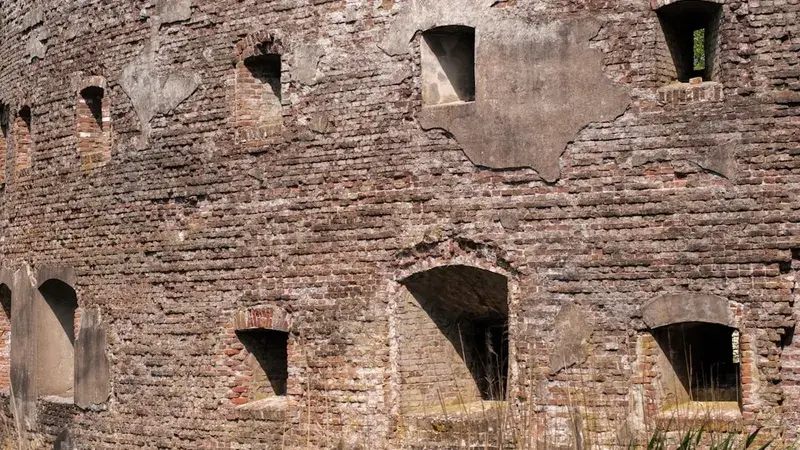
The Fort East Martello Museum stands at 3501 South Roosevelt Boulevard—a Civil War-era brick fort that has served as military garrison, ammunition storage, and eventually cultural institution. The fort's architecture creates an atmosphere already weighted with historical gravity: thick brick walls, shadowed corridors, the lingering sense of conflict and emergency that seeps from military structures. Robert's placement here was not arbitrary.
The museum created a climate-controlled glass case for the doll, displayed prominently in the fort's main exhibition space. The case is surrounded by the material evidence of Robert's cultural impact: the thousands of letters, organized and catalogued, arranged in rotations so that new visitors see fresh testimony. The museum posts clear instructions near the exhibit: visitors are advised to greet Robert respectfully, to ask permission before photographing, to treat the doll with courtesy. These instructions have become ritual protocol—a semi-official acknowledgment that something unusual surrounds this object, whether supernatural or psychological.
The fort's historical weight combined with Robert's accumulated reputation created a new phase of the legend. Where the Eaton Street home was the site of intimate, domestic disturbance, Fort East Martello became the stage for a broader cultural phenomenon. Robert transformed from a family curse into Key West's most recognizable cultural icon.
The Apology Letters: Folklore as Self-Perpetuating System
The collection of apology letters represents something unprecedented in American museum practice. Over one thousand letters have been catalogued—some brief notes, others detailed multi-page confessions. The letters typically follow a pattern: the visitor photographed Robert without asking permission (violating the posted protocol), then experienced a sequence of misfortunes. The misfortunes vary: lost luggage, delayed travel, car accidents, broken relationships, job losses, medical emergencies, minor injuries, or persistent bad luck. The visitor then writes to Robert—to the doll itself, not to the museum—requesting forgiveness and asking the doll to reverse the curse.
Some letters include payment for return postage, as if expecting the doll to write back. Others contain elaborate apologies, lengthy explanations of the visitor's suffering, and pleas for mercy. A smaller number include monetary donations as restitution. The letters arrive continuously. Museum staff changes the display periodically but archives every letter received. Each one testifies to a moment when a skeptical visitor encountered the legend and was persuaded by personal experience—real or constructed—that Robert possesses some form of agency. For related history, see our fort east martello: key west's haunted.
Whether these letters represent genuine supernatural phenomena or a self-reinforcing folklore tradition is less important than the fact that they exist. They demonstrate how belief systems perpetuate themselves through community participation. A visitor comes as a skeptic, takes a photo without asking, experiences coincidental bad luck, and then reinterprets that luck retroactively as punishment. The letter-writing becomes a confessional act—a way of managing anxiety through narrative. The letter itself becomes part of the folklore, encouraging future visitors to take the protocol seriously. New visitors witness the walls of letters and think: what if this is real? The legend strengthens through each participant's act of engagement, whether they believe or not.
Robert as Key West Cultural Institution
Robert the Doll has transcended his origin as a haunted object to become Key West's most recognizable paranormal icon. He appears in documentaries, television specials, and popular culture references. Annual events at Fort East Martello celebrate Robert's presence. Tourists plan their Key West visits specifically to photograph the doll (though they are now supposed to ask first). Travel blogs and paranormal websites cite Robert as evidence of genuine haunting phenomena. The boundary between authentic folklore and carefully maintained tourist attraction has become deliberately blurred.
This is not inherently dishonest. Rather, it reflects how modern culture perpetuates folk traditions. The museum is not fabricating Robert's history; it is actively maintaining and presenting that history in a way that invites participation. Visitors become co-creators of the legend by choosing whether to follow the protocol, by photographing or not photographing, by writing letters of apology, and by sharing their experiences. Robert the Doll demonstrates that folklore is not a static historical artifact—it is a living system that evolves through community engagement.
Visiting Robert: How to Encounter the Legend
Fort East Martello Museum operates daily from 10 a.m. to 5 p.m. Admission to the museum includes access to Robert's exhibit and the broader collection covering Key West's military history, archaeological findings, and folk art. The museum is located at 3501 South Roosevelt Boulevard, on the southern edge of Key West proper—a location that makes Robert geographically accessible but not downtown-central, as if the city has contained the legend in a specific geographic location.
Visitors should expect to encounter a small doll in a glass case, surrounded by thousands of letters, with a protocol posted nearby. Some visitors will feel genuine unease in Robert's presence. Others will find the entire phenomenon unconvincing and slightly absurd. Both reactions are documented in the museum's feedback. Whether you believe the stories or treat them as cultural curiosity, the experience of standing before the case—of reading the letters from strangers describing their misfortunes—will likely provoke reflection on belief, folklore, and the meaning we assign to objects.
If you do photograph Robert, the protocol asks that you first greet him and request permission. Whether that request matters to an inanimate object, whether Robert responds to courtesy, remains a question each visitor must answer for themselves.