By the 1830s, Key West was the wealthiest city per capita in the United States. The source of that wealth was catastrophe—maritime catastrophe, to be precise. Over 100 ships passed daily through the most dangerous waters in the Western Hemisphere, and at least one wrecked every week. The men who profited from those disasters built the mansions that still stand along Whitehead Street, founded the institutions that became the backbone of Old Town, and accumulated fortunes vast enough to rival industrial magnates on the mainland. Yet their wealth rested on a foundation of coral, blood, and stolen goods. This article is part of our comprehensive Key West ghost tours guide.
The Florida Reef: Cemetery of the Sea
The Florida Reef is the only living coral barrier reef in the continental United States, stretching approximately 170 miles from the waters off Miami through the Florida Keys to the Dry Tortugas. Unlike the Caribbean's deep blue walls, this reef forms a shallow, treacherous system of elkhorn coral, brain coral, and jagged formations rising to depths of only 10 to 30 feet—perfect for catching a ship's hull and tearing it open.
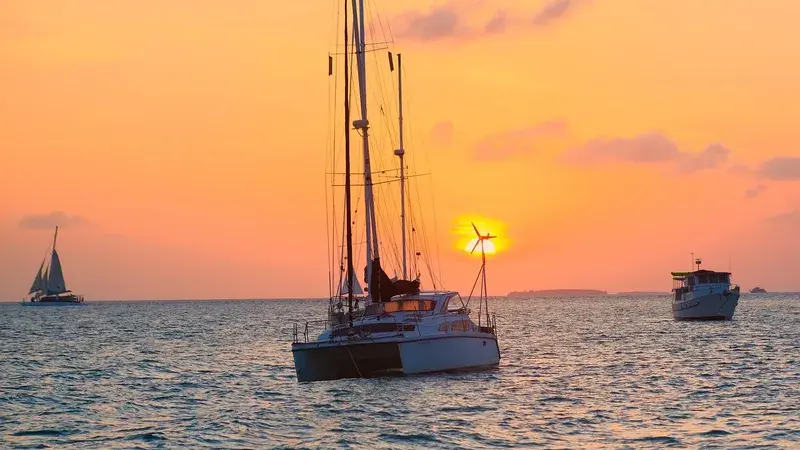
The reef's position—running parallel to the Keys just miles offshore—placed it directly in the path of the Gulf Stream, one of the world's strongest ocean currents. Sailing ships bound for Spanish ports in the Caribbean or headed toward European markets had no choice but to navigate these waters. A vessel caught by the Stream's powerful pull and driven toward the coral had only minutes to drop anchor or deploy sails to avoid running aground. Many failed.
Between 1540—when Spanish colonial fleets first established Caribbean trade routes—and the twentieth century, more than 1,000 documented shipwrecks occurred within what is now the Florida Keys National Marine Sanctuary. The first victims were Spanish galleons laden with treasure—gold, silver, pearls, and emeralds extracted from the New World. They were followed by merchant vessels, passenger ships, warships, and slavers. The reef claimed them all with brutal indifference. The human cost was staggering: drowned sailors, passengers killed by exposure on the coral, enslaved people locked in cargo holds as their ships went down, crew members attacked by sharks as they waited for rescue that never came.
How the Wrecking Trade Operated
Key West's wrecking industry developed into a sophisticated—and heavily regulated—salvage operation. Tall observation towers, some reaching 90 feet, were positioned across the island and nearby cays. Watchers stationed in these towers scanned the horizon constantly, looking for the telltale signs of a vessel in distress: torn sails, smoke, or a ship listing dangerously in the shallow water.
When a wreck was spotted, the cry "Wreck Ashore!" echoed across the island. Men abandoned their daily work and raced to the docks where the fastest boats were moored. The captain who reached the stricken vessel first became the wrecking master—the man who would direct the entire salvage operation and, if successful, claim the largest share of the recovery.
The system operated under federal jurisdiction. Salvaged cargo was inventoried, transported to Key West, and auctioned off in the town's federal wrecking court. Salvors received between 25 and 50 percent of the total recovered value, depending on the amount of effort, risk, and resources expended. The remaining value went to the ship's owners or insurers. The courthouse auctions generated enormous revenue: in peak years, salvors in Key West recovered cargo and goods worth millions of dollars (in nineteenth-century terms).
This legal framework created both opportunity and temptation. While the wrecking court tried to maintain standards of fairness, the system was inherently corrupt. A man could become wealthy in a single salvage if luck and skill aligned. That incentive led to darker practices.
The Corruption That Built Fortunes
As the wrecking trade became more profitable, accusations mounted that some salvors were manufacturing wrecks rather than simply salvaging them. Channel markers were allegedly moved to guide ships toward the reef. Lighthouse keepers were bribed to extinguish their lamps on foggy nights. False lights were displayed from shore—replicas of what a safe harbor might look like—to lure ships onto the rocks.
Were these accusations true? Probably some were. The records are murky, but the practice was common enough that maritime authorities took it seriously. Navigational hazards multiplied in the mid-1800s as lighthouses improved, charts became more accurate, and shipping traffic learned safer routes. Wreck-related income dropped precipitously. The desperate final decades of the wrecking trade saw accusations intensify, though the worst of the corruption likely belonged to the industry's earlier, less-regulated years.
The federal government issued the last wrecking license in 1921. By then, steam-powered ships, advanced navigation, and established shipping lanes had rendered the trade obsolete. The men who had built Key West through salvage moved on or faded into history.
The Wrecking Elite and the Mansions They Built
Captain John Geiger was among the wealthiest and most successful wreckers of Key West's golden age. His fortune, accumulated through decades of salvage operations, allowed him to construct the Audubon House, a mansion that still stands at the corner of Whitehead and Greene Streets. Built in 1832, the house represents the architectural ambitions of a man who had accumulated serious wealth.
Asa Tift arrived in Key West in 1829 as a wrecker and quickly made his reputation as a skilled and aggressive salvage captain. His profits from wrecking allowed him to acquire property and invest in other ventures. The house he built—now famous as the Hemingway House, where the author lived for decades—was constructed on foundations of wrecker wealth.
William Curry (born 1809 in the Bahamas) built his fortune on salvage operations in Key West starting in the 1820s. His success was so substantial that he became Florida's first millionaire. His mansion, the Curry Mansion, was completed in 1899 after his death in 1894, built by his son and heir, remains one of Key West's most impressive Victorian homes. The house itself is a monument to the wrecking trade: its scale, materials, and craftsmanship testify to the wealth generated by salvaging other people's ships.
John Simonton deserves mention as the man who set the entire operation in motion. In 1822, Simonton purchased the island of Key West for $2,000 and immediately recognized the opportunity it presented as a salvage base. His vision—to establish a federally regulated port where wrecked cargo could be auctioned—created the legal and economic framework that made Key West the wealthiest city per capita in America by the 1830s.
Legendary Wrecks and Treasures
The Nuestra Señora de Atocha represents the most famous wreck in the Florida Keys. This Spanish treasure galleon sank in 1622 during a hurricane while carrying gold, silver, and emeralds. The wreck was lost for centuries until treasure hunter Mel Fisher launched an obsessive sixteen-year search beginning in 1969. On July 20, 1985, Fisher's team located the Atocha and began recovering treasure. The final count: an estimated $450 million in gold, silver, and jewels, making it one of the most valuable shipwreck discoveries of the twentieth century.
The Isaac Allerton, wrecked in 1856, produced what was then the single richest salvage payout in Key West wrecking court history. The cargo itself has faded from memory, but the auction price remains a record of the era's wealth concentration.
The San Pedro was part of a larger tragedy: the 1733 Spanish treasure fleet disaster. In a single hurricane, twelve Spanish ships ran onto the Keys and surrounding reefs. The San Pedro, a Spanish merchant vessel located in just 18 feet of water approximately 3 miles northwest of Indian Key, carried 16,000 pesos in Mexican silver and multiple crates of Chinese porcelain. The 1733 fleet as a whole sank with cargo valued at roughly 1.5 million pesos, a catastrophe that disrupted Spanish commerce for years.
The Human Cost: Death, Salvage, and Artifacts
Behind every wreck lay human suffering. Sailors drowned in the shallow reef. Passengers died from exposure, thirst, and sun. The enslaved men and women locked in the cargo holds of slave ships never even reached the reef—many suffocated below deck as vessels took on water.
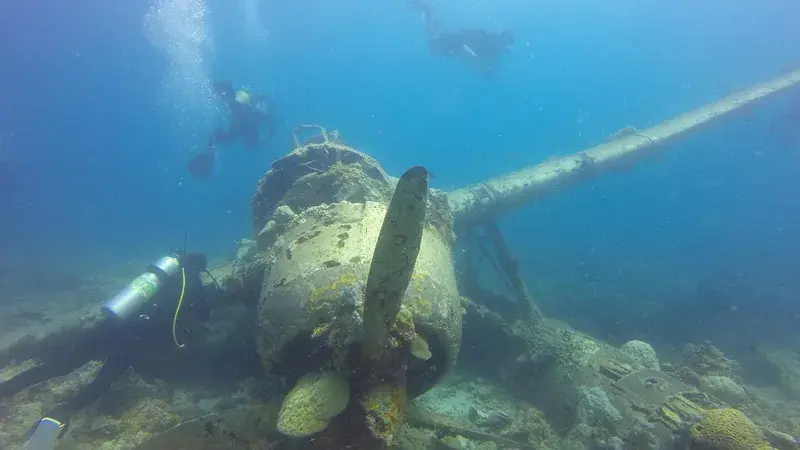
Divers exploring the wrecks today encounter the physical evidence of this tragedy. Scattered among the coral are buttons from jackets, belt buckles from trousers, shoe fragments, clay pipes, coins, and other small personal items. These objects are the last traces of the people aboard. The reef itself has become a graveyard for four centuries of concentrated violent death.
Key West residents of the eighteenth and nineteenth centuries lived with constant reminders of maritime disaster. Bodies sometimes washed ashore. Salvors bringing goods to auction necessarily handled items still bearing blood or salt water. The smell of wreck—of seawater, rot, and oil—was endemic to the island's economy.
Phantom Lights and Ghost Ships
Key West's earliest recorded ghost stories are all maritime. Sailors and fishermen reported phantom lights dancing over the reef on foggy nights—lights that looked like ship lanterns or lighthouse beams but originated from no identifiable source. Voices were heard on the ocean breeze: cries for help, shouts of warning, conversations in Spanish or English emerging from the darkness. Fishermen refusing to venture near certain wreck sites cited encounters with apparitions or an overwhelming sense of dread.
Are these stories merely folklore? Possibly. But Key West is built quite literally atop centuries of violent death concentrated in a small area. The reef and surrounding waters have drowned, crushed, or burned more people per square mile than almost any location in North America. The human psyche is sensitive to such history. Whether the phantom lights are supernatural or the product of fog, moonlight, and stressed imagination matters less than the fact that the reef's legacy saturated Key West's consciousness with dread and fascination.
Modern visitors report similar experiences: unexplained lights near known wreck sites, the sound of creaking wood where no wood should be, an oppressive sadness that descends without warning. Whether these are genuine hauntings or the accumulated weight of historical knowledge acting on the mind, the reef remains one of Key West's most powerfully haunted locations.