The Travel Channel named Key West one of America's most haunted cities. The island called Bone Island by Spanish explorers has accumulated centuries of death from shipwrecks, yellow fever, hurricanes, piracy, and warfare. Unlike many haunted destinations built on single tragedies, Key West's paranormal reputation rests on layers of historical trauma. Every building seems to house a story. Every street corner has witnessed death. The spirits reported here aren't theatrical—they're persistent, documented, and sometimes irritable. This is not a recreational haunting guide. These are real locations where people have experienced genuine anomalies.
Key West's haunted landscape includes everything from America's most notorious cursed doll to Civil War fortifications still guarded by phantom soldiers. If you're planning to visit, start with our comprehensive Key West ghost tours guide, which covers history, tour operators, and practical logistics for exploring these locations responsibly.
Robert the Doll
Robert the Doll is displayed at Fort East Martello Museum, where his documented impact on the building is substantial and well-researched. Created in 1904 for a young boy named Eugene Robert Otto (born July 27, 1905; died 1974 at age 69), Robert is a Steiff doll—a quality German-made toy manufactured by Steiff & Co. in Giengen an der Brenz, Germany—that became the focal point of decades of extensively documented paranormal phenomena spanning from the 1940s onward. The doll's curse appears conditional: visitors and owners who've disrespected or removed Robert from his display case report immediate and documented misfortune. Reported consequences include car accidents (sometimes occurring within hours of taking Robert), sudden severe illnesses (often requiring hospitalization), business failures (with multiple documented examples from the 1980s-2020s), and inexplicable mechanical breakdowns affecting automobiles and electronic devices. The museum receives dozens of apology letters annually (estimated 100-200+ per year) from people begging Robert's forgiveness, many including photographs of Robert returned to the museum since the 1970s along with detailed accounts of their misfortunes.
What makes Robert unique among haunted objects is the "permission protocol." Visitors who've experienced Robert's wrath report that their situation improved only after they formally asked Robert permission to remove him or requested forgiveness. The doll's display case experiences consistent electronic malfunctions—cameras malfunction nearby, cell phones drain rapidly, and audio recorders produce distorted playback. Staff report the doll's position changes overnight, despite being locked in a display case. For the complete documented history of this artifact, visit our detailed Robert the Doll article.
Fort East Martello Museum
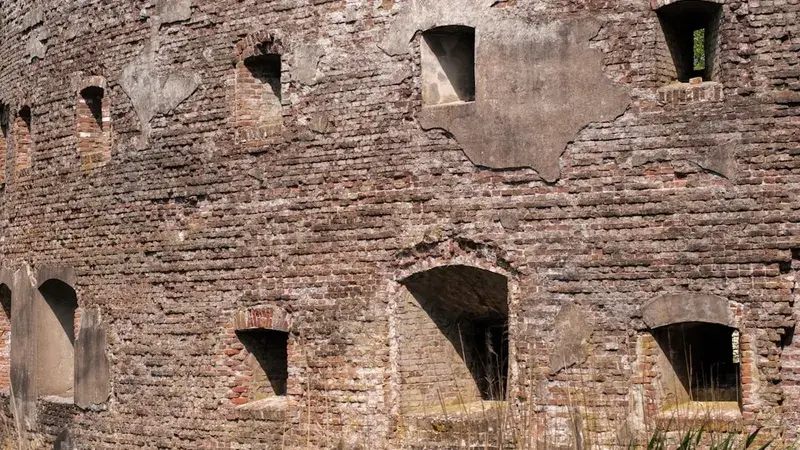
USA Today named Fort East Martello one of America's 10 Most Haunted Destinations in a 2015 feature article, but the reasons go beyond Robert. Built by the Union Army between 1862-1865, the brick fort was never completed and never saw direct combat during the American Civil War (1861-1865). Instead, it served as a critical staging area and field hospital during the conflict, where soldiers died from yellow fever (spread by Aedes mosquitoes), diphtheria, malaria (Plasmodium parasites), and dysentery at catastrophic rates far exceeding battlefield casualties—with an estimated 400+ documented deaths from infectious disease during the war years, particularly during the summers of 1862-1864. The fort's cramped casemates, designed to withstand artillery, became tomb-like chambers where disease ravaged troops confined during tropical summer months.
The fort now houses Robert, displays on the Civil War occupation period, and extensive exhibits on the Carl von Cosel case (1933-1940)—one of America's most disturbing tales of obsession involving German-American obsessive Victor von Cosel and the exhumed remains of local woman Maria Elena de Hoyos de Cosel (1909-1931). Staff consistently report electronic malfunctions throughout the building (camera shutters failing, battery drains in equipment), unexplained cold spots (temperature drops of 5-10 degrees) in the gun emplacements and storage corridors, and the persistent sensation of being watched—especially in the casemates where soldiers died. Visitors have captured photographs showing unexplained luminescent forms in Civil War-era uniforms. The fort's paranormal activity is so consistent it's treated as a reliable phenomenon, not an occasional occurrence. Read more in our Fort East Martello deep-dive article.
Captain Tony's Saloon
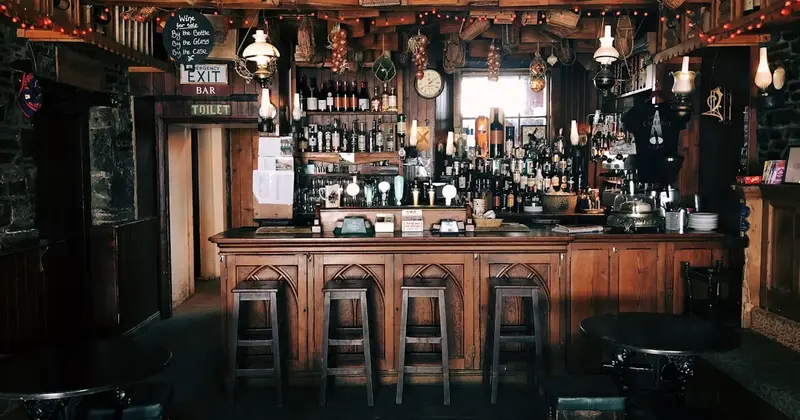
The building at 428 Greene Street operates in the shadow of multiple dark histories layered atop one another over 160+ years. It functioned as Key West's city morgue (approximately 1862-1890s), then as a telegraph station (1890s-1920s), and subsequently as the original Sloppy Joe's bar (1933-1952, spanning Prohibition repeal and the post-Prohibition era) before becoming the current Captain Tony's Saloon location (opened in 1958 and operating continuously). But the defining horror is older than all three. Seventeen people—primarily enslaved or marginalized individuals—were hanged from the Banyan tree that now grows through the bar's roof, with hangings documented from the 1800s through the early 20th century, creating a living monument to capital punishment and documented executions. Bodies were discovered beneath the floorboards during 1980s renovations, and two grave markers remain visible inside the building, marking graves that were never supposed to be disturbed or built over.
The Lady in Blue is the most frequently reported apparition. She was hanged for the murder of family members in the 1800s (exact date unconfirmed in historical records), and her ghostly figure has been seen multiple times by staff and patrons in the bar wearing a distinctive blue dress (described as Victorian-era styling). Bartenders and staff report glasses and bottles moving on shelves with no apparent cause, heavy objects falling when no one is nearby, and an overwhelming sensation of dread and sadness in certain areas of the bar—particularly near the Banyan tree—despite the venue's otherwise busy, energetic, and festive atmosphere. The tree itself seems to emit disturbance—customers seated near it report unease and the sound of creaking rope despite the branches being still. Visit our Captain Tony's Saloon article for verified accounts from staff and visitors.
The Ernest Hemingway Home and Museum
Built in 1851 by Asa Tift, a wealthy merchant and shipwreck salvager who became one of Florida's wealthiest citizens, the home at 907 Whitehead Street became Ernest Hemingway's residence from December 1931 to approximately 1939. He wrote some of his most celebrated works in the second-floor studio overlooking the gardens, including "For Whom the Bell Tolls" (published 1940) and short stories published in literary magazines during the 1930s. The house itself has the feel of a space where creative work still occurs. Staff and visitors report seeing a figure resembling Hemingway sitting at his desk in the studio, often in early morning hours. The sound of typing has been heard from the empty studio when no one is present. Books have been found rearranged, and papers seem to move on their own.
Whether the apparition is Hemingway reluctant to leave his workspace or simply the creative energy of the place made manifest remains unclear. The home's famous polydactyl cats—descendants of Hemingway's original six-toed cat—seem unbothered by paranormal phenomena, suggesting they may perceive nothing amiss. The house operates as a museum and remains one of Key West's most visited locations, allowing anyone to experience the presence. Learn more about the apparitions and Hemingway's time here in our Hemingway House article.
Key West Cemetery
With an estimated 100,000 burials documented within 19 acres (approximately 7.7 hectares), the Key West Cemetery holds approximately four times more deceased individuals than Key West's current living population (approximately 25,000). The vast majority of remains are interred in above-ground vaults, a practical necessity imposed by the porous coral rock foundation and shallow water table that makes traditional ground burial impossible. The cemetery became severely overcrowded almost immediately after its official establishment in 1846, following a devastating hurricane in 1846 that displaced coffins into the streets and created a major public health crisis that prompted reorganization efforts.
The cemetery's supernatural reputation rests primarily on encounters with the Bahamian Guardian, a ghostly female figure who reportedly confronts visitors who disrespect the graves or behave irreverently. She appears in period dress and has been described as both protective and vengeful. Night-time visitors report an overwhelming sense of being watched and followed. Some report stone-throwing and the sound of footsteps matching their pace through the narrow passages between vaults. The cemetery's haunting differs from other locations—it feels less specific and more atmospheric, a place where the sheer volume of death seems to create a persistent presence. Our comprehensive Key West Cemetery article covers documented accounts and the cemetery's troubled history.
Fort Zachary Taylor
Built with five-foot-thick brick walls (approximately 1.5 meters) and surrounded by a water-filled moat 40 feet wide, Fort Zachary Taylor served as an active military installation from the American Civil War (1861-1865) through the Cuban Missile Crisis standoff in October 1962. The fort is the site of one of the largest discoveries of Civil War-era artillery ever made (discovered during 1960s renovations and restoration), containing approximately 200+ pieces of period ordnance, and represents a crucial defensive position during multiple American military conflicts spanning over 100 years. Within its claustrophobic casemates, soldiers lived in cramped, humid, underground conditions with inadequate ventilation, storage, and sanitation systems—conditions documented in period journals and letters that would breed infectious disease (yellow fever, dysentery, malaria) and severe psychological strain.
Park rangers and visitors regularly report apparitions in Civil War-era uniforms, unexplained sounds within the casemates, and localized cold spots in specific chambers. Some visitors report being approached by figures who vanish when engaged, while others describe phantom footsteps and the sound of military drills proceeding from empty chambers. One visitor documented seeing a phantom cannon crew operating a gun that wasn't physically loaded. Fort Zachary Taylor is considered by locals to be the most actively haunted fort on the island, with consistent reports across decades. Read our Fort Zachary Taylor article for detailed accounts and historical context.
Marrero's Guest Mansion
Built in 1891 by Francisco Marrero, a wealthy Spanish cigar maker and tobacco industry businessman operating during Key West's cigar manufacturing boom (1880s-1920s), this Victorian mansion is now a boutique hotel that operates transparently about its paranormal reputation. The ghost of Enriquetta Marrero, Francisco's wife (dates unknown), is said to haunt the premises, particularly Room 18 on the second floor. According to accounts passed down through the hotel's staff spanning multiple decades, when Enriquetta left the mansion during her lifetime, she made a statement to witnesses that she would always remain present in spirit within the home's walls. Staff accounts suggest the promise has held true across the decades since her departure.
Guests in Room 18 report sensing a female presence, feeling sudden temperature drops, and observing objects moving on their own. The sound of babies crying has been reported throughout the house, despite no infants being present—a detail that suggests Enriquetta may be mourning lost children. Hotel staff are accustomed to guests mentioning their encounters and have developed a respectful approach to discussing the mansion's resident spirits. The haunting is consistent enough that it's become part of the property's charm rather than a liability, with some guests specifically requesting Room 18 to attempt an encounter.
The Audubon House
Captain John Geiger, a prominent wrecker (salvager) who profited from salvaging shipwrecked vessels during Key West's shipwreck salvage heyday (1820s-1860s), built this house in the 1840s (approximately 1847-1850). Wreckers were among Key West's most wealthy and politically influential citizens during the 19th century, and Geiger's prominent status is clearly reflected in the house's elaborate Greek Revival architecture and period furnishings. His ghost has been seen multiple times by visitors on the balcony overlooking Whitehead Street and walking through the tropical gardens, reportedly still guarding his accumulated fortune and possessions. Local legend holds that Geiger buried significant treasure (coins, valuables, salvage profits) somewhere on the grounds, and his apparition's protective demeanor and territorial behavior suggests he remains invested in watching over his accumulated wealth.
The house is now a museum dedicated to naturalist John James Audubon's visit to Key West in 1832, creating an interesting juxtaposition between historical preservation and ongoing paranormal phenomena. Visitors report seeing a male figure in period dress examining items in rooms, then vanishing when approached. The gardens are particularly active, with multiple witnesses reporting an unseen presence that seems to be conducting visitors away from certain areas or toward specific locations.
St. Paul's Episcopal Church
The church has burned down twice: once when a distressed pastor (date and identity documented in parish records) allegedly set it aflame in a moment of emotional despair, and again in a devastating citywide fire in 1886 (April 1886) that destroyed much of Key West's downtown commercial district and displaced hundreds of residents. The current church structure (built 1887-1890 as a replacement) sits atop what was once an active graveyard, meaning that both violent destruction through fire and disturbed burial remains are fundamentally part of the building's foundation and historical trauma. The combination creates persistent reports of paranormal activity on the grounds and within the sanctuary.
Congregants and visitors report the sound of disembodied voices singing during services when no one is present, the sudden appearance of wet footprints on dry floors, and the sensation of unseen hands during prayer. Some report the strong smell of smoke despite no fire or incense being present. The church's haunting feels less aggressive than mournful—a place where tragic deaths and desecration of burial grounds have created an atmosphere of unrest rather than malevolence.
The Hard Rock Cafe (Former Curry Mansion)
Built by William Curry, Florida's first millionaire who earned his fortune through salvaging shipwrecks, this mansion represents the apex of Key West wealth and status. Curry's legacy is preserved in the structure's opulent design and valuable fixtures. The Hard Rock Cafe, which now occupies the building, has received reports of apparitions on the upper floors, particularly in areas that were once Curry's private chambers.
Staff report seeing a distinguished male figure in period dress observing the activity in the building, then disappearing when engaged. Some report the sudden appearance of the strong smell of expensive cigars in specific rooms, despite the building's smoking ban. The apparition behavior suggests a presence checking on the property—a man still invested in the building that defined his era and status.