Behind the neon glow of Broadway lies a city scarred by Civil War battles, tragic deaths, and ghost stories that locals take seriously.
This article is part of our comprehensive Nashville ghost tours guide. Whether you're planning a visit or researching from afar, these stories reveal a side of Nashville most visitors never see.
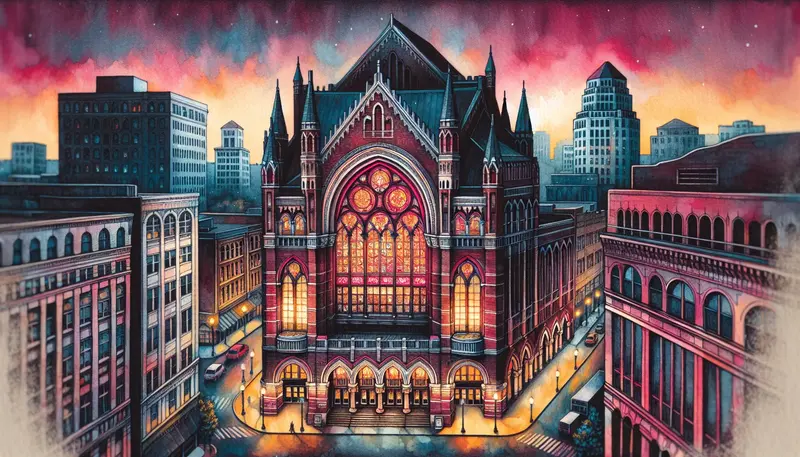
Ryman Auditorium, built in 1892 by Thomas G. Ryman as the Union Gospel Tabernacle and later becoming the Ryman Auditorium (also known as \"The Mother Church\"), this landmark at 116 5th Avenue North, Nashville, TN 37219, anchors downtown not just in music history but in a steady stream of paranormal reports. You’ll recognize the building as the former home of the Grand Ole Opry (1943–1974); that long history of performers, late nights and dense crowds creates fertile ground for Nashville ghost lore.
Staff and performers commonly describe chilly, localized cold spots near the stage wings and the upstairs balcony where solo performers once stood. One frequently told account comes from longtime production stagehand Sam H. (full name withheld for privacy), who reported in August 2006 described hearing a woman singing rehearsal lines in empty dressing rooms on the backstage left area and finding makeup and a hairbrush arranged neatly on a dressing table when no one else was on site. Sam’s account appeared in local tour reports and remains a staple of Ryman lore.
Another specific claim involves a former night security officer, Linda R., who reported in 2011 that motion sensors would trigger without cause in the back corridors and that she twice felt a hand on her shoulder while checking the rear mezzanine at approximately 3 a.m.; CCTV footage reviewed by the security director later showed no visible source for the motion or any person entering the affected areas. These are the kind of reported anomalies you’ll hear about when people talk about the Ryman as Nashville haunted—a place where the line between performance and presence blurs.
Historically verifiable facts help ground the stories: the Ryman was completed in 1892, converted to the Opry home in 1943, and restored in the early 1990s. Whether you treat these accounts as atmospheric artifacts of a building steeped in memory or as possible paranormal phenomena, the Ryman’s reputation makes it one of the most commonly cited Nashville ghost sites by historians and storytellers alike.
Belle Meade Plantation — Antebellum Echoes on Harding Pike
Would you expect the lawns of a celebrated plantation to keep secrets? Belle Meade Plantation, located at 5025 Harding Pike, Nashville, Tennessee 37205, occupies 5,400 acres and is best known for its 19th-century thoroughbred breeding program and for the Greek Revival mansion completed in 1853 by entrepreneur William Giles Harding. Yet visitors regularly report sensations and sightings that connect the property’s living history interpretation to its reports of lingering presences.
Several former docents and staff have recounted consistent experiences: footsteps in the attic above the parlor when no work was being done, and a recurring sense of being watched in the servants’ quarters. One former docent, Sarah B., recorded her experience in a 2014 oral history project: while closing the carriage house she heard a child’s laughter and found a small toy carriage placed on a bench—an object she swore she had not seen earlier that day.
On one documented occasion in April 2009, a maintenance worker reported seeing a figure in antebellum-era clothing near the historic stable area; he took a photograph that, when examined later, showed a faint human-shaped silhouette absent from the original framing and visible only to the left of the stable entrance. Belle Meade’s interpretive staff are careful to frame these reports as anecdotal, but local paranormal groups have cited the plantation as one of the Nashville haunted sites tied to the emotional weight of antebellum life, slavery, and postbellum decline.
Context matters: Belle Meade’s main house was built mid-century by William Giles Harding and later sold and preserved as a museum. Those historical facts—dates, ownership, and the plantation’s role in Tennessee equine history—provide a factual backbone to the stories, which you should treat as reported experiences rather than established proof of the paranormal.
The Hermitage — Andrew Jackson’s Residence and Resting Place
Do leaders leave more than legacy behind? The Hermitage, former home of President Andrew Jackson, is at 4580 Rachel’s Lane, Hermitage, TN 37076, and functions as both a house museum and the final resting place for Jackson (born March 15, 1767; died July 8, 1845). The property’s long public access and deep historical records make it a frequent subject of Nashville haunted discussions. For related history, see our the bell witch: tennessee's most famous.
Accounts associated with The Hermitage often revolve around sightings near Jackson’s tomb and reports of a commanding presence in the mansion’s central hallway. Museum staffers have repeatedly reported an impression of someone pacing late at night near the parlor where Jackson entertained. One supervisor, tour manager Thomas K., told a local historical newsletter in 2012 that security footage once showed a chair rocking in the study although no one was recorded entering the room during the interval.
Another widely circulated report dates to 1998 when a volunteer, Ellen P., claimed she felt a pressure in her chest and heard a low voice say “stay” while cataloging papers in the archive—an account the museum recorded but described to the public as unexplained personal experience rather than evidence. These kinds of reports often tie back to Jackson’s contentious life—his military campaigns, duels, and polarizing presidency—which many say could account for a charged atmosphere.
For historical clarity: Jackson purchased the Hermitage in 1804, expanded the property over subsequent decades, and the current house dates largely to expansions completed in the 1830s. Those facts are central when you evaluate accounts: the Hermitage is a documented historic site where reported phenomena enter the public record largely as staff testimonies and visitor recollections rather than scientifically verified encounters.
The Hermitage Hotel — Elegance, Tragedy, and Late-Night Piano Music
Would you accept piano music coming from an empty ballroom? The Hermitage Hotel, located at 231 6th Avenue North, Nashville, TN 37219, opened its doors on New Year’s Eve 1910 and has long been a downtown landmark. Renovated and restored across the 20th century, its gilded past and opulent public spaces have produced a steady stream of reported eerie phenomena and staff recollections.
Guests and hotel employees frequently report late-night piano music from the ground-floor lobby when the hotel’s public pianist is off duty. A notable account from 2007 comes from former night manager Robert S., who told a city magazine that housekeeping staff twice reported hearing the music move down the hall and stop at an otherwise locked room. On each occasion, the room registered no recent occupancy but showed a cup of tea cooling on a nearby tray—anomalies the staff logged in internal incident reports.
Another story involves a woman in period attire seen by multiple guests in the Marble Room during the 1980s; the sightings peaked after a high-profile murder-suicide in the 1920s that occurred offsite but touched many downtown residents. The hotel’s management historically treats such accounts with discretion, characterizing them as part of the property’s folklore. You should weigh these experiences against the hotel’s role as a long-service luxury venue where unusual occurrences might have natural explanations as often as they do uncanny ones.
Documented history: the Hermitage Hotel was built by former Nashville mayor Joe H. Jackson and opened in 1910, offering modern amenities for its time (electric elevators, telephones in every room). That heritage—married to decades of guest use—helps explain why the site is commonly listed among Nashville haunted destinations in local guidebooks and tour narratives.
Belmont Mansion — Acklen’s Ambience and Attested Anomalies
Do you think a private mansion can keep public ghosts? Belmont Mansion stands on the Belmont University campus at 1900 Belmont Boulevard, Nashville, Tennessee 37212. The mansion, completed in 1853 for Adelicia Acklen (1817–1887) and her husband Joseph Acklen, spans 16,500 square feet and is architecturally notable for its Italianate design, frequently mentioned in Nashville ghost tours for the sensations and small phenomena that staff and students report. For related history, see our nashville's civil war ghosts: the battle.
Reported experiences at Belmont often center on the second-floor gallery and the servants’ quarters beneath the main house. In 2015, a graduate student and part-time gallery attendant, Michael T., described an experience where a portrait in the upstairs hallway seemed to “change expression” between shifts; Michael’s account, logged in the university’s oral history files, was complemented by another student who felt sudden nausea on the same landing.
Belmont’s museum staff have catalogued multiple minor anomalies—objects apparently moved between exhibit openings, unexplained drafts in sealed rooms, and the occasional sensation of being accompanied while alone in the mansion. Local paranormal researchers have investigated and published notes, but the university frames these as anecdotal reports connected to a building with a long occupancy history rather than definitive supernatural occurrences.
Historically, Adelicia Acklen was one of the wealthiest women in Tennessee; she completed the Vanderbilt-style mansion in the 1850s and maintained the estate through the Civil War. That layered history—period wealth, wartime disruption, later institutional reuse—contributes to the mansion’s reputational presence in lists of Nashville haunted properties and informs how you should interpret the reported phenomena.
Fort Negley — Civil War Echoes and Nighttime Witnesses
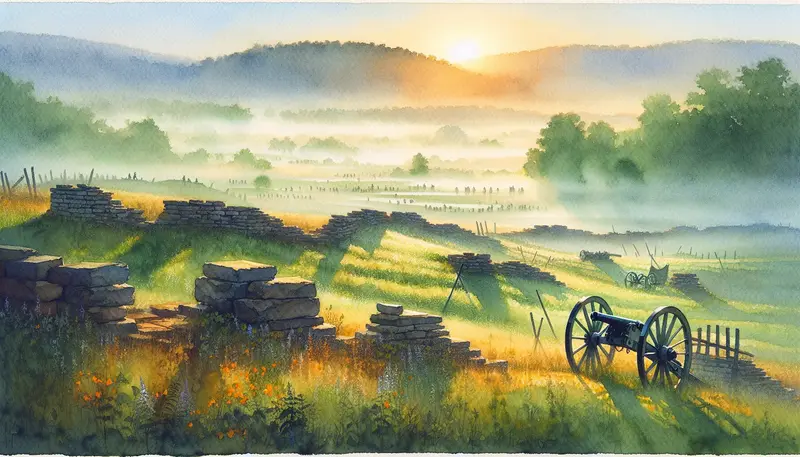
Have you considered that earthworks might remember war in a different way than books do? Fort Negley, located at 1100 Fort Negley Boulevard, Nashville, Tennessee 37203, is a Union-built pentagonal stone fortification completed in February 1862 during the Civil War. The site’s exposed stonework, reconstructed walls, and parkland are regularly associated with accounts of disembodied footsteps, whispered names, and soldier apparitions—claims that resonate with the fort’s violent past.
Photographers and late-night visitors commonly report orbs in images and the sensation of being watched near the original powder magazine. One specific account from 2010 comes from local photographer Mark P., who documented several long-exposure images that showed faint vertical streaks of light appearing only when he was alone on the ruins; Mark submitted his photos to a regional historical society, which preserved them as part of a community oral-history collection.
Another witness, a Nashville Parks employee named Evelyn M., told a preservation newsletter in 2013 that she sometimes hears distant calls in an old dialect she associates with the Civil War era while closing the park after hours. Fort Negley’s managers emphasize the site’s historical significance and caution that environmental factors—wind, wildlife, and nearby traffic—can create auditory and visual phenomena, but they also record the accounts to preserve public memory and interpretive material.
Built by Union troops under Colonel James St. Clair Morton (1823–1864) in 1862, Fort Negley was completed in approximately 8 months and played a strategic role during the Union occupation of Nashville from 1862–1865. The hard evidence of warfare—the artifacts, burial sites and construction—anchors the reported sensations in a historical record that you can consult. Whether those sensations are remnants of trauma, memories projected by listeners, or something else, Fort Negley remains one of the most frequently cited locations in narratives of Nashville haunted sites.