The Plan
Frank Lee Morris was a career criminal with an IQ tested at 133 and a resume of escapes from institutions across the country. He arrived at Alcatraz in January 1960 — sent there specifically because he had proven that lesser prisons could not hold him. Within months, he had identified a vulnerability in the aging infrastructure that no one else had exploited in Alcatraz's 26 years of federal operation: the ventilation system behind the cells was accessible through a concrete-covered steel grille, and the concrete surrounding the grille had deteriorated in the salt air to the point where it could be chipped away with improvised tools.
This article is part of our American Prison History collection.
Morris recruited brothers John William Anglin (born May 2, 1930) and Clarence Anglin (born May 11, 1931), both serving sentences for bank robbery and both experienced escape artists who had broken out of other institutions. A fourth participant, Allen West, was included in the planning but would ultimately fail to complete his portion of the work in time. The four men occupied adjacent cells on the flats of B Block — a proximity that allowed whispered communication and coordinated work during the nighttime hours when guard patrols were least frequent.
The preparation took approximately 18 months. Working during the evening music hour — when an accordion player's practice masked the sound of chipping — the men widened the ventilation grilles behind their cells using sharpened spoons, a drill fashioned from a vacuum cleaner motor stolen from the prison workshop, and other improvised tools. The concrete, weakened by decades of salt-air corrosion, gave way in small increments. Each night, the men replaced the loosened material to conceal their progress. Each night, they made a few more inches of opening.
The Dummy Heads
The most celebrated detail of the escape plan was the decoy heads. Morris and the Anglins crafted realistic human heads from a mixture of soap, toilet paper, concrete dust, and flesh-toned paint stolen from the art supplies available in the prison. Real human hair — collected from the barbershop — was glued to the sculpted features. The heads were placed on the pillows of the escapees' bunks, facing the cell door, to fool guards conducting the nightly bed checks.
The bed checks were visual inspections conducted by flashlight through the cell bars. Guards walked the tier, shining a light into each cell to confirm an occupied bunk. They did not enter the cells or physically verify the presence of the inmates. In the dim light of the cellhouse at night, a flesh-colored lump with human hair protruding from a blanket was sufficient to pass a cursory inspection. The dummy heads fooled guards on the night of June 11, 1962, and the escape was not discovered until the 7:15 AM standing count on the morning of June 12, 1962. This 12-hour discovery delay proved crucial, giving the fugitives significant advantage in their escape window and allowing them to progress far into the bay before Alcatraz Island could mobilize pursuit and alert federal authorities. For related history, see our al capone at alcatraz: the fall.
The Night of June 11, 1962
After lights-out at 9:30 PM, Morris and the Anglin brothers removed their ventilation grilles, climbed through the openings into the utility corridor behind the cells, and ascended a network of pipes and ventilation shafts to the roof of the cellhouse. Allen West, who had not yet completed widening his opening, was left behind. He eventually broke through after the others had gone, reached the roof, and saw that they had already departed. He returned to his cell.
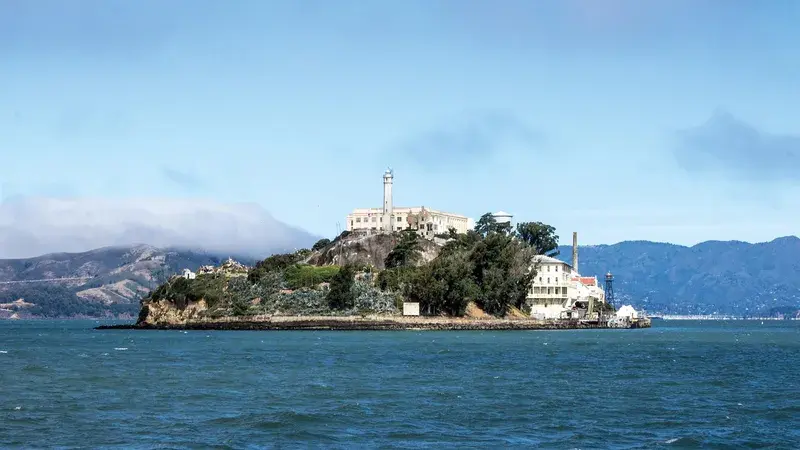
From the cellhouse roof, the three men descended to the ground via a drainpipe on the north side of the building. They crossed the open ground to the northeast shore of Alcatraz Island, inflated a raft constructed from over 50 stolen raincoats (approximately 150 total pieces of rubber material) that had been cut, shaped, and glued together using contact cement in a concealed workshop atop the cellblock, and launched into the cold waters of San Francisco Bay sometime between 10:00 PM and midnight on June 11, 1962.
The raft was designed from plans published in Popular Mechanics magazine, which Morris had obtained through the prison library. The raincoat material was vulcanized using the steam pipes in the utility corridor. Each man also had an individual life vest made from the same material. The raft was approximately 6 by 14 feet, with oar-like paddles fashioned from plywood. It was crude but functional — designed for a single crossing, not durability.
The Investigation
The FBI launched an investigation that would span 17 years. Agents recovered personal items — photographs and paperwork belonging to the Anglins — on Angel Island, roughly two miles north of Alcatraz. A homemade paddle was found in the water. The raft was never recovered. No bodies were ever found, despite extensive searching of the bay and its shoreline. For related history, see our the birdman of alcatraz: robert stroud's.
The FBI's official conclusion, published when the case was transferred to the U.S. Marshals Service in 1979 (17 years after the June 1962 escape), stated that the three men most likely drowned in the cold waters of San Francisco Bay. Water temperatures on the night of the June 11, 1962 escape were approximately 50 degrees Fahrenheit (10 degrees Celsius). The currents around Alcatraz are strong and unpredictable, particularly during the ebb tide that would have been flowing during the escape window. The FBI calculated that the men's improvised raft and the cold water made survival unlikely — though the report acknowledged that the absence of bodies prevented a definitive conclusion.
The U.S. Marshals Service keeps the case open. Fugitive warrants remain active for all three men. The case has no statute of limitations because the escape itself constitutes a federal offense. If any of the three were found alive today — Frank Morris would be 98, John Anglin would be 94, Clarence Anglin would be 93 — they could still be arrested and returned to federal custody.
The Evidence for Survival
In 2013, the FBI field office in San Francisco received a handwritten letter purportedly from John Anglin. The letter stated: "My name is John Anglin. I escaped from Alcatraz in June 1962 with my brother Clarence and Frank Morris. I'm 83 years old and in bad health. I have cancer." The letter offered to identify his location in exchange for medical treatment and a promise of limited prison time. Handwriting analysis was inconclusive — partially consistent with known samples of Anglin's writing but not definitive enough for authentication.
A photograph reportedly taken in Brazil in 1975 shows two men who bear a resemblance to the Anglin brothers. Forensic analysis using age-progression technology has produced mixed results — some experts find the resemblance compelling, others dismiss it. The Anglin family has maintained for decades that the brothers survived and communicated with relatives for years after the escape, though family members' accounts have varied in detail and consistency over time.
In 2015, a documentary featured analysis suggesting that the raft could have navigated the currents successfully if the men had launched during a specific tidal window. Modern swimmers have completed the Alcatraz-to-San Francisco crossing in under an hour, though they do so with wetsuits, support boats, and advance knowledge of current patterns. The escapees had none of these advantages — but they had a raft, life vests, and the motivation of men who faced decades of imprisonment if they failed.
The escape remains unresolved, and that irresolution is a significant part of its cultural power. Alcatraz was designed to be inescapable, and the possibility that three men defeated its defenses using stolen spoons and raincoats sustains a narrative that no confirmed drowning could match.