The Colony System
France shipped over 80,000 convicts to French Guiana between 1852 and 1953 under a system of forced transportation that represented the French Republic's answer to the British penal colonies in Australia. The system operated under a simple and devastating logic: remove undesirable populations from metropolitan France and use their labor to develop a tropical colony that free settlers refused to inhabit. The convicts served double duty as punishment and colonial workforce. The mortality was staggering: historians estimate that up to 90 percent of prisoners perished, with only about 2,000 of the 80,000 transported convicts returning alive. That most of them died in the process was, to the administrators who designed the system, an acceptable cost.
This article is part of our American Prison History collection.
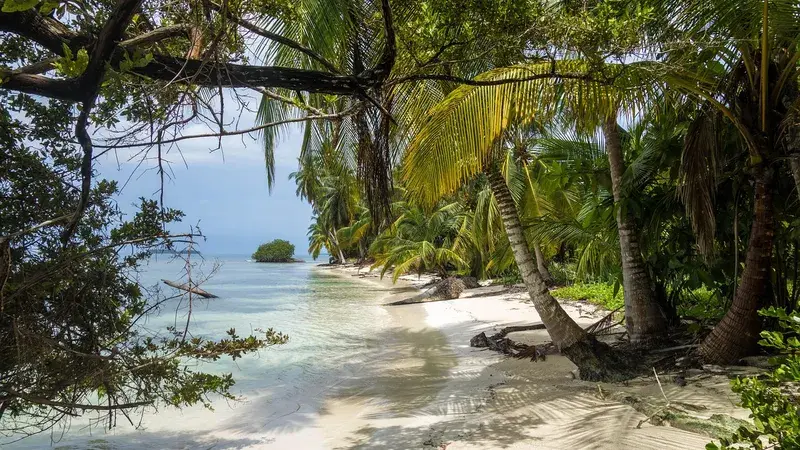
The name "Devil's Island" technically referred only to the smallest of three islands — Ile Royale, Ile Saint-Joseph, and Ile du Diable — located eight miles off the coast of French Guiana near the town of Kourou. Only political prisoners and spies were held on Ile du Diable itself. The majority of convicts served their sentences in mainland camps scattered through the coastal jungle, where conditions were, if anything, worse than on the islands. Former prisoner Rene Belbenoît, who spent years in the system, dubbed it the "Dry Guillotine"—a fitting name for an institution that killed as efficiently as the blade, but slowly. The islands were collectively known as the "Iles du Salut" (Islands of Salvation), a grim irony given the death toll. But the name Devil's Island attached itself to the entire system, and it is the name the world remembers.
Transportation was a one-way trip for most. French law required that convicts who served sentences longer than eight years remain in French Guiana for a period equal to their sentence after release — a provision called "doublage" that effectively converted any long sentence into a life sentence. Released convicts, called "liberes," had no money, no employment, and no means of returning to France. They joined the growing population of destitute freedmen in Cayenne and the coastal towns, surviving through manual labor, petty crime, or not surviving at all.
Alfred Dreyfus and the Political Prisoners
The most famous prisoner arrived on Ile du Diable in April 1895. Captain Alfred Dreyfus (1859–1935), an Alsatian Jewish officer in the French Army, had been convicted of treason — specifically, of passing military secrets to the German embassy in Paris. The evidence was a handwritten memorandum, called the "bordereau," found in a wastebasket at the German embassy. Handwriting analysis attributed it to Dreyfus, though subsequent investigation would reveal that the real author was Major Ferdinand Walsin Esterhazy.
Dreyfus spent five years on Devil's Island in conditions of extreme isolation. He was confined to a stone hut measuring just four by four meters (13 by 13 feet) with a guard stationed outside around the clock. His correspondence was censored and delayed for months. He was forbidden from speaking to his guards. Tropical diseases ravaged his body; the temperature reached 45 degrees Celsius (113°F), and he was underfed or given contaminated food with minimal treatment for his illnesses. Most brutally, on September 6, 1896, he was chained to his bed at night in double loops, forcing him to remain motionless with his ankles shackled — a punishment for someone else's action that reflected the administration's paranoid fear that France's most famous prisoner might somehow flee a tropical island surrounded by shark-infested waters and 4,000 miles of open ocean.
The Dreyfus Affair divided France more deeply than any controversy since the Revolution. In 1896, evidence emerged that undermined his conviction: Lieutenant Colonel Georges Picquart (1854–1914), the head of military counter-espionage, discovered that Major Ferdinand Walsin-Esterhazy was the actual spy, and that Esterhazy's handwriting matched the incriminating bordereau, not Dreyfus's. However, high-ranking military officials suppressed the evidence. Emile Zola's 1898 open letter "J'Accuse...!" accused the military of covering up evidence of Dreyfus's innocence and sparked national outrage. The affair pitted the Army, the Catholic Church, and conservative nationalists against liberal republicans, intellectuals, and the nascent human rights movement. Dreyfus was eventually exonerated and reinstated in 1906, but the military did not publicly declare his innocence until 1995—nearly a century later. The scars the affair left on French politics persisted for decades.
Survival Rates and Conditions
Unlike the legendary escapes that define popular prison narratives, most Devil's Island prisoners never escaped. The French government's own estimates acknowledged that fewer than 25 percent of transported convicts survived to complete their sentences and doublage period. Tropical diseases — malaria, yellow fever, dysentery, beriberi, and parasitic infections —” killed the majority within months or years of arrival. The prison camps provided minimal medical care, inadequate nutrition, and housing that offered little protection from the equatorial climate. Work details in the jungle — road-building, forestry, and construction —” exposed convicts to disease vectors, venomous animals, harsh humidity, and environmental conditions that European bodies were poorly equipped to withstand.
Violence was endemic. Guards operated with minimal oversight in isolated camps hours from any supervisory authority. Convict hierarchies enforced their own brutal social order. Murder, assault, and sexual violence were routine. The camps on the mainland were, by multiple accounts, more dangerous than the island facilities —” a fact that made transfer to the islands perversely desirable, as island prisoners at least benefited from relative security and regular supply deliveries.
Henri Charriere and Papillon
Henri Charrière (1906–1973) published Papillon in 1969, a memoir claiming to detail his imprisonment in French Guiana and multiple daring escapes, including a final successful flight on a bag of coconuts thrown from a cliff into the sea. The book sold millions of copies and was adapted into a 1973 film directed by Franklin J. Schaffner and starring Steve McQueen and Dustin Hoffman. It cemented Devil's Island in the popular imagination as the ultimate inescapable prison.
Historians have disputed nearly every significant claim in the book. Research by French journalist Gerard de Villiers and others demonstrated that many of the adventures Charriere attributed to himself actually happened to other prisoners, if they happened at all. Charriere's prison records do not support the timeline of escapes he described. The book appears to be a composite —” part autobiography, part borrowed experience, part invention —” presented as a single coherent memoir. Charriere never acknowledged the fabrications, maintaining until his death in 1973 that the account was truthful.
The factual unreliability of Papillon has not diminished its cultural impact. The book and film created an archetype —” the defiant prisoner who refuses to accept his fate and fights the system through sheer will —” that subsequent prison narratives have endlessly recycled. The real Devil's Island was more grinding than dramatic, more bureaucratic than adventurous, more lethal through disease than through violence. But the real story —” of slow death by tropical fever in a jungle camp — does not sell movie tickets.
Closure and Legacy
The penal colony system was officially abolished in 1938 and the last prisoners were repatriated to France in 1953, though the process of emptying the camps took years. The islands are now administered as part of the Guiana Space Centre complex, and Île Royale is open to tourists who arrive by boat from Kourou. The ruins of the prison buildings —” the cells, the hospital, the chapel, the guards' quarters — stand in various states of decay, gradually being consumed by the tropical vegetation.
The penal colony's legacy in France remains politically sensitive. Unlike Britain, which has largely integrated its convict transportation history into a broader narrative of colonial complexity, France has been slower to confront the human cost of its penal system in Guiana. The debate over memory and acknowledgment continues —” complicated by the fact that French Guiana remains an overseas department of France, and the descendants of both convicts and guards still live in the communities the system created.