The Plantation That Never Closed
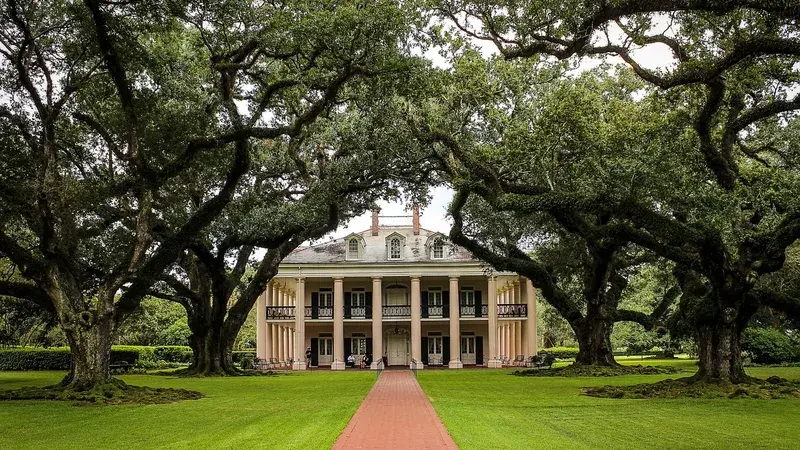
The Louisiana State Penitentiary sits on 18,000 acres of former slave plantation land in West Feliciana Parish, a bend of the Mississippi River so isolated that the nearest town of any size is 22 miles away. The plantation was named Angola after the African country from which many of the people enslaved there had been forcibly transported. When the Civil War ended slavery in 1865, the state of Louisiana began transitioning the plantation into a prison facility. By 1880, inmates were being housed in the old slave quarters and worked on the plantation. The land remained the same. The labor remained the same. The workers changed legal status from enslaved to incarcerated, but the fields of cotton, sugarcane, and soybeans continued to be worked by Black men under the supervision of armed white men on horseback.
This article is part of our American Prison History collection.
This continuity was not accidental. The 13th Amendment abolished slavery "except as a punishment for crime" — a clause that Southern states exploited immediately and systematically. Louisiana's Black Codes, enacted in 1865 and 1866, criminalized vagrancy, loitering, and breach of labor contracts in terms that applied almost exclusively to formerly enslaved people. The convict lease system that followed channeled Black men arrested under these laws into forced labor arrangements that enriched private operators while maintaining the plantation economy under a new legal framework.
Major Samuel Lawrence James leased Angola from the state in 1869 and operated it as a private enterprise for over three decades. Under the lease system, James had complete control over the inmates — their labor, their housing, their food, their punishment, and, effectively, their lives. He paid the state a flat fee for access to the convict workforce and kept whatever profit the plantation generated. The incentive structure was lethal: lessees profited from maximum labor output and minimum expenditure on prisoner welfare. Unlike slave owners, who had a financial interest in keeping their workforce alive, convict lessees could replace dead workers at the cost of a new conviction.
The Bloodiest Prison in America
Mortality rates under the convict lease system were staggering. In some years, 20 percent or more of Angola's inmates died — from disease, malnutrition, overwork, exposure, and violence. The death rate exceeded that of many slave plantations, confirming what historians have documented across the post-Civil War South: convict leasing was, for many of those subjected to it, worse than slavery in measurable terms of survival.
State control resumed in 1901 after a series of investigations and public outcry, following the Louisiana Constitution of 1898, which prohibited convict leasing effective at the end of the James lease. Conditions improved only marginally. Angola earned its reputation as the bloodiest prison in America through decades of inmate-on-inmate violence, guard brutality, and institutional indifference that persisted well into the 20th century. In 1951, 31 inmates slashed their own Achilles tendons with razor blades in a coordinated protest against conditions — a form of self-mutilation so extreme that it made national headlines and forced a legislative investigation. For related history, see our al capone at alcatraz: the fall.
The heel-slashing incident was not an isolated act of desperation. It was a calculated communication — the only language the inmates believed the outside world would hear. They were correct. The investigation that followed documented systematic abuses including forced labor in dangerous conditions, inadequate medical care, sexual violence, and a trusty system in which armed inmates supervised other inmates with minimal guard oversight. The investigation produced reforms that were implemented slowly and incompletely over the following decades.
The Farm Today
Modern Angola houses over 5,000 inmates, approximately 75 percent of whom are serving life sentences without the possibility of parole. The prison's demographics reflect the broader disparities of the Louisiana criminal justice system — roughly 75 percent of inmates are Black, in a state where Black residents constitute approximately 33 percent of the population. The racial composition of the inmate workforce, the plantation geography, and the agricultural labor that continues on the grounds create visual and structural parallels to the antebellum period that Angola's critics find impossible to ignore.
Inmates still work the fields. Angola operates one of the largest prison farming operations in the country, producing crops and raising cattle on the same land that enslaved people cultivated before the Civil War. The prison also maintains a variety of vocational programs, educational opportunities, and a theological seminary that has graduated hundreds of inmate ministers. Warden Burl Cain, who led the prison from 1995 to 2016, promoted religious programming as a tool for institutional management and inmate development — an approach that drew both praise from evangelical communities and criticism from civil liberties advocates who questioned the entanglement of state authority and religious practice.
The Angola Prison Rodeo
The Angola Prison Rodeo, held since 1965, draws tens of thousands of spectators to the prison grounds twice annually — in April and October. Inmates compete in traditional rodeo events alongside a signature game called Convict Poker, in which four inmates sit at a card table in the center of the arena while a bull is released. The last man seated wins. The event also features an inmate craft fair where prisoners sell woodwork, leather goods, and other handmade items to the public. For related history, see our the birdman of alcatraz: robert stroud's.
The rodeo is Angola's most visible public interface and its most controversial. Supporters argue that it provides inmates — most of whom will die in prison — with a rare connection to the outside world, a source of income from craft sales, and a break from the monotony of life sentences. Critics call it a spectacle that exploits incarcerated people for public entertainment, drawing uncomfortable parallels to historical practices of displaying prisoners for profit. The debate is genuine, and reasonable people disagree.
Reform, Resistance, and the Future
Angola has been the subject of repeated reform efforts, legal challenges, and journalistic investigations throughout its history. The 1971 federal court case Hayes v. Walker resulted in a consent decree that mandated improvements in medical care, living conditions, and the use of force. Subsequent litigation has addressed overcrowding, mental health services, and the treatment of elderly and disabled inmates in a population where life sentences mean that many prisoners will grow old and die behind the walls.
The prison's relationship to its plantation past remains the central tension of its institutional identity. Angola's administration has made efforts to acknowledge the history — a museum on the grounds documents both the convict lease era and the broader history of the site. But acknowledgment and transformation are different things, and the structural continuities between Angola's past and present — the land, the labor, the racial demographics, the isolation — ensure that the plantation metaphor is never entirely metaphorical.
Eastern State Penitentiary was designed as an experiment in reform. Angola was designed as an instrument of extraction — of labor, of profit, of human potential. The two institutions represent opposite poles of American penology, and the fact that both produced suffering on an industrial scale suggests that the problem lies not in the design philosophy but in the practice of mass incarceration itself.