The Book That Divided a Genre
Stephenie Meyer was a stay-at-home mother with no publishing credits when she dreamed of a sparkling vampire in a meadow on June 2, 2003. She wrote Twilight in three months, secured an agent who sold it to Little, Brown for a $750,000 three-book deal, and watched it debut at number five on the New York Times bestseller list in October 2005. The four-book series would sell over 160 million copies, generate five films grossing $3.3 billion worldwide, and permanently alter the landscape of vampire fiction.
This article is part of our Vampire Culture collection.
Meyer's vampires broke the rules that had governed the genre since Bram Stoker, though they drew from centuries of vampire legends. They did not burn in sunlight — they sparkled. They could choose to abstain from human blood, feeding on animals instead. They were beautiful, wealthy, eternally young, and capable of romantic love. The Cullens were not predators trapped in an existential nightmare, like Anne Rice's Louis. They were a functional family unit who happened to be immortal. For traditional horror fans, this was heresy. For millions of teenage readers, it was revelation.
The criticism was immediate and loud. Stephen King said Meyer "can't write worth a darn." Horror purists argued that removing the vampire's essential monstrousness gutted the metaphor that gave the creature its power. Literary critics dismissed the prose as flat and the characterization as thin. None of this mattered commercially. Meyer had identified an audience that previous vampire fiction had ignored or condescended to — young women who wanted romance, not horror — and she served that audience with absolute conviction.
Forks, Washington: Population 3,900
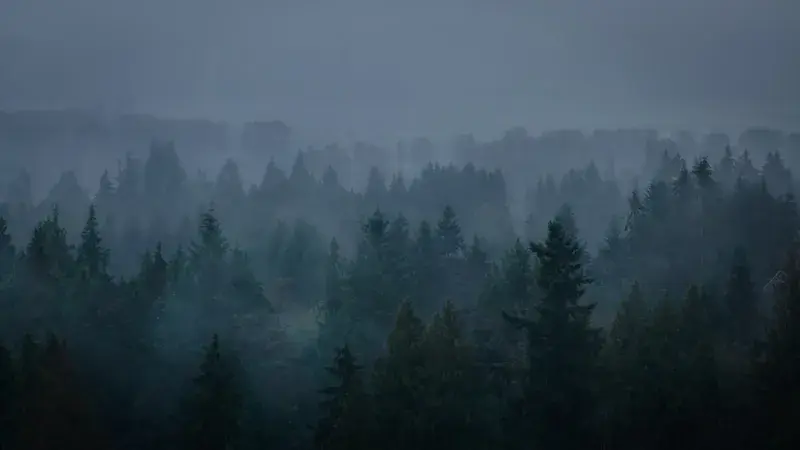
Meyer chose Forks, Washington as Twilight's setting by searching online for the rainiest place in the continental United States. She had never visited the town. The Olympic Peninsula logging community, surrounded by temperate rainforest and accessible only by two-lane highways, had a population of approximately 3,500 and an economy that had been declining since federal timber restrictions in the 1990s reduced logging operations.
After Twilight's publication, Forks experienced a tourism explosion that local officials compared to winning a lottery they had not entered. Annual visitors increased from roughly 10,000 to over 70,000. The town created a self-guided Twilight tour, marking locations mentioned in the books. The Forks Chamber of Commerce placed a red Chevrolet truck — matching Bella Swan's vehicle — in its parking lot for photo opportunities. Businesses rebranded: Dazzled by Twilight gift shop opened on Forks Avenue, the local lodge added Twilight-themed rooms, and restaurants created vampire-inspired menu items.
The economic impact was transformative. A town that had been losing population and services suddenly had reason to invest in infrastructure, lodging, and retail. Stephenie Meyer Day, held each September, draws fans from around the world. The tourism has outlasted the peak of the franchise's popularity, settling into a steady baseline that sustains businesses that did not exist before 2005. Forks learned what Transylvania had learned decades earlier: a fictional vampire can save a real economy.
The Broader Vampire Renaissance
Twilight did not arrive in isolation. It was the most commercially successful expression of a broader vampire renaissance that dominated popular culture from roughly 2005 to 2015. Charlaine Harris's Southern Vampire Mysteries, beginning with Dead Until Dark in 2001, provided the source material for HBO's True Blood, which premiered in 2008 and ran for seven seasons. L.J. Smith's The Vampire Diaries was adapted by the CW in 2009, spawning the spinoff The Originals and running for eight seasons. Other notable vampire properties included Tim Burton's Dark Shadows starring Johnny Depp in 2012, and Abraham Lincoln: Vampire Hunter also in 2012.
Combined, these properties created a vampire media ecosystem of unprecedented scale. At the renaissance's peak, the top-selling book series, the top-rated cable drama, and a network television hit were all vampire stories running simultaneously. Publishing houses scrambled to acquire vampire manuscripts. Film studios greenlit vampire projects with minimal vetting. The market was so saturated that the phrase "vampire fatigue" entered entertainment journalism by 2012.
The renaissance had economic dimensions beyond entertainment. Hot Topic devoted entire store sections to vampire merchandise. Vampire-themed fashion — pale makeup, dark clothing, Victorian accessories — entered the mainstream. Vampire tourism expanded beyond established destinations like New Orleans and Transylvania to include Forks, Mystic Falls (actually Covington, Georgia, where The Vampire Diaries filmed), and Bon Temps (actually Shreveport, Louisiana, standing in for True Blood's fictional town).
Why Vampires, Why Then
The vampire renaissance coincided with several cultural currents that made the undead particularly resonant. The post-9/11 period produced widespread anxiety about threats that were invisible, omnipresent, and embedded within ordinary life — precisely the qualities that define the vampire as a literary figure. The 2008 financial crisis heightened interest in stories about ancient, wealthy beings who accumulated power over centuries while ordinary people struggled. The vampire as a metaphor for predatory capitalism was not new, but it gained fresh relevance.
The rise of social media and the attention economy created conditions where the vampire's defining characteristics — eternal youth, physical perfection, the ability to compel others — mapped onto emerging cultural aspirations. The vampire did not age, did not gain weight, did not lose relevance. In a culture increasingly organized around self-presentation and the projection of an idealized self, the vampire offered a fantasy of permanent optimization.
The sexual politics of the renaissance were complex. Twilight's abstinence narrative — Edward refuses to consummate the relationship until marriage — resonated with conservative religious readers while simultaneously being consumed as romance by secular audiences. True Blood's explicit sexuality pushed in the opposite direction, using vampires as metaphors for LGBTQ+ identity and civil rights. The vampire proved flexible enough to serve both narratives simultaneously, which is the surest sign of a durable cultural symbol.
After the Renaissance
The vampire renaissance faded after 2015, replaced by zombies, witches, and true crime as the dominant dark-culture phenomena. But it left permanent marks on the publishing industry, the tourism economy of multiple communities, and the cultural status of vampire fiction. Before Twilight, vampire novels were a niche subgenre shelved in the horror section. After Twilight, paranormal romance became a permanent publishing category with its own bestseller lists, conventions, and readership communities. The renaissance also spawned unexpected spinoffs: Fifty Shades of Grey, a Twilight fan fiction by E.L. James originally titled "Master of the Universe," became the fastest-selling novel in history upon its 2011 release, proving that the Twilight universe could serve as creative fodder for entirely new genres and audiences.
The renaissance also established a template for franchise-driven tourism that communities continue to exploit. Forks built infrastructure. By 2023, food, retail, and accommodations comprised 32% of Forks' economy, compared to just 16% two decades earlier. The year following the first Twilight film's release saw approximately 50,000 additional visitors stopping at the town's visitor center, while 2024 was described as a record-breaking year for tourism. Covington, Georgia maintains Vampire Diaries filming locations as tourist attractions years after the show ended. The lesson — that fictional creatures can generate real economic activity in real places — has been internalized by tourism boards worldwide. Transylvania's Dracula tourism industry pioneered this model, but Twilight proved it could work in a logging town on the Olympic Peninsula with no pre-existing mythological connection to vampires.