A Film That Should Not Exist
F.W. Murnau's Nosferatu: Eine Symphonie des Grauens premiered in Berlin on March 4, 1922, at the Primus-Palast cinema, and it was illegal from the moment it flickered across the screen. Murnau and his producer Albin Grau had failed to secure the rights to Bram Stoker's Dracula. Their solution was cosmetic: rename the count Orlok, move the setting from London to Wisborg, change the solicitor's name from Harker to Hutter, and hope nobody noticed. Florence Stoker, Bram's widow, noticed immediately. The screenplay, adapted by Henrik Galeen from Stoker's novel, bore too much structural and narrative similarity to the source material to escape scrutiny.
This article is part of our Vampire Culture collection.
Prana Film, the production company, had been founded specifically to make Nosferatu. Grau, an occultist who claimed to have encountered a vampire during World War I in Serbia, envisioned the film as an artistic expression of supernatural truth. The company produced exactly one film before Florence Stoker's lawyers destroyed it. Every known print was ordered burned by a German court in 1925. Prana Film declared bankruptcy. The case should have been closed.
But copies had already shipped to distributors in other countries. Prints survived in private collections, in film archives that ignored the court order, and in countries where British copyright law carried no weight. The film that was supposed to be erased from existence became one of the most influential horror films ever made — a ghost that could not be killed, much like its subject.
Max Schreck and the Shadow of Orlok
Max Schreck's performance as Count Orlok remains the most physically disturbing portrayal of a vampire committed to film. Where later Draculas — Lugosi, Lee, Oldman — projected aristocratic menace, Schreck presented something inhuman. The elongated fingers, the rodent-like front teeth, the hunched posture, the sunken eyes — Orlok moved like something that had forgotten how living bodies were supposed to work. Schreck disappeared so completely into the role that the 2000 film Shadow of the Vampire, directed by E. Elias Merhige, built its entire premise around the joke that Schreck was actually a vampire. Willem Dafoe's portrayal of Schreck earned an Academy Award nomination for Best Supporting Actor.
The makeup and prosthetics were primitive by modern standards — putty ears, dental caps, extended finger appliances — but Murnau's camera work transformed them. He shot Schreck in high-contrast lighting that reduced the actor to a collection of sharp angles and deep shadows. The famous scene of Orlok's shadow climbing the staircase, fingers extending like spider legs across the wall, required no special effects. It was a man, a light, and a wall. The shadow did the rest.
Schreck himself remains a figure of limited biographical record. Born Friedrich Gustav Maximilian Schreck on September 6, 1879, in Berlin-Friedenau, he trained in secret against his father's wishes and joined Max Reinhardt's company of innovative German actors. He married actress Fanny Normann in 1910—she appeared as a nurse in Nosferatu. His surname means "fright" or "terror" in German — a coincidence that has fueled decades of speculation and myth-making. He died on February 20, 1936, of a heart attack after performing as the Grand Inquisitor in Don Carlos the previous evening. He was buried at Wilmersdorfer Waldfriedhof Stahnsdorf in Brandenburg. Having appeared in over 40 films, he is remembered almost exclusively for the one role that ate the rest of his career. For related history, see our interview with the vampire: anne rice's.
German Expressionism and Visual Horror
Nosferatu emerged from the German Expressionist movement that produced The Cabinet of Dr. Caligari, Metropolis, and M. But where most Expressionist films created horror through distorted studio sets — tilted walls, painted shadows, impossible architecture — Murnau made an unusual choice. He shot largely on location, using real castles, real streets, and real landscapes, then applied Expressionist techniques to natural settings.
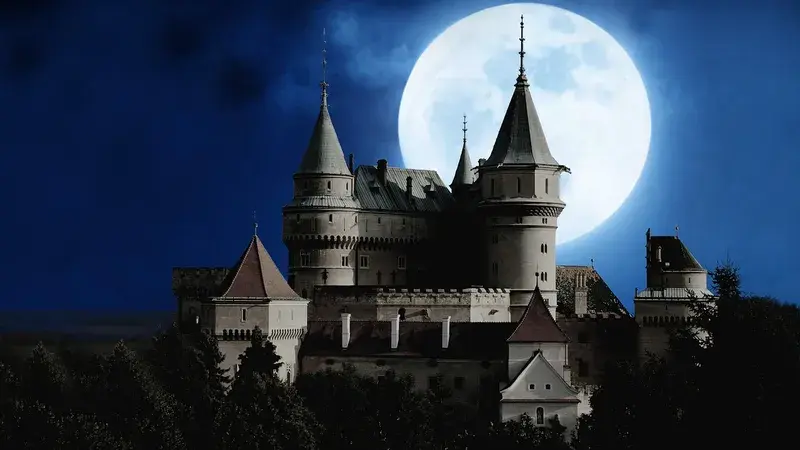
The Carpathian sequences were filmed at Orava Castle (Oravský hrad) in the village of Oravský Podzámok, Slovakia, a fortress perched on a 520-metre limestone spur above the Orava River, with the oldest parts dating to the thirteenth century after the Mongol invasion of 1241. Distant establishing shots used the ruins of Strečno Castle near Žilina. Cinematographer Fritz Arno Wagner captured the castle's jagged silhouette against the sky, which needed no set decoration. Principal photography lasted approximately six weeks across multiple locations in Central Europe between May and September 1921. Murnau enhanced the location with camera tricks — stop-motion footage of a coach racing through forests, negative-image photography that turned white trees black against a white sky, and time-lapse footage of a coffin lid opening by itself. These techniques were innovative in 1922 and remain effective a century later because they distort recognizable reality rather than replacing it.
The scenes in Wisborg — actually filmed in Wismar, Lubeck, and other Baltic port cities — used real medieval architecture to create an atmosphere of claustrophobic antiquity. The narrow streets, the gabled warehouses, the harbor — Murnau's Wisborg feels like a real place because it was a real place. When the plague arrives with Orlok, the rats swarming through actual cobblestone streets carry more dread than any computer-generated pestilence.
The Plague Narrative
Murnau's most significant departure from Stoker was connecting the vampire explicitly to plague. In Dracula, the count is a predator — he chooses his victims. In Nosferatu, Orlok is a contagion. He arrives by ship in a coffin full of rats. The rats carry plague. The town sickens and dies. Orlok is not just a monster who kills individuals; he is an epidemic that devastates communities. This shift aligned the vampire with Europe's deepest historical trauma — the Black Death — and gave Nosferatu a resonance that Stoker's drawing-room horror lacked.
The plague ship sequence — the Demeter sailing into Wisborg harbor with its crew dead and its hold full of rats — is cinema's first great horror set piece. Murnau shot the arrival at dawn, the empty ship drifting into port with no hand at the wheel, and the hatches opening to release a stream of rats down the gangplank. The townspeople gather to watch, not yet understanding what has arrived. It is a scene about the moment before catastrophe becomes visible, and it has been borrowed by every plague narrative from Salem's Lot to 28 Days Later. For related history, see our the new nosferatu film: locations and.
Florence Stoker's War
Florence Stoker learned about Nosferatu when a friend sent her a promotional program from the Berlin premiere. She was already struggling financially — Bram Stoker's Dracula had earned relatively little, and his other works generated almost no income. The unauthorized film represented both a copyright violation and a personal affront. She spent three years pursuing legal action through the British Incorporated Society of Authors.
The German court's 1925 ruling ordered all prints and negatives destroyed. Prana Film, already bankrupt, could not comply because it no longer controlled the distributed prints. Florence continued legal efforts until her death in 1937, pursuing distributors in different countries with varying success. The film screened publicly in the United States in 1929, where Stoker's copyright protection was complicated by the failure to register the American edition of Dracula properly.
The copyright battle created a paradox that shaped vampire cinema. Because Nosferatu was illegal, subsequent filmmakers had to license Dracula directly from the Stoker estate — which is how Universal obtained the rights that produced the 1931 Lugosi film. Florence Stoker's enforcement of her husband's copyright inadvertently created the commercial framework that turned Dracula into a Hollywood franchise.
The 2024 Remake and Continued Legacy
Robert Eggers' 2024 Nosferatu—starring Bill Skarsgård as Count Orlok, Lily-Rose Depp as Ellen Hutter, Nicholas Hoult as Thomas Hutter, and Willem Dafoe as Professor Albin Eberhart Von Franz—brought the story back to prestige cinema with a production budget that dwarfed Murnau's entire career earnings. Eggers, known for the historical obsessiveness of The Witch and The Lighthouse, filmed across the Czech Republic and Germany using period-accurate sets and practical effects. The film demonstrated that Murnau's core insight — that a vampire is more frightening as a disease than as a seducer — still resonated with modern audiences.
The original Nosferatu has been restored, re-scored, and re-released multiple times. Major film archives including the Filmoteca Española, the British Film Institute, and the Library of Congress have preserved multiple versions. The film exists today in better condition than many authorized productions of the same era, preserved by the same archival impulse that Florence Stoker tried to prevent. It stands as proof that great art, like a good vampire, is remarkably difficult to kill.