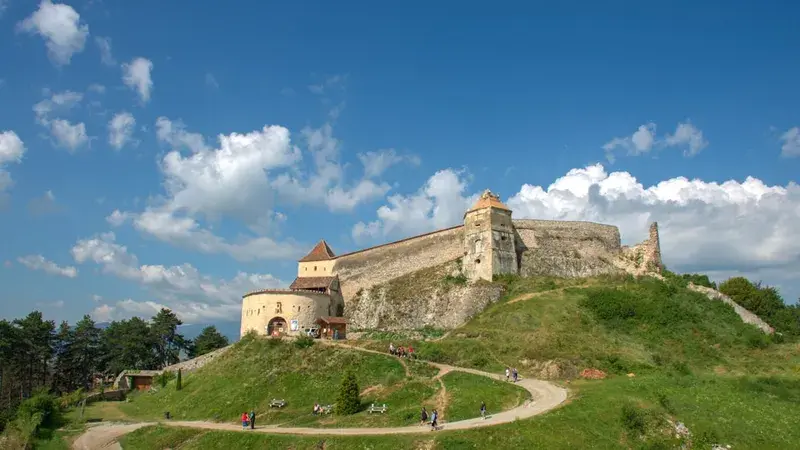
The Castle That Has Nothing to Do with Dracula
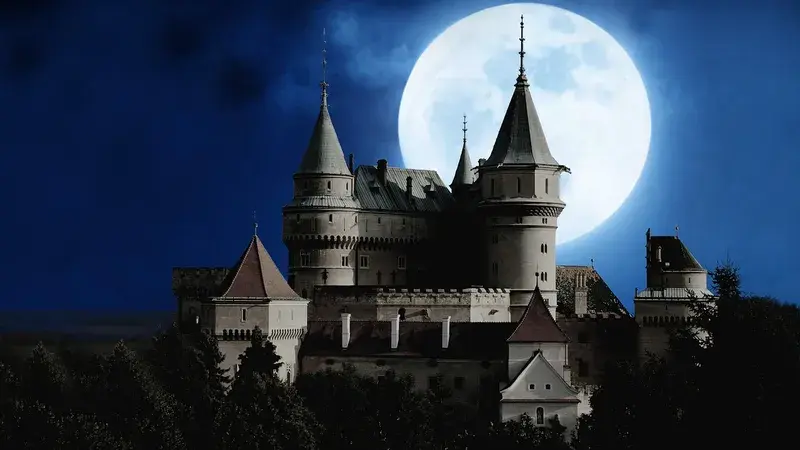
Bran Castle sits on a rocky outcrop near Brasov in central Romania, surrounded by souvenir shops selling plastic fangs, Dracula wine, and T-shirts bearing slogans that would make Bram Stoker wince. The castle is marketed globally as "Dracula's Castle," and approximately 800,000 tourists visit annually on the strength of that association. The problem is that the connection between Bran Castle and either the historical Vlad the Impaler or the fictional Count Dracula ranges from tenuous to nonexistent.
This article is part of our Vampire Culture collection.
The fortress dates to 1388, built by Saxon merchants as a customs post and defensive position on the border between Transylvania and Wallachia. Vlad III may have passed through the region during military campaigns, and one contested theory suggests he was briefly imprisoned at Bran in 1462, though modern historians now conclude he was held in a fortress in Budapest instead. But he never lived there, never ruled from there, and the castle bears no documented connection to his reign beyond geographical proximity to territory he controlled. The castle's modern incarnation owes more to Romanian royalty than medieval history—Queen Maria of Romania transformed it into a royal residence in the 1920s, overseeing extensive renovations that created the museum visitors see today.
Stoker never visited Romania. His description of Dracula's castle — perched on a precipice with a vast view of forests and mountain peaks — was assembled from travel books and his own imagination. The description loosely matches several Carpathian locations, Bran among them. Romanian tourism authorities seized on the resemblance in the 1970s, and the branding stuck with a tenacity that no amount of historical correction has managed to dislodge.
Sighisoara: Where the Real Dracula Was Born
The medieval citadel town of Sighisoara in Mures County holds the strongest documented connection to the historical Vlad Dracula. Vlad III was born here around 1431 in a house on Cositorarilor Street, where his father Vlad II Dracul lived while serving as military governor of Transylvania. A small plaque marks the building, which now operates as a restaurant serving Romanian cuisine to tourists who eat beneath vaulted ceilings where a future impaler once crawled as an infant. For related history, see our dracula: the novel that invented modern.
Sighisoara itself is a UNESCO World Heritage Site, and its preservation owes nothing to Dracula tourism. The citadel is one of the best-preserved inhabited medieval fortifications in Europe. Nine of the original 14 towers survive. The 14th-century Clock Tower dominates the skyline. Cobblestone streets wind between painted houses that have stood for 500 years. The town would be a significant tourist destination without any vampire connection — but the vampire connection is what fills the hotels.
The tension between Sighisoara's genuine medieval heritage and its Dracula branding reflects a broader conflict in Romanian cultural politics. Some historians and preservation advocates argue that Dracula tourism trivializes a complex historical figure and reduces a rich cultural landscape to a horror movie set. Others counter that tourism revenue funds preservation — that without the vampire tourists, many of these sites would lack the resources to maintain their medieval infrastructure.
Vlad the Impaler: The Historical Record
The real Vlad III, who ruled Wallachia intermittently between 1448 and 1476, earned the epithet "Tepes" (the Impaler) through a documented campaign of extraordinary cruelty. German pamphlets printed in the 1460s and 1470s — among the earliest products of the printing press — described mass impalements, the nailing of turbans to ambassadors' heads, and banquets held among forests of the impaled. These accounts were propaganda produced by Vlad's Saxon enemies, but they drew from real events confirmed by multiple independent sources. For related history, see our interview with the vampire: anne rice's.
Vlad's primary targets were Ottoman Turkish invaders and the Saxon merchant communities of Transylvania whose economic independence threatened his authority. His most famous act — the impalement of approximately 20,000 Turkish prisoners outside Targoviste in 1462, creating a "forest of the impaled" that reportedly turned back an Ottoman advance — is documented in both European and Ottoman sources. The scale may be exaggerated, but the practice is not disputed.
In Romania, Vlad occupies a complicated position. He is regarded by many as a national hero who defended Romanian independence against Ottoman expansion — a harsh ruler whose cruelty was directed primarily at foreign enemies and domestic traitors. The Dracula tourism industry sits uncomfortably beside this national narrative, transforming a controversial historical figure into a cartoon monster for Western entertainment.
The Tourism Economy
Romania earns an estimated 200 million euros annually from Dracula-related tourism. Bran Castle alone attracts approximately 800,000 visitors per year, generating significant revenue through entrance fees (roughly 7 euros per adult), its on-site museum, and the commercial village that has grown around its base. Tour operators in Bucharest offer multi-day "Dracula tours" that visit Bran, Sighisoara, Poenari Castle (Vlad's actual military fortress in Wallachia, now a ruin requiring a 1,480-step climb to access), and Snagov Monastery, where Vlad is traditionally believed to be buried. The Poenari climb itself has become a pilgrimage for serious dark tourism enthusiasts, filtering out casual visitors and creating a more intimate, historical experience than the crowded corridors of Bran. For related history, see our the new nosferatu film: locations and.
The economic impact extends beyond the major sites. Small towns throughout Transylvania have developed vampire-themed accommodations, restaurants, and experiences. A cottage industry of Dracula-branded products — wine, cheese, honey, woodcarvings — provides income to rural communities that have few other economic options. The tourism industry has also improved road infrastructure in previously isolated regions, making remote Carpathian villages accessible for the first time.
International hotel chains have recognized the market. Themed accommodations range from the genuinely atmospheric — converted Saxon manor houses in the Carpathian foothills — to the aggressively kitschy. A proposal to build a Dracula theme park near Sighisoara was defeated after intense opposition from preservationists and the Romanian Orthodox Church, which objected to the glorification of a figure associated with mass killing.
Beyond the Vampire: What Transylvania Actually Offers
The irony of Dracula tourism is that Transylvania's real attractions rival anything the vampire legend can offer. The Carpathian Mountains contain some of Europe's last remaining old-growth forests — ancient beech and spruce stands that have never been logged. Brown bear, wolf, and Eurasian lynx populations survive here in numbers that have vanished from the rest of the continent. Romania's Carpathians hold an estimated 6,000 brown bears, roughly 60 percent of Europe's non-Russian population.
The fortified Saxon churches of southern Transylvania — over 150 of them, seven designated UNESCO World Heritage Sites — represent a unique architectural tradition. Built between the 13th and 16th centuries by German colonists, these churches combined religious architecture with military fortification, creating village strongholds where communities could withstand Ottoman raids. Many stand in tiny villages with aging populations, their future uncertain as young people leave for Bucharest or Western Europe.
Dracula tourism, for all its historical distortions, brings visitors close enough to discover these authentic treasures. A tourist who arrives for the vampire kitsch at Bran and then drives an hour into the Carpathian backcountry discovers a landscape of staggering beauty and historical depth that no fictional monster could match. The challenge for Romania is leveraging the Dracula brand to build awareness of the real Transylvania without allowing the brand to consume the reality it was supposed to promote.