The Dhampir Tradition of the Balkans
In Balkan folklore, the dhampir occupied a unique position in the supernatural ecosystem — the offspring of a vampire father and a human mother, born with the ability to see and destroy the undead. Serbian, Bosnian, and Romani communities documented the existence of professional dhampirs who traveled between villages, offering their services for a fee. These itinerant vampire hunters operated well into the 18th century, with records of their activities preserved in Austrian military reports and church records.
This article is part of our Vampire Culture collection.
The dhampir's methods varied by region. Some performed elaborate rituals involving mirrors, icons, and specific prayers. Others claimed to see vampires through physical signs invisible to ordinary humans — a faint glow around the grave, a shadow that moved against the wind, a particular quality of silence in a house where a vampire had fed. The theatrical elements of these performances suggest that many dhampirs were skilled confidence operators who understood their audiences. But the communities that hired them believed in the service with absolute sincerity, and the dhampir's visit often coincided with the end of whatever crisis had prompted the consultation — a correlation that reinforced belief in the tradition.
The dhampir concept influenced vampire fiction long before Blade or Vampire Hunter D made it a genre staple. The idea that defeating a supernatural predator required someone who straddled the boundary between human and monster — who understood the enemy because they carried part of it within themselves — proved irresistible to storytellers. Bram Stoker's Van Helsing is not a dhampir, but his knowledge of vampire nature and his willingness to operate outside conventional medicine echo the dhampir's liminal authority.
Dom Augustin Calmet and the Scholarly Vampire
In 1746, a French Benedictine monk named Dom Augustin Calmet published a treatise with one of the longest titles in publishing history: Dissertations sur les Apparitions des Anges, des Demons et des Esprits, et sur les Revenants et Vampires de Hongrie, de Boheme, de Moravie et de Silesie. The book compiled every vampire account Calmet could find — Serbian military reports, Hungarian church records, German newspaper articles, classical references — and attempted to analyze them with scholastic rigor.
Calmet's intentions were ambiguous, and scholars still debate whether he believed in vampires or was cataloguing superstition. His methodology was genuine — he cross-referenced sources, noted contradictions, and acknowledged the limits of his evidence. But his comprehensive compilation had the unintended effect of spreading vampire belief across educated European society. Before Calmet, vampire reports were regional curiosities. After Calmet, they were a subject of salon conversation from Paris to Vienna.
Voltaire responded with characteristic acid, devoting an entry in his Philosophical Dictionary to mocking vampire belief and, by extension, Calmet's credulity. The exchange between Calmet's scholarly earnestness and Voltaire's Enlightenment contempt established a pattern that repeats in every generation — the careful documenter of anomalous phenomena versus the rationalist who dismisses the entire project. Ghost hunting television, paranormal investigation societies, and the skeptic community are all descendants of this 18th-century argument.
The Real Inspirations Behind Van Helsing
Abraham Van Helsing, Stoker's vampire-hunting professor, drew from multiple real-world models. The most commonly cited is Arminius Vambery, a Hungarian professor of Oriental languages who lectured at the University of Budapest and traveled extensively through Central Asia disguised as a dervish. Stoker met Vambery at a dinner in London and later credited him as a source of information about Eastern European folklore, though the extent of Vambery's actual influence on Dracula remains disputed.
Van Helsing also reflects the Victorian-era tradition of the psychic investigator — educated professionals who applied scientific methods to supernatural claims. The Society for Psychical Research, founded in 1882, included Cambridge philosophers, physicists, and Nobel laureates among its members. They investigated haunted houses with thermometers, cameras, and detailed interview protocols. Van Helsing's combination of medical credentials, folklore knowledge, and willingness to believe in the supernatural mirrors this real tradition of respectable people taking the paranormal seriously.
The character's name may derive from Abraham van Helsing, a Dutch lord referenced in historical documents from the early modern period, or from the city of Helsinki — Stoker's notes are not definitive on this point. What matters is the archetype Van Helsing established: the older, European, academically credentialed expert who understands the monster because he has spent decades studying it. Every vampire hunter since — from Peter Cushing's Van Helsing in the Hammer films to Buffy Summers's Watcher — operates in the shadow of Stoker's creation.
The Highgate Vampire Hunters
The most absurd chapter in vampire-hunting history played out in Highgate Cemetery, North London, beginning in 1970. Sean Manchester, president of the British Occult Society, and David Farrant, founder of the British Psychic and Occult Society, both claimed to have identified a vampire in the overgrown Victorian cemetery. What followed was a decades-long feud between rival vampire hunters that involved tabloid interviews, cemetery break-ins, competing books, a television appearance on the BBC, and Farrant's eventual arrest for vandalism.
Manchester claimed to have performed an exorcism on a tomb in Highgate, later publishing a book asserting he had tracked the vampire to a house in the nearby neighborhood and destroyed it with traditional methods. Farrant claimed his own encounters and investigations, was photographed in the cemetery with a cross and stake, and was convicted in 1974 of damaging catacombs. The two men maintained their feud for over 40 years, each accusing the other of fraud, publicity-seeking, and disrespect for the dead.
The Highgate affair demonstrated that vampire hunting in the modern era operates through media rather than folklore. Manchester and Farrant were not responding to a community crisis or performing traditional rituals. They were competing for attention in a media landscape that rewarded sensational claims. The cemetery — an atmospheric Victorian necropolis that had fallen into Gothic ruin after decades of neglect — provided a photogenic backdrop that television cameras found irresistible.
Modern Vampire Hunters and the Paranormal Industry
Contemporary vampire hunting has merged with the broader paranormal investigation industry. Teams equipped with electromagnetic field detectors, infrared cameras, and digital audio recorders investigate locations associated with vampire legends using the same methods applied to ghost hunting. The equipment lends a veneer of scientific process to activities that remain outside the boundaries of scientific methodology — no controlled experiments, no peer review, no falsifiable hypotheses.
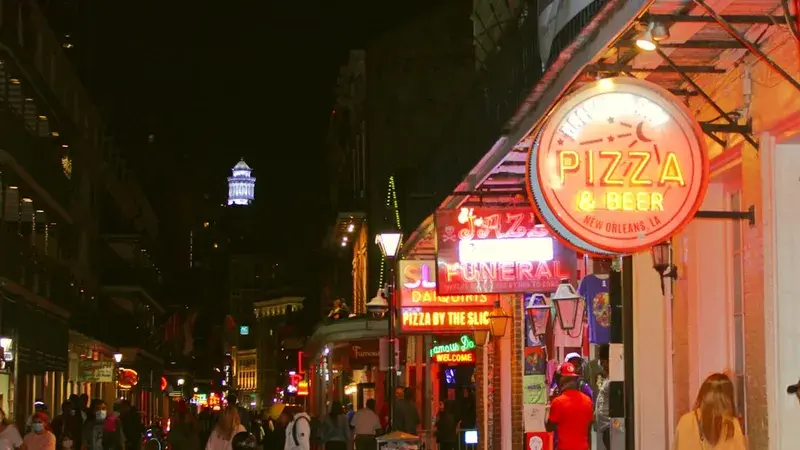
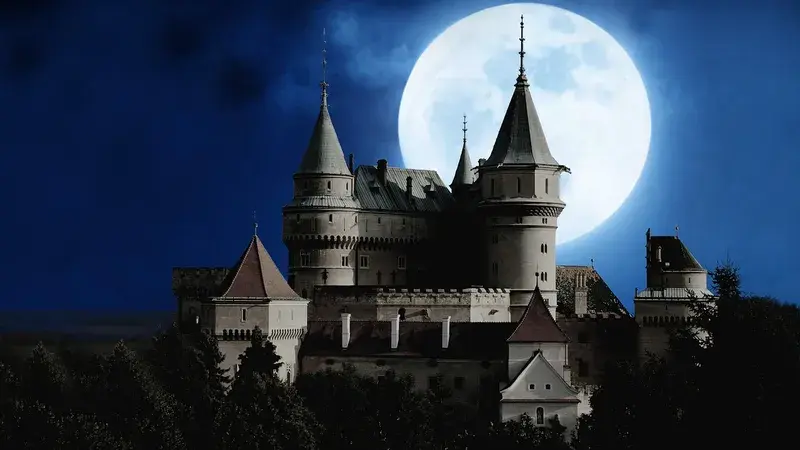
The tourism industry has professionalized the vampire-hunting experience. Transylvania offers vampire-hunting packages that include castle visits, forest expeditions, and ritual demonstrations. New Orleans tours incorporate vampire-hunting narratives alongside their ghost and voodoo programming. Eastern State Penitentiary and other haunted historic sites offer overnight investigation experiences that borrow the vampire hunter's toolkit.
The vampire hunter endures as a cultural figure because the vampire endures. As long as communities maintain stories of the returning dead — whether as literal belief, cultural heritage, or commercial entertainment — someone will step forward to confront them. The methods change. The dhampir's mirror becomes the ghost hunter's EMF reader. The stake becomes a television camera. But the role itself — the person who stands between the living and the dead and claims authority over the boundary — remains remarkably consistent across centuries and cultures.