Robert Eggers and the Art of Historical Obsession
Robert Eggers spent approximately a decade trying to remake Nosferatu, beginning his initial attempts in 2014-2015. The director, who built his reputation on the period-accurate horror of The Witch (released January 31, 2015) and The Lighthouse (released October 18, 2019), first formally attempted the Nosferatu project in 2015 with actress Anya Taylor-Joy attached to star. Financing fell apart. He tried again after The Lighthouse, but scheduling conflicts with his Viking epic The Northman pushed it further. The film that finally reached theaters on December 25, 2024 (Christmas Day release) represented nearly a decade of research, pre-production, and false starts spanning from 2014 through 2024 — a gestation period that would have killed most Hollywood projects but that Eggers used to refine his vision to an almost pathological degree of detail.
This article is part of our Vampire Culture collection.
Eggers' approach to historical filmmaking treats the past not as a backdrop but as a psychological environment. In The Witch, he used only building techniques and materials available in 1630s New England. In The Lighthouse, he shot on 35mm film with orthochromatic-style filtration to replicate the tonal range of 19th-century photography. For Nosferatu, he applied this same obsessiveness to the visual language of German Expressionism and the folk traditions of Carpathian vampire belief.
The result was a film that looked like nothing else in contemporary horror — not a period recreation but a sustained attempt to inhabit the psychological space of early 19th-century Central Europe, where rationalism and superstition coexisted without clear boundaries. Eggers was not remaking Murnau's 1922 film so much as returning to the same source material — Eastern European vampire folklore — and approaching it with tools Murnau did not have.
Filming Across Central Europe
Principal photography took place primarily in the Czech Republic and Germany, with additional work in other Central European locations. Prague's Barrandov Studios, established in 1933 and among Central Europe's oldest working film facilities, have hosted major productions from Mission: Impossible to The Chronicles of Narnia and provided the soundstage infrastructure for this production. But Eggers, characteristically, preferred real locations whenever possible, using historic buildings and landscapes that carried genuine age rather than constructed approximation.
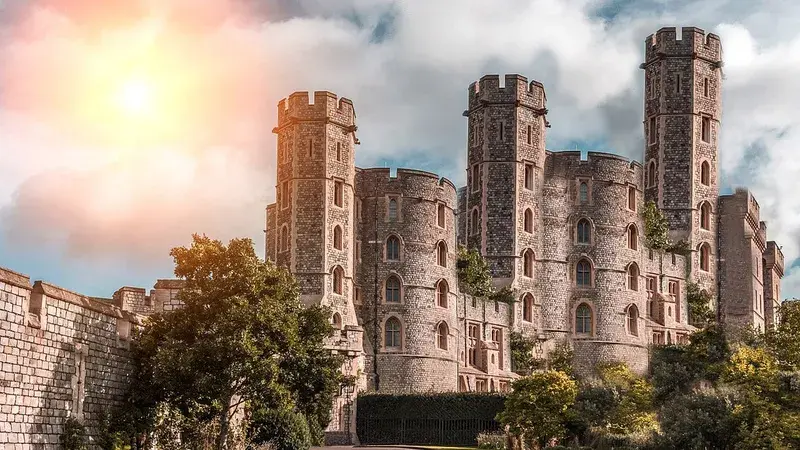
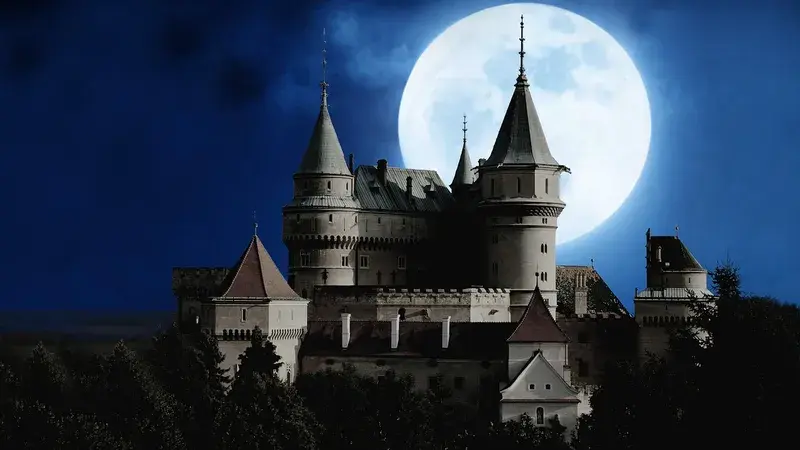
Czech castles and manor houses stood in for the fictional settings. The country's abundance of well-preserved medieval and Baroque architecture — maintained through decades of Communist-era neglect that ironically prevented the modernization that destroyed similar buildings elsewhere in Europe — offered Eggers a library of authentic period locations. Production designer Craig Lathrop, who had worked with Eggers on The Northman, dressed these locations with period-appropriate furnishings sourced from antique dealers across Central Europe.
The Carpathian sequences drew from the same visual tradition that inspired Murnau a century earlier. Mountain passes, dense spruce forests, isolated villages with wooden churches — the landscape of Romanian and Slovak folklore translated to Czech and German locations that shared similar geography. Eggers shot in conditions that prioritized atmospheric truth over convenience, using natural light supplemented by period-appropriate sources — candles, oil lamps, and firelight that cast the irregular, flickering illumination that electric light never quite replicates.
The 1922 Original and Its Shadow
F.W. Murnau's Nosferatu is one of the most influential horror films ever made, and any remake operates under the weight of that legacy. Murnau shot his film on location in Wismar, Lubeck, and Orava Castle in Slovakia between 1921-1922, using real architecture and Expressionist camera techniques to create imagery that has defined the vampire in cinema for over a century. Max Schreck's Count Orlok — bald, rat-toothed, moving with inhuman stiffness — remains the most physically disturbing vampire ever filmed.
Eggers was not interested in replicating Schreck's performance or Murnau's visual style. His Nosferatu returned to the folk roots that predated both the 1922 film and Stoker's 1897 novel. The vampire in Eggers' conception was not Murnau's Expressionist shadow-puppet or Stoker's aristocratic predator but something closer to the Slavic revenant — a corpse animated by malevolent will, carrying plague and madness in its wake. The distinction mattered: Murnau's Orlok was stylized horror; Eggers' aimed for something that felt like recovered memory.
The connection to plague — central to Murnau's film and absent from Stoker's novel — became even more prominent in Eggers' version. The film arrived in December 2024, approximately four years after the COVID-19 pandemic declaration in March 2020, and the imagery of a contagion carried across borders by an unstoppable force resonated with audiences who had lived through a global pandemic. Eggers did not design the film as a COVID allegory, but the timing gave the plague narrative an immediacy that it lacked in 1922.
Practical Effects in a Digital Age
Eggers' commitment to practical effects over computer-generated imagery extended to every aspect of the production. Makeup effects teams spent hours transforming performers into creatures that could be filmed in camera rather than added in post-production. Prosthetic applications, mechanical rigs, and physical puppetry created the film's supernatural imagery — an approach that was slower, more expensive, and more limited than digital effects but that produced results with a tactile weight that CGI consistently fails to match.
The decision was philosophical as much as aesthetic. Eggers argued in interviews that actors respond differently to physical effects than to tennis balls on sticks. When a performer sees a practical creature on set, the fear registers differently than when they are asked to imagine one. This principle — that the reality of the filmmaking process produces more authentic performances — aligned with Eggers' broader commitment to historical immersion. If the buildings were real, the costumes were real, and the light was real, the monsters should be real too, at least in the sense that they existed physically in the space where the actors worked.
The Locations You Can Visit
Several filming locations are accessible to visitors. Czech castles used in the production operate as tourist attractions, offering tours that predate and will outlast any connection to the film. Barrandov Studios in Prague occasionally offers behind-the-scenes tours and has a long history as a filming location that draws cinema tourists independently of any single production.
The original 1922 locations remain the stronger tourist draw. Orava Castle in Oravsky Podzamok, Slovakia — Murnau's Count Orlok's fortress — receives over 200,000 visitors annually. The castle perches on a 112-meter (approximately 367 feet) rock formation above the Orava River, accessible by a steep path that discourages casual visitors and rewards those who make the climb with one of Central Europe's most dramatic fortress settings. The connection to Nosferatu is acknowledged but not dominant — the castle's 13th-century history provides sufficient reason for the visit.
Wismar, the German Baltic port city that served as Murnau's Wisborg, preserves medieval architecture that appears in the 1922 film with minimal alteration. The brick Gothic churches, the harbor, the narrow streets — a visitor can stand where Murnau placed his camera and see substantially the same view. The city does not aggressively market its Nosferatu connection, but film tourists find it regardless, carrying screenshots from the 1922 film and matching them to buildings that have stood for 700 years.
The new film will inevitably generate its own tourism trail, though the specific locations have been less publicly documented than those of the original. Transylvania's Dracula tourism industry demonstrates the longevity of vampire-location tourism — a market that has sustained itself for decades on associations far thinner than those Nosferatu offers. A film shot in real castles and real landscapes, by a director known for historical authenticity, creates a tourism asset that outlasts the theatrical run.