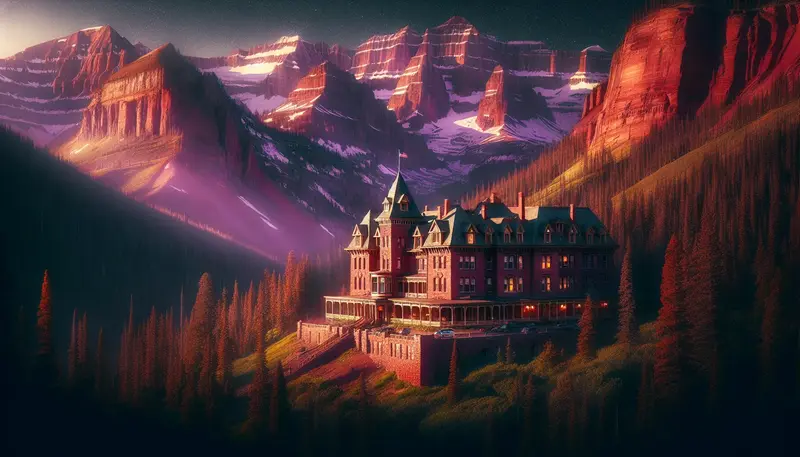
Stephen King spent one night at the Stanley Hotel in 1974. Room 217, a dream about his son, and the empty hotel became the foundation for his masterpiece.
This article is part of our comprehensive Denver ghost tours guide. Whether you're planning a visit or researching from afar, these stories reveal a side of Denver most visitors never see.
How the Stanley Became the Model for The Shining
Could a single night at an isolated mountain hotel seed one of America’s most enduring ghost stories? The link between the Stanley Hotel and Stephen King’s 1977 novel The Shining is one of the clearest examples of fiction borrowing from place. King stayed one night at the Stanley in June 1974 while touring Colorado; the experience — especially the emptiness of the hotel late at night and the eerie atmosphere of Room 217 — is openly cited by King as the spark that led to his novel.
## Key link between hotel and novel ### The King's stay and the novel's genesis Stephen King’s short stay, and the subsequent dream he described in interviews, created a direct creative line to The Shining. King has explained in multiple interviews that being the only guest in a large, silent hotel on a stormy night and waking early with a vivid nightmare about his young son inspired the story’s central premise: a family alone in an isolated hotel where the building itself seems to harbor memories and malevolence.
Beyond the author’s testimony, cultural history ties the Stanley to The Shining in other ways. The novel names Room 217 as an important set piece; the Stanley’s Room 217 (at 333 Wonderview Ave, Estes Park, CO 80517) became a focal point for fans and paranormal enthusiasts. While Stanley’s architecture and remote setting supplied atmospheric fuel, the building’s folklore and reported phenomena fed the public imagination — which is why the hotel appears on lists alongside ghost and haunted references in regional paranormal guides.
The Stanley’s role as the novel’s physical inspiration is factual (King stayed there and credited the visit); how literal or supernatural the correspondence is remains a matter of interpretation. The factual basis — a documented stay, an authored novel, and an identifiable room and address — gives researchers and curious visitors a concrete trail to follow when examining both the documented history and the folklore surrounding the hotel.
History and Architecture of the Stanley Hotel
## Founding and construction ### F.O. Stanley and the 1909 opening Freelan Oscar Stanley, co-inventor of the Stanley Steamer automobile, financed and built the Stanley Hotel as a high-end mountain retreat in the early 20th century. Construction finished in 1909 and the hotel officially opened on July 4, 1909. The Stanley was intended as both a summer resort and a healthful escape for affluent visitors from the East.
The hotel stands at 333 Wonderview Ave in Estes Park, Colorado, with commanding views of the Rocky Mountains and a prominent position overlooking the valley. Architecturally, the building blends Colonial Revival elements with the grand resort sensibilities of its era: broad porches, spacious public rooms, a large music/concert hall, and long corridors that contribute to the hotel’s distinctive interior atmospherics. That combination of scale, layout, and finish is often cited as part of what makes the place feel cinematic and, to many, quietly uncanny. For related history, see our the brown palace hotel: denver's grandest.
## Timeline (select highlights)
| Year | Event |
|---|---|
| 1907–1909 | Construction of the Stanley Hotel |
| July 4, 1909 | Official opening |
| Mid–20th century | Period of changing ownership and uses |
| 1974 | Stephen King’s stay in Room 217 |
| Late 20th–early 21st c. | Restoration and growth as a cultural/ghost-tour destination |
Because of its age and continuous public use, the Stanley has gone through restoration efforts and modern upgrades while retaining many historic features. Those long corridors, large public rooms, and original-style furnishings are as responsible for the hotel’s charm as they are for the unsettling impressions reported by guests and staff. The combination of verified historical facts and the preserved physical setting is what makes the Stanley both a credible historical site and a magnet for those interested in the haunted narrative.
Documented Paranormal Reports at 333 Wonderview Ave
## Commonly reported phenomena ### What witnesses and investigators describe Over the decades, guests, staff, and paranormal investigators have cataloged recurrent themes: cold spots in certain corridors, disembodied piano music in the Concert Hall or parlor, the scent of cigar smoke where no smoker is present, and transient apparitions. Room 217 sits at the heart of many stories because of its direct connection to Stephen King’s experience, but other locations — the Concert Hall, the Grand Staircase, and the west porches — also generate reports.
Two of the more specific, often-circulated accounts are directly tied to named or well-documented witnesses. First, Stephen King (and his wife Tabitha King, who accompanied him) have stated publicly that their single night at the hotel in 1974 left them with vivid impressions that later fed the creation of The Shining. King described an intense dream about his son and remembered the strange stillness and sounds of the empty hotel.
Second, numerous staff and long-time employees (documented in hotel materials, oral histories, and local press) report physical interactions with purportedly intelligent phenomena: lights switching on and off, radios or pianos coming to life when no one is in the room, and housekeeping carts being found in places they were not left. While many of those accounts are aggregated and summarized rather than filed as formal investigations, the consistency of reported locations and types of experiences contributes to the Stanley’s reputation as an ghost hotspot. For related history, see our cheesman park: denver's cemetery scandal and.
Investigative teams have performed audio, thermal, and EMF studies here, as they have at many historic hotels. Those technical efforts have occasionally recorded anomalous readings that defy easy explanation — though skeptics point to building noises, plumbing, and the hotel’s age as mundane explanations. The responsible approach treats these items as documented experiences without claiming definitive supernatural causation.
Notable Witnesses and Their Accounts
## Witness testimony and credibility ### From famous authors to long-time employees Stephen King and his wife Tabitha are the most famous named witnesses connected to the Stanley. King has recounted that during the 1974 stay he and Tabitha were the only registered guests; the emptiness and the layout of the hotel fed a nightmare that directly inspired his novel. King’s testimony is central: it establishes a credible, documented chain linking the hotel to a major work of American fiction.
Beyond King, the record relies heavily on staff, guides, and patrons. Hotel-owned oral histories and local newspaper reporting include statements from long-time employees who describe repeated phenomena: night auditors hearing piano music in the unused Concert Hall, housekeepers finding personal items moved to different rooms, and guests complaining of cold spots and apparitions. These reports rarely appear in academic journals but do show up consistently in local archives and interviews with the hotel’s historians and press representatives.
One frequently cited type of experience involves apparitions associated with the Stanley’s founding family. Visitors and guides report sightings of a male figure dressed in early 20th-century clothing on the hotel’s porches; the figure is often identified in folklore as Freelan Oscar Stanley himself. Likewise, Housekeeping staff have sometimes reported seeing the vague outline of a woman in period clothing — accounts that hotel tours and publications attribute, respectfully, to lingering historical impressions.
While the level of detail and verifiability varies from one report to another, the combination of a famous literary testimony and a consistent corpus of local eyewitness accounts gives the Stanley a unique place in American haunted-hotel lore. That mix of named, verifiable testimony and collective staff reports is why the site continues to be studied by both paranormal enthusiasts and cultural historians. For related history, see our denver's gold rush ghosts: boomtown violence.
Film Connections, Pop Culture, and Preservation
## Media appearances and The Shining adaptations ### Kubrick, the miniseries, and the hotel’s public image The Stanley’s cultural afterlife shifted dramatically after The Shining. The 1980 film directed by Stanley Kubrick famously used Timberline Lodge in Oregon for exterior shots but did not use the Stanley for interiors. Stephen King disliked that adaptation and later produced a 1997 television miniseries adaptation that used the Stanley Hotel for a number of interior sequences. That production reinforced the hotel’s association with the novel and extended its cultural profile.
The Stanley’s architecture and name appear across pop culture: references in books, TV shows, and documentaries often cite the hotel as the “real” Shining. That status has had two practical effects. First, it increased public interest and visitation, sometimes from fans hoping to experience the hotel’s ambiance for themselves. Second, it prompted preservation efforts and interpretive programming, since the hotel’s historic fabric — its floors, staircases, and public rooms — became part of a nationally recognized cultural story.
Preservation efforts have balanced rehabilitation with authenticity: restoring carpets and finishes to evoke the early 20th-century resort while meeting modern safety and guest-comfort standards. Historic preservation specialists and local heritage groups have documented the hotel’s significance as an architectural artifact and as a cultural touchstone tied to American literature and paranormal folklore.
Because the Stanley sits so publicly at the intersection of historic preservation, literature, and ghost lore, the hotel draws a wide spectrum of interest — from architectural historians and Stephen King scholars to people curious about haunted reputations. That diversity of interest helps preserve the site’s physical integrity while ensuring that its stories, well-documented and speculative alike, remain in circulation.
Visiting, Tours, and Responsible Inquiry
## Practical information and ethical considerations ### Touring, room stays, and research guidelines The Stanley Hotel remains a functioning hotel at 333 Wonderview Ave, Estes Park, CO 80517, and it offers guided tours, heritage programming, and public events that address its architecture, history, and folklore. Many visitors specifically request Room 217 because of its literary significance; when occupancy allows, the room is offered to guests and also appears in promotional material. For those interested in documented history, the hotel’s archives and interpretive materials provide historically-grounded context for F.O. Stanley, the building’s construction, and later alterations.
Responsible inquiry means treating reports with respectful skepticism: recording what witnesses say, checking hotel records and dates, and distinguishing firsthand testimony from secondhand rumor. Investigators and journalists should request permission before conducting any formal recording or investigative activity, respect the privacy and work schedules of staff, and avoid sensationalizing traumatic or private experiences.
For cultural visitors looking to understand the ghost and haunted narratives, combining a tour with primary-source reading — contemporary newspaper accounts, hotel records, and Stephen King’s interviews — yields the best-informed perspective. Preservation-minded visitors also support the hotel’s long-term care when staying overnight, participating in paid tours, or purchasing publications produced by the hotel’s archives.
Finally, the Stanley’s story demonstrates how place, memory, and literature can interact: a documented visit by a major author, a single room with a name and a number, and a succession of consistent witness reports together create a site that is both historically verifiable and rich in folklore. That dual character is what sustains serious interest from historians, paranormal researchers, and the general public alike.