Room 217 and the Birth of a Masterpiece
In the fall of 1974, Stephen King and his wife Tabitha checked into the Stanley Hotel in Estes Park, Colorado. They were the only guests. The grand old hotel was preparing to close for the season, and the Kings had the vast corridors, cavernous ballroom, and echoing dining room essentially to themselves. King was placed in Room 217. That night, he had a nightmare about his young son being chased through the hotel's hallways by a fire hose that had come alive. He woke up drenched in sweat, lit a cigarette, and by the time he finished smoking it, he had the entire plot of "The Shining" worked out in his head.
This article is part of our Pop Culture Dark History collection.
The novel he wrote — and the film Stanley Kubrick adapted from it — became the most influential haunted hotel story ever told. But the Stanley Hotel's reputation for paranormal activity didn't begin or end with Stephen King. The building had been generating ghost stories for decades before King arrived, and in the years since, it has become one of the most investigated paranormal locations in the United States.
F.O. Stanley and His Grand Hotel
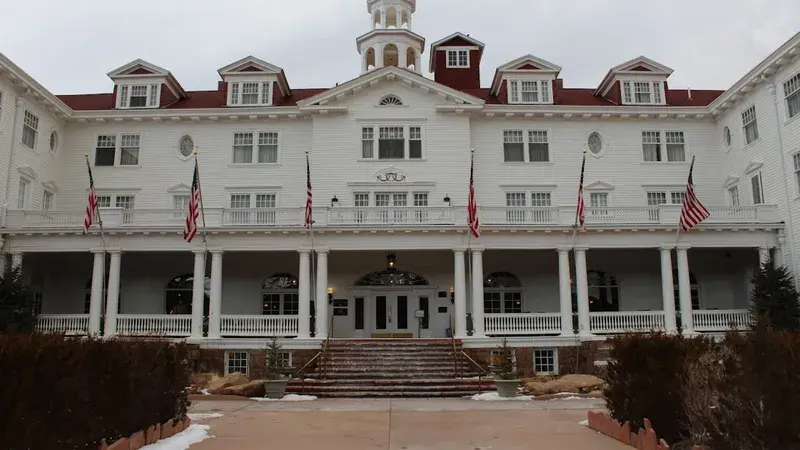
Freelan Oscar Stanley made his fortune co-inventing the Stanley Steamer automobile with his twin brother Francis. Diagnosed with tuberculosis in 1903, he moved to the mountain air of Estes Park, Colorado and — as wealthy men of the era tended to do — decided to build a hotel. The Stanley Hotel opened in 1909, a Georgian Revival palace perched at 7,500 feet with panoramic views of Rocky Mountain National Park. It featured electricity throughout, en suite bathrooms, and a level of luxury that made it the social center of the Colorado resort season.
Stanley ran the hotel until his death in 1940, and the property changed hands multiple times over the following decades. Each successive owner struggled with the economic reality of maintaining a grand seasonal hotel in an increasingly competitive market. By the time King visited in 1974, the Stanley was showing its age — beautiful but faded, grand but slightly melancholy, exactly the kind of place that a horror writer's imagination could transform into something terrifying.
The Real Hauntings
Staff and guests at the Stanley Hotel have reported paranormal activity since long before King's visit. The most persistent reports center on F.O. Stanley himself, who is allegedly seen in the billiard room and the lobby — transparent, wearing turn-of-the-century clothing, watching the hotel he built with what witnesses describe as a proprietary air. His wife Flora, an accomplished pianist, is associated with the ballroom, where guests and staff report hearing piano music at night. When investigated, the piano — a Steinway that Flora owned — is found to be playing by itself, its keys moving without visible cause.
Room 217 — the room where King stayed — is the hotel's most requested room and its most active paranormal location. The room's history includes a 1911 gas explosion that injured a chambermaid named Elizabeth Wilson. Wilson survived, and when she died years later, the hotel staff began attributing unexplained activity in Room 217 to her spirit. Guests report having their luggage unpacked for them, lights and faucets turning on and off, and the sensation of someone sitting on the bed while they're trying to sleep.
Room 401, at the top of the hotel, has generated reports of children's voices and laughter when no children are staying on that floor. Guests in the room have described objects moving on their own, closet doors opening in the night, and the feeling of small hands pressing against their backs. The fourth floor in general — originally servant quarters — produces more paranormal reports than any other section of the hotel. For related history, see our the amityville horror: separating truth from.
King's Novel vs. Kubrick's Film
King's 1977 novel "The Shining" uses the Stanley Hotel as its foundation but transforms it into the fictional Overlook Hotel — a more remote, more sinister version that amplifies every creepy quality the real building possesses. The novel is ultimately about alcoholism, domestic violence, and the destruction of a family, with the hotel serving as a malevolent amplifier of Jack Torrance's worst impulses. The ghosts in King's version are real and actively predatory, luring Jack toward violence.
Kubrick's 1980 film adaptation famously angered King, who felt the director had stripped the story of its emotional core and replaced it with visual spectacle. Kubrick shot the film entirely on soundstages in England, creating a hotel interior that doesn't resemble the Stanley at all — the Overlook of the film is a sprawling, impossible space designed to disorient viewers with deliberate continuity errors and impossible geometry. The exterior shots used the Timberline Lodge in Oregon, adding another layer of geographic confusion.
King eventually produced his own television miniseries adaptation in 1997, filmed at the actual Stanley Hotel, which he felt was truer to the novel's spirit. The miniseries was less commercially successful than Kubrick's film but pleased King and fans who valued fidelity to the source material.
The Stanley's Paranormal Tourism Empire
The Stanley Hotel has embraced its haunted reputation with a business savvy that F.O. Stanley himself would probably appreciate. The hotel offers nightly ghost tours, spirit tours that include access to normally restricted areas like the tunnel system beneath the building, and psychic consultations. A dedicated "Spirited Night Tour" takes guests through the hotel's most active areas with electromagnetic field detectors and other equipment.
The hotel has appeared on "Ghost Hunters," "Ghost Adventures," and numerous other paranormal television programs, each appearance generating publicity that fills rooms for months afterward. The gift shop stocks a comprehensive selection of "Shining"-themed merchandise alongside legitimate paranormal investigation equipment. Room 217 books out months in advance, and the hotel charges a premium for rooms with documented paranormal histories. For related history, see our the best horror movies based on.
In 2016, the Stanley announced plans for a Stanley Film Center — a multiplex and horror-themed entertainment venue on the hotel grounds designed to position Estes Park as a permanent horror tourism destination. The project reflects an understanding that the Stanley's value extends far beyond hospitality — it's a brand, a destination, and a pilgrimage site for horror fans worldwide.
Visiting the Stanley
The Stanley Hotel operates year-round, unlike its seasonal origins. The hotel's location at the entrance to Rocky Mountain National Park means that daytime visitors can combine a ghost tour with some of the most spectacular mountain scenery in the American West. Estes Park itself is a small resort town with shops, restaurants, and outdoor recreation that provide context for visitors who want more than a single night's scare.
Booking Room 217 requires advance planning — several months during peak season, particularly around Halloween when the hotel hosts the Stanley Hotel Horror Film Festival. The ghost tours run nightly regardless of occupancy and don't require a room reservation. The hotel's public areas — the lobby, the ballroom, the veranda — are accessible to non-guests and are worth visiting even without the paranormal angle. The building's architecture and its mountain setting make it one of the most photogenic hotels in the country.
Whether the Stanley Hotel is genuinely haunted or whether its atmosphere — the grand spaces, the mountain isolation, the weight of its own legend — simply creates conditions where the imagination runs free is a question the hotel wisely leaves unanswered. The ambiguity is the point. King understood that when he checked in fifty years ago, and every guest who requests Room 217 understands it now. The best haunted places don't prove anything. They just make you wonder.