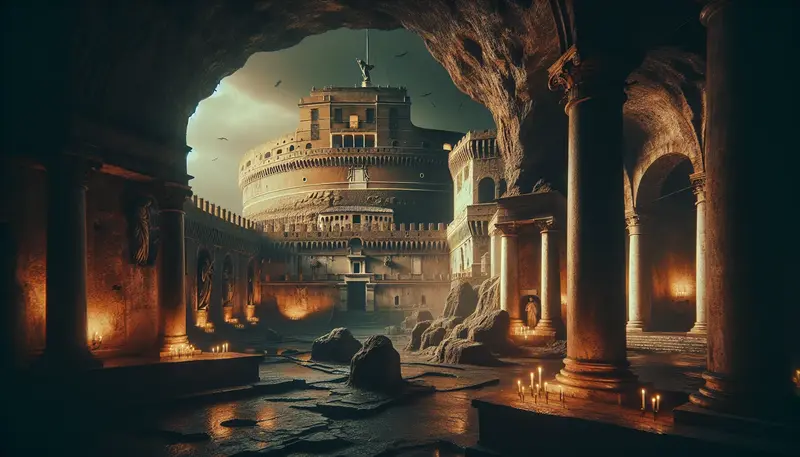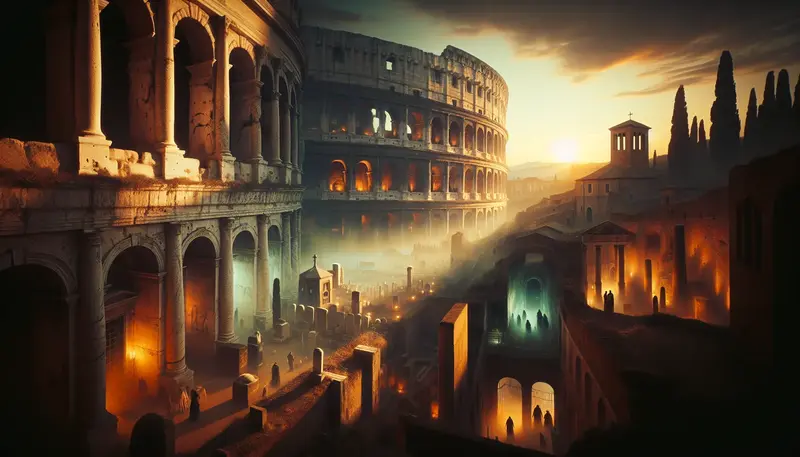
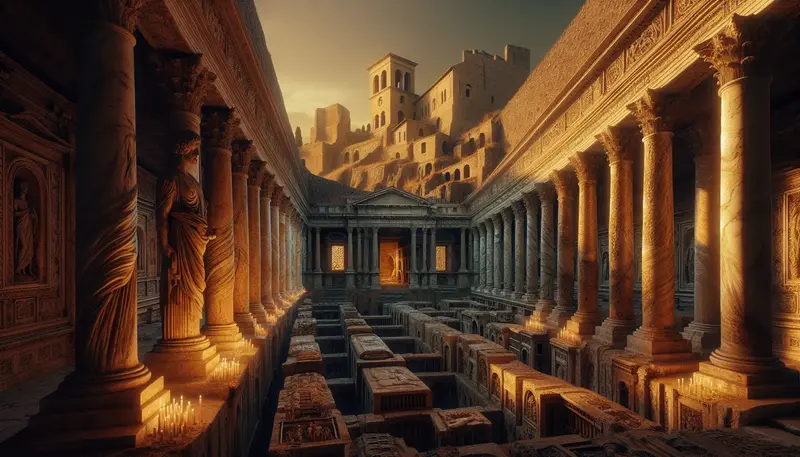
Nero's ghost was reportedly so troublesome that Pope Paschal II had a church built on his burial site to suppress it. It didn't entirely work.
This article is part of our comprehensive Rome ghost tours guide. Whether you're planning a visit or researching from afar, these stories reveal a side of Rome most visitors never see.
The Life, Death, and Afterlife of Nero
?Could the life of Nero Claudius Caesar Augustus Germanicus still shape Rome’s streets centuries after his death?
Born on December 15, 37 CE, Nero became emperor in October 54 CE at age 16 and reigned until his suicide on June 9, 68 CE. The documented facts — his full imperial name, his patronage of the arts, the construction of the Domus Aurea after the Great Fire, and his eventual fall during the Year of the Four Emperors — are well attested by ancient historians like Tacitus, Suetonius, and Cassius Dio. Those same sources also record a potent mix of rumor, propaganda, and lasting narrative that turned an emperor into an archetype of excess and cruelty.
## Nero in contemporary sources
The guide in Rome will point out that Tacitus’s Annals (early 2nd century CE) and Suetonius’s Lives of the Caesars (c. 121 CE) form the backbone of Nero’s posthumous reputation. These texts describe Nero’s alleged fiddling during the Great Fire of July 18–23, 64 CE (a detail modern scholars contest), his persecution of Christians after the fire, and his extravagant building projects, especially the Domus Aurea (Golden House) begun in 64 CE. The archaeological record — mosaics, fresco fragments, and the plan of the Domus Aurea — matches many documented claims, even when motivations remain debated.
### What “ghost” means in Roman memory
For historians and folklorists, “Nero’s ghost” functions less as a literal haunting and more as a cultural afterimage. The emperor’s persona as tyrant and patron of the arts gives rise to stories that attach to specific locations: the Domus Aurea (Via della Domus Aurea, 1, 00184 Rome), the Palatine Hill (entrance Via di San Gregorio, 30, 00186 Rome), and even the area around the Theatre of Marcellus (Piazza di Teatro di Marcello, 00186). These sites are often cited in reports of strange sounds, cold spots, and apparitions that locals label as the Rome ghost or Rome haunted phenomena, blending verifiable history with living folklore.
The Great Fire of 64 CE and the Ghostly Aftermath
?Does the memory of the Great Fire keep flames alive in Rome’s narratives about Nero?
The Great Fire that began on July 18, 64 CE is a factual anchor for many tales about Nero. Contemporary accounts disagree about origin and culpability — Tacitus records rumors that Nero sang about the fall of Troy while Rome burned, but he also notes that Nero organized relief, opened public buildings, and arranged supplies. After the fire, Nero appropriated vast tracts of land for the Domus Aurea, an act that fed public resentment and sustained accusations of arson.
## Physical traces that fuel stories
Archaeological strata show fire damage in numerous neighborhoods, and the construction of Nero’s palace over burned districts created visible scars in Rome’s urban fabric. Modern visitors can still see signs of reconstruction in areas around the Esquiline and Palatine Hills. These visible scars make it easier for local storytelling to attach supernatural narratives to real ruins: charred walls and buried rooms become “evidence” of an emperor’s moral culpability in the popular imagination. For related history, see our castel sant'angelo: rome's fortress of ghosts.
### Folklore born from disaster
In the decades after 64 CE, ballads and anecdotes circulated that linked emperors to cosmic events, making fires, plagues, and famines moments when rulers’ moral character was publicly judged. Over time the story of Nero at the time of the fire evolved into a ghost legend, one that anchors itself in specific locations and sensory experiences — the smell of smoke in a sealed chamber, a shadow seen beneath an arch in the Domus Aurea, or the sudden chill on the Palatine in the pre-dawn. Those details recur in modern reports of Rome haunted locales and in guided narratives that treat the emperor’s reputation with informed skepticism.
Domus Aurea and the Palatine: Where Nero Lingers
?Which physical sites most often attract claims of Nero’s lingering presence?
Two locations dominate the conversation about Nero as a spectral presence: the Domus Aurea (Via della Domus Aurea, 1, 00184 Rome) and the Palatine Hill (entrance Via di San Gregorio, 30, 00186 Rome). The Domus Aurea, built between 64 and 68 CE, was rediscovered in the Renaissance and became a locus for artistic fascination; its grottoes (grotte) and frescoes influenced Raphael, Michelangelo, and other artists who accessed the site in the 15th and 16th centuries. The Palatine, as imperial residence and ceremonial center, contains layers of habitation and ritual that encourage stories of lingering imperial presences.
## The architecture that invites imagination
Vaulted halls, subterranean passages, and frescoed niches create sensory settings where natural phenomena — echoes, drafts, and optical effects — can be misinterpreted as supernatural. The Domus Aurea’s large vaulted rooms and the interplay of light and shadow in its preserved spaces make it a focal point for reports of apparitions. Similarly, the Palatine’s terraces and ruins generate microclimates and acoustics that can startle night-watchers or late-hour visitors.
### Addresses and access
Practical specifics matter for both historians and those reporting encounters: the Domus Aurea’s modern museum and conservation project sits on Via della Domus Aurea, while the main Palatine access points are near Via di San Gregorio and the Roman Forum. Guides who interpret these spaces often emphasize documented building phases (64–68 CE for Domus Aurea construction) and later alterations, treating anecdotal reports as part of the site’s living history. These sites’ materiality — their walls, stairways, and sealed rooms — gives tangible shape to the language of Rome ghost stories and Rome haunted lore. For related history, see our most haunted places in rome.
Reported Sightings: Witnesses and Testimonies
?What are the most credible modern accounts that claim to have encountered Nero’s presence?
The guide will note that most contemporary reports are anecdotal, often coming from security staff, archaeologists, or late-night visitors rather than academic publications. Two recurring accounts, however, have become staples of local lore and are worth recounting with respectful skepticism.
## Night guard at the Domus Aurea — Antonio De Angelis (2003)
In the summer of 2003, Antonio De Angelis — identified in local press as a night security officer assigned to the Domus Aurea site (Via della Domus Aurea, 1) — reported hearing a series of measured, rhythmic footfalls in an otherwise sealed wing of the complex around 02:00 on August 14. De Angelis described the sound as “like sandals on mosaic,” followed by a low hum that seemed to come from behind a boarded doorway. After calling colleagues, he and a conservator opened the space and found no intruder and no recent disturbance. De Angelis’s testimony was recorded by a local newspaper and repeated in tour narratives; skeptics point to acoustic resonance and settling stones as likely causes.
## Tour guide Lucia Moretti at the Palatine — October 2011
Lucia Moretti, a licensed Rome guide whose tours regularly include the Palatine terraces, described an incident on October 2, 2011, when a small group in the late afternoon claimed to see a “figure in a white tunic” descending the steps of the House of Augustus toward the Circus Maximus area. Moretti reported that several attendees — not known to each other — offered consistent descriptions of a pale, indistinct outline and a brief scent of incense. Official site logs show no unauthorized access at the time. Forensic explanations point to pareidolia, group suggestion, or late sunlight creating a silhouette; nonetheless, Moretti’s account has become a frequently cited Rome haunted anecdote.
Folklore, Literature, and the Construction of the Haunted Emperor
?Why has Nero become such a persistent figure in ghost stories and literary imagination?
Nero’s endurance in folklore stems from the convergence of dramatic historical events, vivid contemporary descriptions, and a long tradition of political scapegoating. Renaissance writers and later Enlightenment historians recycled earlier tales while adding moral and artistic interpretations. In addition, artists who rediscovered sites like the Domus Aurea in the 15th and 16th centuries contributed visual motifs that sustained the emperor’s image in the popular imagination. For related history, see our the roman catacombs: miles of the.
## Literary afterlives
From medieval chronicles to modern novels, Nero appears as a character whose excesses are emblematic of tyrannical decline. Literary treatments — from Tacitus’s rhetorical judgments to Robert Graves’s imaginative portraits — reshape the emperor into a figure whose death did not close his narrative. The growth of pilgrimage narratives and antiquarian studies in the 18th and 19th centuries turned physical ruins into sites of emotional projection, where ghosts could serve political and moral lessons.
### Folklore versus scholarship
Scholars emphasize distinction: folklore preserves social memory and emotional truth, while archaeology and philology recover verifiable data. The guide’s approach on CursedTours.com is to present both layers: the documented events (birth, reign, fire, construction of the Domus Aurea, death on June 9, 68 CE) and the mythic patterns that produce reports of the Rome ghost. In public talks and tours, careful contextualization — dating, citing primary sources, and explaining acoustic or optical phenomena — helps listeners appreciate why certain stories persist without requiring literal acceptance of supernatural claims.
How Nero’s Presence Shapes Modern Rome
?In what ways does the memory of Nero affect conservation, tourism, and the city’s haunted identity?
Nero’s legacy impacts Rome on multiple levels: conservation priorities, interpretive programming, and the marketing of haunted-historical narratives. Sites associated with Nero draw attention and funding for archaeology and preservation while also serving as settings for ghost tours, lectures, and popular histories. The interplay of serious conservation at addresses like Via della Domus Aurea, 1 and the Palatine entrance at Via di San Gregorio, 30 with commercially oriented Rome haunted storytelling raises ethical questions about commodifying tragedy and rumor.
## Responsible interpretation
Conservationists and municipal authorities emphasize evidence-based interpretation. Conservation projects on the Domus Aurea and surrounding imperial palaces balance structural stabilization, visitor safety, and research access. At the same time, local guides and cultural producers — including those affiliated with CursedTours.com — often use the figure of Nero to teach about Roman urbanism, imperial power, and the formation of legends, treating ghost stories as windows into collective memory rather than as primary historical sources.
### The lasting cultural imprint
Whether labeled Rome ghost or Rome haunted, Nero’s specter persists because history, material ruins, and human imagination interlock. The palace walls, the documented dates (64–68 CE construction, fire in July 64 CE, death June 9, 68 CE), and repeated eyewitness anecdotes like those of Antonio De Angelis and Lucia Moretti keep the narrative alive. The guide’s closing emphasis is on respectful skepticism: report what witnesses say, record the when and where (including exact locations and addresses), and interpret with care, acknowledging both the power of legend and the rigor of historical method.