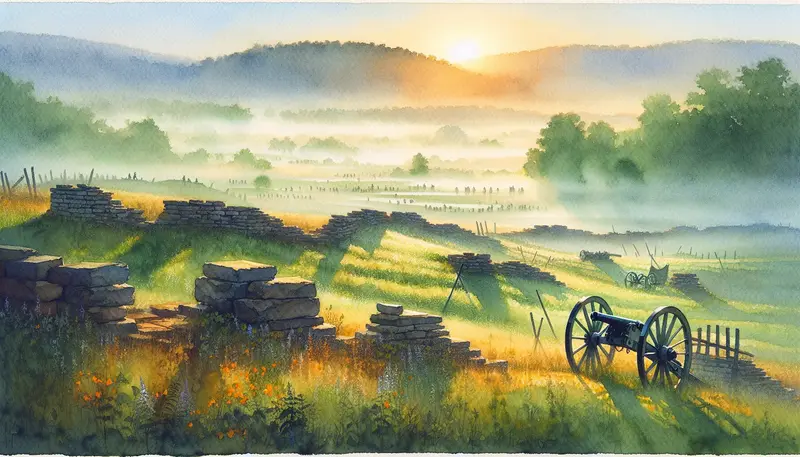
The Battle of Nashville in 1864 was one of the most decisive Union victories. The dead from both sides are said to linger on the battlefield.
This article is part of our comprehensive Nashville ghost tours guide. Whether you're planning a visit or researching from afar, these stories reveal a side of Nashville most visitors never see.
The Historical Stakes: How the Battle of Nashville Changed the War
Can a single engagement alter the fate of a nation? The Battle of Nashville — fought on December 15–16, 1864 — is often presented as one of those pivotal encounters. Under Union Major General George Henry Thomas (1816–1870), a Virginia-born officer nicknamed \"The Rock of Chickamauga,\" and opposing Confederate General John Bell Hood (1831–1879), a South Carolinian known for aggressive tactics, the battle ended in a decisive Union victory that shattered the Confederate Army of Tennessee and secured Union control of Tennessee. Historians place the battle among the final major blows to Confederate military capacity in the Western Theater.
Context and commanders
The two-day fight came after Hood’s aggressive but costly Tennessee campaign. Thomas, nicknamed “The Rock of Chickamauga,” had consolidated a strong defensive position around Nashville and its fortifications. Hood sought to threaten Union communications and possibly draw attention away from William T. Sherman’s marching operations in Georgia. Instead, on December 15–16, Thomas ordered a well-planned offensive that routed Hood’s veterans.
Casualties and consequences
Contemporary reports and modern scholarship estimate Union casualties at roughly 3,000 (387 killed, 2,108 wounded) and Confederate losses between 6,000 and 9,000 (killed, wounded, captured, and missing combined), with some estimates suggesting up to 1,500 killed on the Confederate side alone. The battle effectively destroyed Hood’s fighting force as a coherent field army; large numbers of Confederate troops were captured or scattered, and what remained retreated into Alabama. The result reinforced Union control of Tennessee, bolstered Northern morale, and removed organized Confederate threat from the region—facts that feed the local legend that this engagement “saved the Union” in the Western Theater.
Why the battle still matters
For a city that was a major supply and railroad hub, the victory ensured Nashville remained a secure base for the Union war effort. The logistics of rail and river transport through Nashville had made the city strategically valuable. Today’s readers will encounter battlefield earthworks, cemeteries, and public parks that trace this transformation from military landscape to urban memory. The documented history provides the backbone for many of the ghost stories that have grown up around Nashville’s Civil War sites, and it anchors the factual claims that follow.
Battlefield Geography: Fortifications, Rails, and the Urban Landscape
Where the fighting occurred
The Battle of Nashville unfolded across a largely suburban and rural landscape north and west of the downtown area. Key positions included the Union’s fortified lines on the east and south sides of the city and Confederate defensive works on hills to the west. Fort Negley, constructed by Union forces in late 1862 and finished in 1863, later became a dramatic focal point for the city’s wartime archaeology and ghost lore. The city’s rail junctions and river approaches amplified Nashville’s strategic importance. For related history, see our the bell witch: tennessee's most famous.
Fort Negley and other extant sites
Fort Negley remains one of the most tangible Civil War landmarks within Nashville city limits. Its public address is 1100 Fort Negley Blvd, Nashville, TN 37203. The earthworks, constructed between 1862–1863 largely by formerly enslaved laborers and Union troops, offer a direct physical link to the army that defended the city. The fort's design and construction involved contributions from Black workers whose labor and sacrifice remain central to Fort Negley's Civil War history. Other surviving markers and small cemeteries are scattered across neighborhoods that were once fields and farms, and many modern streets and subdivisions sit atop old skirmish lines.
Urban change and memory
As Nashville expanded in the late 19th and 20th centuries, battlefield ground was subdivided, buildings were erected, and private homes occupy spaces that were once raw combat zones. This overlay of domestic life on former battlefields contributes to modern reports of hauntings: phantom gunfire or spectral soldiers are often reported in ordinary neighborhoods. The juxtaposition of everyday places with violent pasts is central to how Nashville’s Civil War ghosts are imagined and reported, and it underscores why precise addresses and site names—rather than vague “battlefield” labels—matter to researchers and to those curious about the city’s haunted reputation.
Hospitals, Burials, and the Aftermath: Why Spirits Are Said to Linger
Field hospitals and makeshift care
Large battles generate large numbers of wounded and dead, and Nashville in December 1864 was no exception. After the fighting, churches, warehouses, private homes, and public buildings were converted into hospitals and morgues. Locations that served that grim purpose later appear in local ghost lore: people report strange smells of ether, footsteps in empty wards, and shadowy figures pacing where stretchers once lined halls. The logistics of 19th-century battlefield medicine—rapid triage, crude surgery, and mass burials—left a cultural imprint on neighborhoods now inhabited by families and businesses.
National cemeteries and marked graves
Nashville National Cemetery, established in 1866 at 1420 Gallatin Pike North, Nashville, Tennessee to inter Union dead, contains approximately 16,000 graves of Civil War soldiers and veterans. The cemetery is one location where historical grief is visible in rows of headstones. Formal cemeteries and isolated wartime graves on private land created focal points for commemoration and, later, haunted tales. The presence of human remains, especially where records are incomplete or graves disturbed by later construction, fuels stories about lingering presences that some interpret as restless spirits. For related history, see our the hermitage hotel: nashville's grand haunted.
Mass graves, reinterment, and contested memory
After the conflict, efforts to reinter the dead and to create memorial spaces sometimes led to the movement of remains. Those displacements, and the fact that some bodies were never recovered, contribute to narratives about “unfinished business.” Folklore often frames such sites as thin places between the living and the dead, and this form of narrative—respectful of loss yet skeptical of sensational claims—appears repeatedly in Nashville’s haunted histories.
Reported Apparitions and Paranormal Claims
Fort Negley: drums, footsteps, and a watchful presence
Fort Negley is a frequent locus for reports of phantom activity. Visitors and staff have described hearing distant drumbeats and the sound of marching when the park is otherwise empty, and some report cold spots near the fort’s remaining stonework. Accounts collected by local journalists and park guides describe fleeting silhouettes on the walls at dusk and the impression of being watched while walking the ramparts. These experiences have been documented repeatedly on guided history tours and in oral histories—even when skepticism frames them as plausible responses to a charged historical site.
Ryman Auditorium and downtown echoes
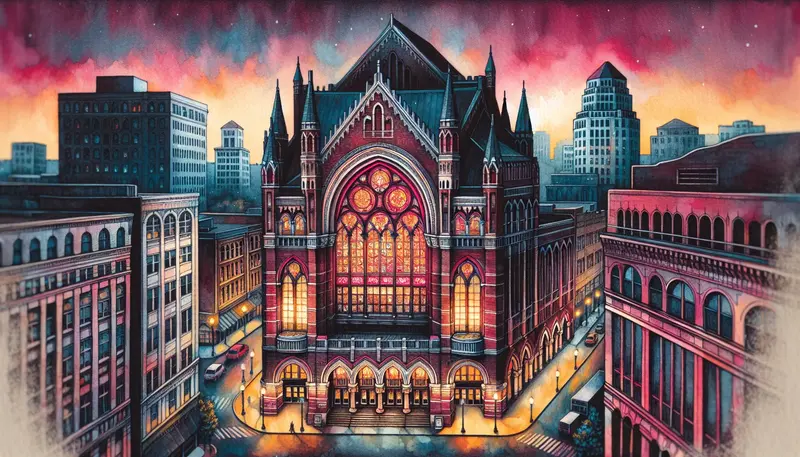
Ryman Auditorium (116 5th Ave N, Nashville, TN 37219) is famous for musical ghosts, but it also connects to Civil War-era Nashville through the building’s long history. Performers and staff have reported unexplained footsteps in empty balconies, doors that close on their own, and the sensation of an unseen presence during late-night rehearsals. While many of these reports are tied to the building’s varied past, some witnesses explicitly link their experiences to the Civil War period, noting that the building sat amid a city shaped by wartime trauma.
Belmont Mansion and other domestic hauntings
Belmont Mansion (1900 Belmont Blvd, Nashville, TN 37212), built in 1853 by William Giles and expanded into a 36-room Italianate mansion, and other antebellum homes in Nashville have generated stories of figures appearing in period clothing, whispers during quiet hours, and cold drafts localized to specific rooms. These claims often come from long-time docents or caretakers who have intimate knowledge of the properties and who report consistent phenomena over years. While such testimony does not prove supernatural causes, it does mark certain sites as places where memory and experience repeatedly intersect, producing the reputation of a Nashville haunted landscape. For related history, see our most haunted places in nashville: music.
Eyewitness Accounts, Folklore, and the Line Between History and Legend
Documented sightings and oral history
Recorded stories of paranormal experiences around Civil War sites in Nashville vary from brief sensory impressions to detailed full-body sightings. Oral histories collected by local historical societies often preserve accounts from veterans’ descendants, park employees, and long-term residents. While many of these sources are anonymous—“a neighbor reported,” “a guide recalled”—they are nonetheless valuable for understanding how narratives develop. Where possible, accounts are corroborated by multiple witnesses who describe similar sensations at the same time and location.
How folklore grows from fact
Folklorists note that repeated retellings transform factual events into stories with supernatural elements. For example, the memory of a night march or the lingering smell of gunpowder can become, over generations, reports of phantom soldiers. This process does not dismiss eyewitnesses but situates their experiences within a cultural pattern: places marked by trauma attract stories that help communities process loss. Nashville ghost lore reflects this pattern—historical fact provides the bones, and human imagination fleshes out the rest.
Two notable reported experiences
Among the more often-cited claims are (1) visitors at Fort Negley reporting coordinated drumbeats and sightlines of figures in Civil War uniforms near the fort’s outer walls during quiet evenings; and (2) long-time staff at Belmont Mansion recounting repeated, localized cold drafts and the smell of tobacco in the servant quarters—sensory reports that match known wartime domestic activities. These testimonies, documented in local newspaper interviews and site oral histories, serve as case studies of how witnesses describe encounters without resorting to sensational language.
Responsible Engagement: Preservation, Research, and Interpretation
Ethical considerations for haunted history
Handling sites associated with death and battle demands respect. Preservationists, museum professionals, and public historians emphasize that haunted narratives should never overshadow the documented suffering of soldiers, enslaved people, and civilians. Interpretation that blends folklore and history can be powerful, but it must be honest about what records show and what remains anecdotal. This approach protects fragile sites and honors those interred in local cemeteries and memorials.
Practical advice for visitors and researchers
Those engaging with Nashville’s Civil War ghost stories—whether researchers, students, or curious members of the public—are encouraged to consult primary sources (maps, official reports, cemetery registers) and to work with licensed guides and historic-site staff. Fort Negley (1100 Fort Negley Blvd) and Belmont Mansion (1900 Belmont Blvd) maintain interpretive programs that contextualize both documented history and folklore. Respectful behavior on private property and at marked gravesites is essential: disturbing artifacts or human remains is illegal and unethical.
Concluding perspective
Nashville’s haunted reputation—its Nashville ghost and Nashville haunted listings in modern guides—arises from the city’s deep entanglement with Civil War events. The documented facts of December 15–16, 1864; the geography of rail and fortification; and the human cost of the campaign provide the factual frame for stories that persist today. Treating these stories with a balance of skepticism and respect lets historians and the public learn from both the archival record and the living memory that continues to shape Nashville’s landscape.