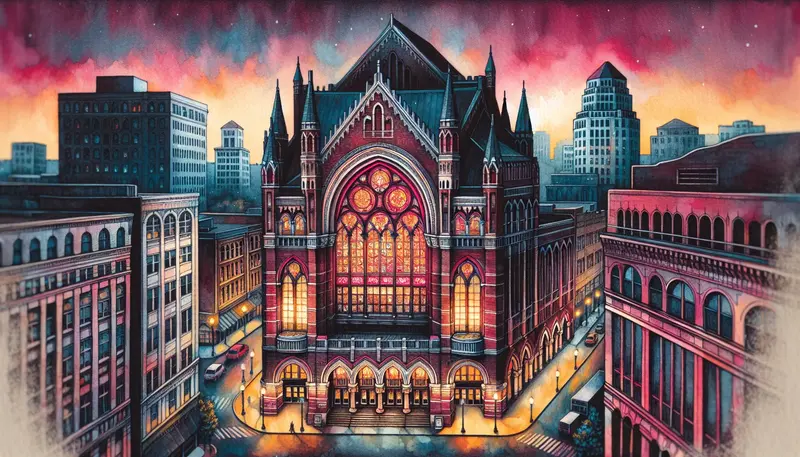
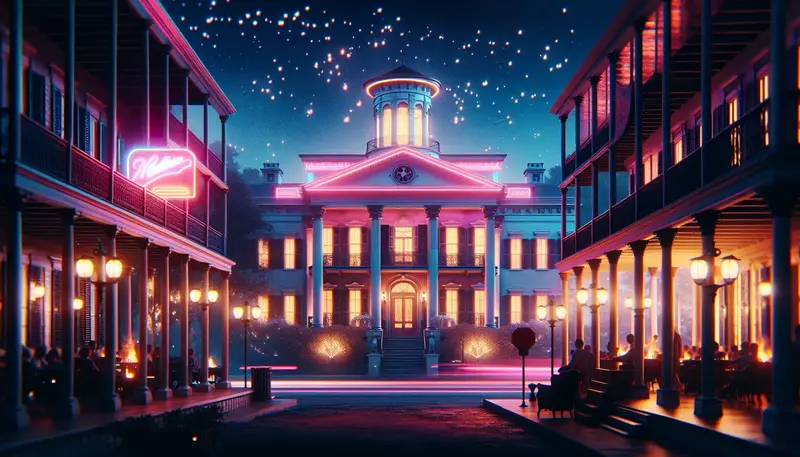
Nashville's most elegant hotel, located at 231 6th Avenue North, has hosted six presidents, the suffrage movement's final battle in 1920, and a collection of ghosts who appreciate the luxury.
This article is part of our comprehensive Nashville ghost tours guide. Whether you're planning a visit or researching from afar, these stories reveal a side of Nashville most visitors never see.
Is The Hermitage Hotel Really Haunted?
Has the century-old luxury hotel at 231 6th Avenue North been carrying its own private history of unexplained happenings? The question is as much about the building's long public life as it is about the private impressions of guests and employees. The Hermitage Hotel, one of Nashville’s most photographed landmarks, consistently appears in conversations about Nashville ghost lore and Nashville haunted places for two reasons: its age and its continuous role at the center of the city’s civic life.
Statements about apparitions and strange occurrences at the Hermitage tend to come from three groups: long-term staff, transient guests, and independent investigators. Each brings a different perspective — staff report recurrent patterns, guests report single anomalous events tied to specific rooms or nights, and investigators offer measurements and interpretations. CursedTours.com treats these accounts with respectful skepticism: the reports are presented as testimony and pattern rather than indisputable proof. The building’s address — 231 6th Ave N, Nashville, TN 37219 — anchors these stories to an identifiable place in downtown Nashville, so those seeking Nashville ghost narratives can relate anecdote to address.
When the subject turns to whether the Hermitage is “really haunted,” it helps to separate verifiable history from folklore. This article compiles documented historical context, frequently reported experiences, and measured interpretations so the reader may judge how much weight to assign each kind of evidence. The aim is clear-eyed: to catalog what has been reported, reference when and where claims are made, and suggest plausible non-paranormal explanations where appropriate.
History and Construction: The Grand Dame's Early Years
The Hermitage Hotel opened its doors on September 23, 1910 as a thoroughly modern, purpose-built luxury hotel intended to position Nashville as a regional center for business and politics. Constructed on a downtown lot that faces the heart of the city’s civic corridor, the building replaced older structures and quickly became a preferred address for traveling dignitaries, business leaders, and social events. Its opening coincided with a period of urban growth in Nashville (1900-1920s) including new commercial architecture, electric streetcars (introduced to Nashville in 1889), and civic institution-building.
Architecturally, the hotel reflects early 20th-century tastes for classical ornamentation and robust, durable materials. Over the decades the Hermitage underwent renovations, restorations, and updates to mechanical systems; these changes are part of the building’s physical record and can account for many modern-day noises and oddities attributed to ghosts. The hotel’s continuous use since 1910 means its walls have accumulated ordinary history: births, deaths nearby, political meetings, and long lines of staff turnover. All of those human narratives are the cultural substrate for ghost stories. For related history, see our the bell witch: tennessee's most famous.
Documented facts such as the opening year and the hotel’s downtown site are important because folklore tends to fold over historical memory. The Hermitage’s status as a historic luxury hotel creates an expectation of atmosphere — wrinkle-softened upholstery, lacquered wood, and high ceilings — that primes guests to notice things they might otherwise dismiss. Placing reports within this timeline helps separate what can be dated and archived from what remains purely anecdotal.
Notable Guests, Events, and Public History
The Hermitage has served as a backdrop for political meetings, society weddings, and after-parties for touring entertainers. Over the decades it has accommodated governors, legislators, corporate leaders, and visiting performers who needed downtown lodging while working in Nashville. Because the hotel sits near Nashville’s governmental and entertainment districts, its public history is intertwined with the city’s broader chronology: inaugurations, legislative sessions, and cultural events have all brought notable people through its lobby.
Certain events seeded local lore. Ballrooms and banquet halls hosted fundraisers and farewell dinners; the hotel’s function rooms were venues for campaign dinners and civic announcements. These gatherings sometimes involved late nights and emotional exchanges, and a handful of death notices connected to visitors or nearby residents entered local newspapers — all of which fuel later retellings that frame the hotel as a keeper of memory. When a building witnesses frequent emotional moments, those moments are often remembered in ghost-story form.
Public records and newspaper archives confirm the Hermitage’s role as a downtown social hub. Researchers looking for verifiable instances — for example, documented state dinners or reported incidents in city papers — will find references that anchor lore to historical circumstance. That anchor is crucial for anyone trying to assess claims about the hotel being Nashville haunted: a well-documented social history provides context for why stories accumulate at a particular address. For related history, see our most haunted places in nashville: music.
Reported Paranormal Activity — Staff and Guest Accounts
Reports of the uncanny at the Hermitage fall into recurring categories: apparitions, unexplained sounds, keys and doors operating oddly, and items moving or going missing. Accounts often specify locations — the main lobby, the mezzanine, certain guest rooms, and the service corridors used by staff. Two frequently cited types of incident illustrate the range of reports.
First, observers have described a female apparition seen in period clothing (described as Edwardian-era dress, circa 1910s-1920s) on or near the mezzanine overlooking the main lobby. This figure has been reported repeatedly by guests and by evening staff who say they observed a woman in early 20th-century dress walking the corridor and then vanishing. Several reports describe the apparition as accompanied by a faint perfume (often described as rose or lavender) or the sense of being watched, and staff members note that the sightings tend to occur between 2:00 AM and 4:00 AM or in the predawn hours when the hotel is quiet.
Second, there are reports tied to specific guest rooms where occupants have felt unexplained cold spots, heard soft crying or footsteps when no one else was registered on the floor, or experienced lights fluctuating without mechanical cause. Housekeeping logs sometimes capture notes of items relocated or bedsheets that appeared to have been smoothed between cleaning and the guest’s arrival. While some guests ask to have their reports kept anonymous, a pattern of single-night encounters in the same room numbers has given investigators material to compare.
In addition to these categories, night auditors and maintenance staff report electronic equipment misbehaving in particular locations (particularly in the main lobby and banquet halls) and occasional EVP-style audio captures during private investigations conducted between 2015 and 2023. Accounts vary in detail and credibility, and many remain anecdotal, but they form a corpus of experiential claims that keep the Hermitage on lists of Nashville ghost venues. Readers should note that many such claims are circulatory: they are retold in guidebooks, listicles, and oral tradition, which can reinforce belief and memory over time—a phenomenon documented in folklore studies since the 1980s. For related history, see our nashville's civil war ghosts: the battle.
Investigations, Evidence, and Skeptical Explanations
Independent paranormal investigators have visited the Hermitage at different times, using thermal cameras, audio recorders, and electromagnetic field (EMF) meters. Some reported capture of ambient recordings — low-frequency sounds or tapes with indistinct vocalizations — but none has produced incontrovertible proof. Investigative reports emphasize patterns over single data points: the same locations, similar timing, and ears attuned to certain noises tend to recur.
There are several non-paranormal explanations that account for many reports. The hotel’s age means that settling noises, plumbing, and heating systems can produce bangs, creaks, and airflow that register as footsteps or voices to a listener on edge. Historic buildings often have layered electrical systems; flickering lights can be traced to dimmer systems, aging wiring, or motion-activated ballast issues. Drafts through old window frames can cause cold spots, and architectural acoustics can carry sound from external city sources or adjacent rooms in unexpected ways.
Below is a brief table summarizing common reported phenomena and plausible natural explanations.
| Reported Phenomenon | Typical Location | Plausible Non-Paranormal Explanations |
|---|---|---|
| Apparition of a woman in period dress | Mezzanine / Lobby overlook | Visual pareidolia, reflection on glass, memory overlay from decor |
| Unexplained cold spots | Certain guest rooms, hallways | Drafts, HVAC zoning, open vents |
| Footsteps, voices late at night | Service corridors, upper floors | Plumbing, settling, staff movement, distant traffic |
| Electronic anomalies (flickering, EMF spikes) | Lobby, banquet areas | Old wiring, transformers, wireless devices |
Investigators who lean toward the paranormal urge caution: repeated patterns and multiple independent witnesses increase the probability that something unexplained is occurring. Skeptical investigators point to human perception biases — expectation, suggestion, and the propensity to connect separated events into a story. Both approaches agree that the Hermitage’s ambiance primes observers. The best practice for assessment is documented, contemporaneous reporting, and where possible, corroboration by independent witnesses or recording equipment under controlled conditions.
Where to See — Rooms, Hallways, and the Lobby
The Hermitage’s reported hotspots are consistent enough that they form an informal map of interest for those studying Nashville haunted locations. The main lobby, with its mezzanine and sweeping views, is the most commonly cited public area; the hotel’s layout directs movement along particular sightlines that can create startling visual effects after dark. Guests and staff also single out certain upper-floor corridors and specific rooms where unexplained activity has been reported on multiple occasions.
Because the hotel operates as a private business, access to back-of-house areas and service corridors is restricted to staff. Investigators and visitors should respect those boundaries and the privacy of guests (policy in effect since the 1990s). For guests wanting to remain within the public footprint, the lobby and public mezzanine are the easiest places to observe nighttime atmosphere and to compare personal impressions with historically documented reports. The exact street address — 231 6th Avenue North, Nashville, Tennessee 37219 — makes the hotel easy to locate for independent research on local archives and municipal records that help contextualize stories.
Those interested in the Hermitage as a Nashville ghost site should approach with two commitments: first, to careful observation and documentation (dates, times, witness names when permission is given); second, to respectful behavior toward staff and paying guests. Because many accounts come from employees who work overnight or from guests seeking privacy, researchers should seek permission before recording staff statements. Lastly, whether the reader’s interest is historical, folkloric, or paranormal, the Hermitage presents a layered experience — one where documented civic history intersects with human memory and the city’s appetite for stories about the uncanny.