Colonel Jesse Driskill built his grand hotel in 1886. He lost it within a year — but his ghost, and others, never left the building.
This article is part of our comprehensive Austin ghost tours guide. Whether you're planning a visit or researching from afar, these stories reveal a side of Austin most visitors never see.
A Brief Question to Begin: What Makes the Driskill Hotel a Focus of Austin's Haunted Reputation?
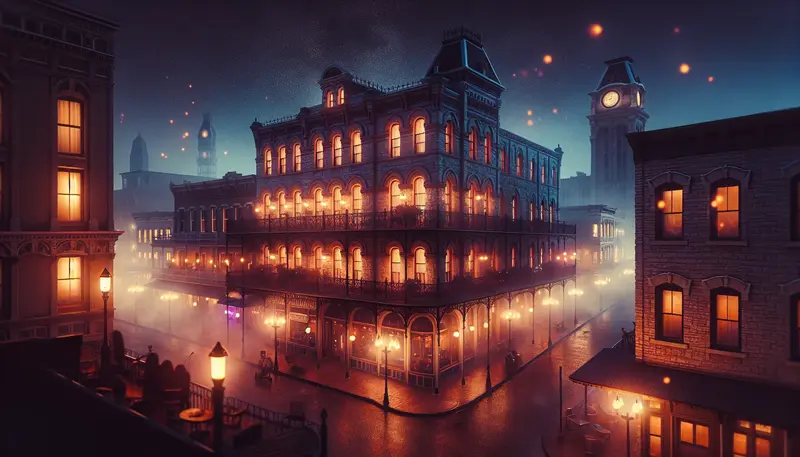
What is it about a Romanesque limestone pile built in 1886 at 604 Brazos Street that causes people to call it the most haunted hotel in Austin? The Driskill Hotel’s reputation as an Austin ghost and Austin haunted landmark grows from a mixture of verifiable history, repeated eyewitness reports, and the kinds of small, uncanny incidents that tend to stick in memory. Jesse Driskill (1824–1890), a wealthy cattleman from Kentucky, commissioned the hotel and opened it to the public in December 1886; the building’s original grandeur, along with public tragedies, changing ownership, and a continuous stream of guests and staff, has provided fertile ground for both folklore and reported phenomena.
Readers should understand that many of the stories attached to the hotel are rooted in actual events: deaths, business failures, and family dramas that took place in and around the property. CursedTours treats those events as part of the context that shapes reports of hauntings. The Driskill’s public spaces—the grand staircase, the lobby, the Driskill Bar—and certain guest-room corridors are repeatedly cited in oral histories and local press accounts. These concentrations of reports are the data that form the basis of any serious inquiry into the Driskill’s reputation. While the eyewitness reports are compelling in the aggregate, historians and investigators separate verifiable fact (dates, owners, renovations) from anecdote, and interpret the latter cautiously.
For readers researching or planning a tour, that interplay between history and anecdote matters. The Driskill is a living hotel located in downtown Austin, so a visitor encounters both a piece of the city’s 19th-century heritage and the contemporary cultural overlays—televised features, ghost-tour narratives, and hotel literature—that keep the stories circulating. That combination of documented history and persistent anecdote is precisely why the Driskill remains at the center of discussions about Austin ghost lore and Austin haunted sites.
History and Context: Jesse Driskill, 1886 Construction, and Civic Role
The factual backbone of the Driskill story begins with Jesse Driskill (1824–1890), a Texas cattle baron who invested heavily in Austin’s downtown in the late 19th century. He commissioned the hotel as a luxury, Romanesque-style property intended to serve Texas legislators, traveling businessmen, and visiting dignitaries. Construction finished in 1886 and the hotel opened that December; this date anchors many later claims because it places the building squarely in Austin’s post–Civil War growth period. The address, 604 Brazos Street, sits at the intersection of Sixth and Brazos, a block from the state capitol—positioning the hotel as a political and social hub from the start.
Over the decades the Driskill has undergone renovations and ownership changes that are well documented in city records and contemporary newspaper coverage. In the 1930s and 1940s the hotel adapted to changing travel patterns but retained a public-facing ballroom, bar, and lobby spaces used for political gatherings and social events. The hotel’s architecture—heavy limestone masonry, rounded arches, and a sweeping central staircase—has been preserved in major refurbishments, making the building itself an artifact that connects modern visitors to Austin’s 19th-century civic life.
Historical facts matter when discussing hauntings because dates, names, and documented events anchor oral tradition. For instance, any claim tied to a specific death, a political scandal, or a celebrity visit can be checked against existing city archives, Austin American-Statesman articles, and municipal property records. That verification process is what separates local legend from provable history and gives the Driskill’s ghost stories a credible frame: the building is old, public, and central to Austin’s civic narrative, and that combination naturally generates stories that echo through time. For related history, see our most haunted places in austin: keep.
Architecture and Atmosphere: Why the Building Feels “Haunted”
Physical details often shape how people interpret an experience as paranormal. The Driskill’s lobby, built with heavy oak, high ceilings, intricate plasterwork, and a central staircase that curves in a dramatic sweep, produces prolonged echoes and particular light patterns at night—conditions that can heighten a visitor’s sense of presence. Historic hotels—especially those retaining original materials or antiques—keep different ambient temperatures, and dense materials like stone and wood can make rooms feel cooler and sound richer, a sensory environment that people sometimes attribute to spirits.
The Driskill Bar and the small parlors off the lobby are frequently named in reports. The bar itself contains Victorian-era furnishings and portraits of historical figures, which personalize the space and encourage guests to imagine historical inhabitants still “inhabiting” personae from the past. Corridors on the second and third floors are narrow and have period lighting; late-night shadows and the distant hum of downtown traffic can combine to create perceptual oddities—footsteps that are actually building settling, or soft voices that are passengers from a neighboring room.
Architectural preservation also preserves the sensory triggers that can generate stories. When a hotel keeps its original elevators, stairways, or room layouts, guests are more likely to interpret creaks or sudden drafts as evidence of a continuing human presence. The Driskill’s aesthetic—Victorian formality embedded in a modern city—makes it a natural stage for ghost narratives. That doesn’t prove supernatural causation, but understanding the physical setting helps a visitor or researcher appreciate why so many people report uncanny sensations in this particular place.
Reported Encounters: Notable Experiences and Common Patterns
Over more than a century, visitors and staff have reported specific encounters at the Driskill that recur in pattern. Two of the most frequently cited types of reports are (1) visual apparitions—figures seen briefly at the top or bottom of the grand staircase, in corridors, or briefly passing in a doorway—and (2) sensory phenomena—odd cold spots, unexplained smells (notably cigar smoke in empty rooms), and unanswered tapping or footsteps. These patterns are reported by a combination of hotel guests, servers, and long-term employees; while individual accounts vary in detail, the clustering around certain locations—lobby, central staircase, and select guest-room corridors—strengthens the tradition.
Specific reported incidents include a widely circulated account of a guest in the late 1990s who described seeing an older man in a dark suit standing at the top of the grand staircase; the figure reportedly nodded once and vanished into the landing’s shadows. Another commonly told report—repeated in local media and on guided-tour narratives—involves repeated smells of cigar smoke in the Driskill Bar after the bar has closed. Staff members have told consistent stories of finding chairs slightly moved and of hearing footsteps on unoccupied floors overnight. While these accounts are anecdotal, they persist across decades and observers. For related history, see our the servant girl annihilator: america's first.
One particularly detailed and oft-quoted case involved a guest who stayed in room 525 (a room number that recurs in several visitor reports across multiple decades). The guest described waking at approximately 3:30 AM to find a faint luminescent impression of an older man standing near the doorway; the man reportedly wore period clothing from the late 1800s and did not speak or acknowledge the guest. The guest left a written note for hotel management, who later reported no practical explanation and confirmed no maintenance work had been scheduled in the room that night. Whether a skeptic reads these accounts as misperception or a believer reads them as evidence, the repetition and specificity of locations make the Driskill a central node in Austin’s haunted narratives.
Investigations, Evidence, and How to Evaluate Claims
Responsible examination of Driskill reports separates verifiable evidence from anecdote and recognizes the limits of each. Paranormal investigators and historians recommend a layered approach: (1) corroborate the witness’s account with hotel logs, cameras, and staff testimony; (2) check architectural explanations (drafts, mechanical systems, old plumbing); and (3) consider psychological and environmental factors (fatigue, expectations from media, and suggestibility). Many incidents at the Driskill have plausible non-supernatural explanations, yet investigators also acknowledge cases where investigators and multiple independent witnesses report similar anomalies.
Equipment-based investigations—EMF meters, thermal imaging, temperature loggers, and audio recorders—have been used during private investigations and appearances on paranormal television features including regional documentary productions. The resulting data is mixed: occasional anomalous audio fragments, unexplained temperature differentials, and transient EMF spikes have been recorded in the lobby and near certain guest-floor corridors. These signals are suggestive to some listeners but remain inconclusive in scientific terms because they are not repeatable on demand and are difficult to isolate from ordinary electrical and mechanical sources in an old building.
For readers evaluating claims, the best practice is to weigh the consistency of independent reports, the specificity of location and timing, and whether objective logs (security cameras, housekeeping records) corroborate anecdotal detail. The Driskill’s status as a public, working hotel means that investigators must also balance curiosity with respect for guests and preservation requirements. That interplay between open inquiry and practical constraints is central to any responsible conversation about Austin haunted locations.
Visiting, Interpretation, and Ethical Considerations for Guests and Researchers
When people come to the Driskill looking for a ghost story, there are practical and ethical considerations. The Driskill is an operating hotel at 604 Brazos Street; guests should respect private rooms, staff routines, and posted policies. For those curious about Austin ghost lore, the hotel’s public spaces—the lobby, Driskill Bar, and the mezzanine—are where most historical interpretation and reported phenomena are concentrated. Researchers and tour operators should obtain permission before carrying out any equipment-based investigation, and tourists should be mindful that the building is both a historic site and a workplace for many employees.
Interpretation matters. CursedTours presents ghost reports alongside their historical contexts and encourages visitors to ask questions: What happened on this site in 1886? Who was Jesse Driskill and how did the hotel function in civic life? Which stories are contemporaneous to a reported event, and which are later embellishments? That inquisitive but cautious approach helps a visitor separate verifiable history from folklore while still appreciating the emotional resonance of the accounts. Whether one believes in spirits or not, the Driskill’s stories illuminate how a city’s past continues to affect its present identity.
Finally, remember that many who report experiences at the Driskill frame them as meaningful rather than sensational. Staff members often describe a solemn respect for the building and its history; guests frequently recount their encounters in tones that are reflective rather than sensational. For anyone interested in Austin haunted history, engaging with the Driskill responsibly—fact-checking claims, honoring privacy, and seeking corroboration—provides the most rewarding and informative experience. Austin's haunted landscape extends beyond downtown hotels to include historic civic landmarks like the Moonlight towers that once lit the night sky.