The Fall of a Queen
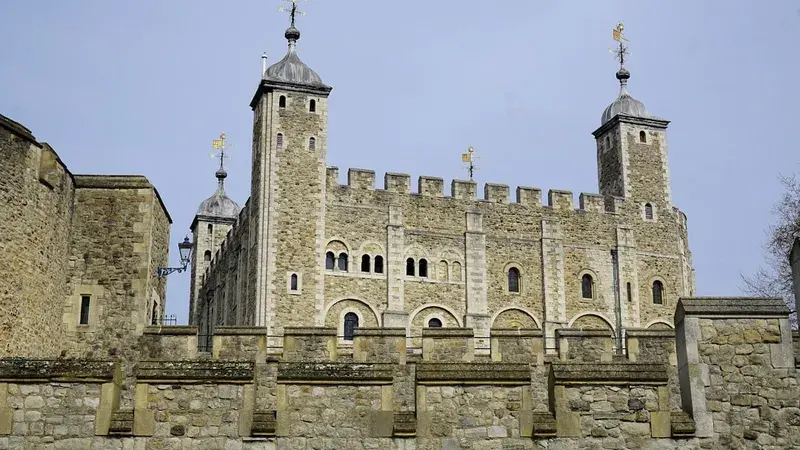
Anne Boleyn entered the Tower of London on May 2, 1536, through the Court Gate on the river side — the same entrance through which she had passed three years earlier for her coronation procession. The symmetry was deliberate. Tudor monarchs understood political theater, and the choice of entrance was designed to remind Anne, the court, and history that the Crown gave and the Crown took away. She reportedly asked Sir William Kingston, the Constable of the Tower, whether she would be placed in a dungeon. He assured her she would have the same lodgings she had occupied for her coronation. "It is too good for me," she replied, then laughed, then wept.
This article is part of our Tower Of London History collection.
The arrest followed weeks of investigation orchestrated by Thomas Cromwell, Henry VIII's chief minister. Cromwell had compiled a case built on the testimony of Mark Smeaton, a court musician who confessed under torture — likely on the rack — to sexual relations with the queen. Four other men were charged alongside Mark Smeaton as Anne's lovers: Sir Henry Norris, Sir Francis Weston, William Brereton, and Anne's own brother George, Viscount Rochford. All five men were executed on Tower Hill on May 17, 1536—two days before Anne herself. The inclusion of George made the charges even more sensational — not merely adultery but incest.
The evidence was thin by any standard. The supposed liaisons occurred on dates when Anne could be documented as elsewhere. The charges relied heavily on Smeaton's tortured confession and on testimony from Lady Rochford, George Boleyn's wife, whose motivations for cooperating with the prosecution remain debated. Modern historians overwhelmingly agree the charges were fabricated. The question is not whether Anne was guilty — she was not — but why she had to die.
The Political Mechanics of a Queen's Death
Henry VIII needed Anne gone for reasons that were practical rather than moral. She had failed to produce a male heir — her daughter Elizabeth, born on September 7, 1533, at Greenwich Palace, was followed by a miscarriage in January 1536 that may have been a male fetus. Henry's eye had already moved to Jane Seymour, a lady-in-waiting whose family was positioning her as Anne's replacement. Cromwell, whose alliance with Anne had fractured over policy disagreements about the distribution of monastic wealth, saw an opportunity to serve the king's desires while eliminating his own political rival. For related history, see our the princes in the tower: england's.
Divorce was technically possible but politically expensive. Henry had spent six years extracting himself from his first marriage to Catherine of Aragon, breaking with Rome in the process. A second divorce would undermine the theological arguments that had justified the first. Execution on charges of treason avoided the problem — a dead queen required no annulment, and the charges of adultery provided grounds to declare Princess Elizabeth illegitimate, clearing the succession for any children Jane Seymour might produce.
The trial was a performance, not a proceeding. Anne was tried on May 15 in the Tower's Great Hall before a jury of 26 peers, including her own uncle, the Duke of Norfolk, who served as Lord High Steward. The verdict was unanimous: guilty. Norfolk, reportedly weeping, pronounced the sentence — death by burning or beheading at the king's pleasure. Henry chose beheading. It was considered a mercy.
The French Swordsman
Henry granted Anne one additional concession that she had specifically requested: execution by sword rather than axe. The distinction mattered. An axe required the condemned to place their neck on a block and hold still while a heavy blade was swung downward — a process that frequently required multiple strokes. Executioners were not always skilled, and botched beheadings were documented with grim regularity. A sword stroke, delivered to a kneeling victim from the side, was faster and more reliable in trained hands. For related history, see our famous prisoners of the tower of.
No swordsman-executioner was available in England. Henry imported one from Saint-Omer in Calais — then an English possession — at a reported cost of 23 pounds, 6 shillings, and 8 pence. The swordsman arrived before Anne's trial had concluded, a detail that confirms the verdict was never in doubt. The executioner's identity is not recorded with certainty in surviving documents—he was long called Jean Rombaud (a name popularized by historical fiction), but recent scholarship by Dr. Mickey Mayhew identifies him as Bartholomew, a man of English descent born in Calais to a trading family. He was described as an expert who had performed similar duties on the continent.
The execution took place on the morning of May 19, 1536, on Tower Green — the private execution site within the Tower walls. Only seven people were ever privately executed on Tower Green (including Catherine Howard in 1542, Lady Jane Grey in 1554, and Robert Devereux, Earl of Essex, in 1601); most Tower executions occurred on the public scaffold at Tower Hill outside the fortress. Private execution within the walls was reserved for those whose deaths might provoke crowd sympathy or disorder. Anne Boleyn qualified on both counts.
The Final Hours
Anne spent her last night in prayer with her almoner, John Skip. Kingston's letters to Cromwell record her behavior in the Tower as oscillating between dark humor and genuine distress. She joked that the executioner's task would be easy because she had "but a little neck," then laughed hysterically. She expressed hope that Henry might send her to a nunnery instead of the scaffold. She composed herself for prayer. She fell apart again. The pattern suggests a woman under extreme psychological stress managing her terror through the social performance expected of her rank. For related history, see our the ravens of the tower of.
On the morning of the execution, Anne wore a dark grey damask gown with a fur-trimmed mantle and an English gable hood — formal court dress appropriate for a state occasion, which is how she chose to treat her death. She was escorted from her lodgings to the scaffold, a low wooden platform surrounded by a crowd estimated at roughly one thousand — nobles, Tower officials, foreign ambassadors, and selected spectators.
Her scaffold speech followed convention. She praised the king as "a good, a gentle, and sovereign lord." She asked the crowd to pray for her. She did not confess guilt — but neither did she proclaim innocence, as a declaration of innocence from the scaffold could be interpreted as accusing the king of injustice, potentially endangering her family and her daughter. The speech was carefully calibrated: submit to the king's authority without admitting to crimes she had not committed. Even in death, Anne Boleyn was a political operator.
The Execution and Burial
Anne knelt upright in the French style — there was no block. Her ladies removed her headdress and tucked her hair into a cap. She was blindfolded with a white linen bandage. The swordsman reportedly used a distraction — calling for his sword as though it had not yet been brought — to cause Anne to turn her head, exposing her neck at the optimal angle. The single stroke was clean. Contemporary accounts state that her lips continued moving in prayer for several seconds after the blade fell.
No proper coffin had been prepared. Anne's body and head were placed in an arrow chest — an elm box originally designed to hold longbow arrows — and carried to the Chapel Royal of St Peter ad Vincula, a few steps from the scaffold. She was buried beneath the chancel floor. During renovations ordered by Queen Victoria in 1876 and supervised by architect Anthony Salvin, workmen discovered remains consistent with a female of Anne's approximate age. The bones were reinterred beneath the altar, where a memorial tile now marks the spot.
The chapel floor contains the remains of multiple Tower execution victims, including Catherine Howard, Lady Jane Grey, and the Jacobite lords executed after the 1745 rebellion. Visitors to the chapel walk above the remains of some of the most famous prisoners in English history — a fact the Yeoman Warders mention on every tour, with the practiced solemnity of men who have told the same story ten thousand times.