The Farmhouse That Launched a Horror Franchise
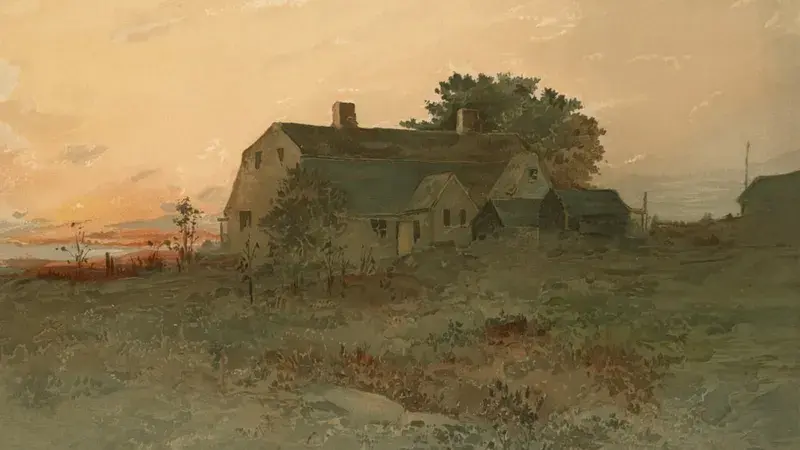
The Old Arnold Estate in Harrisville, Rhode Island looks exactly like what it is — a weathered New England farmhouse that's stood on the same patch of land since the early eighteenth century. From the road, it could be any number of rural properties scattered across northern Rhode Island. But this particular farmhouse became the basis for one of the most commercially successful horror films of the twenty-first century, and the real events that occurred inside it between 1971 and 1980 remain among the most extensively documented cases in the files of paranormal investigators Ed and Lorraine Warren.
This article is part of our Pop Culture Dark History collection.
Separating fact from Hollywood embellishment requires patience. The 2013 film "The Conjuring" takes significant creative liberties with the timeline, the severity of events, and the resolution. But the core of the story — a family tormented by escalating paranormal activity in a house with a dark history — is grounded in testimony that multiple witnesses have maintained consistently for over fifty years.
The Perron Family Moves In
Roger and Carolyn Perron purchased the farmhouse in January 1971, moving in with their five daughters — Andrea, Nancy, Christine, Cynthia, and April. The property appealed to them for practical reasons: the price was right, the house was spacious enough for a large family, and the surrounding land offered the kind of rural freedom they wanted for their children.
Strange occurrences began almost immediately. The family reported hearing sounds in the walls — scratching, tapping, and what Andrea Perron later described as "something heavy being dragged across the floor above us, even though no one was upstairs." Small objects moved on their own. Doors opened and closed without explanation. The family initially chalked it up to an old house settling, drafts through gaps in the framing, and the overactive imaginations of five young girls.
The activity escalated quickly. Within months, the Perrons were reporting events that couldn't be dismissed with rational explanations. Beds shook violently while family members were lying in them. The smell of rotting flesh appeared and vanished without any identifiable source. Carolyn Perron found unexplained bruises on her body in the morning, arranged in patterns she described as deliberate. Most disturbingly, the family began seeing apparitions — human figures that appeared in doorways, hallways, and at the foot of beds before vanishing.
The History of the Property
Research into the farmhouse's history revealed a catalogue of tragedy stretching back to the 1700s. The property had passed through multiple families, and an unusual number of former residents had died under violent or mysterious circumstances on the property. Suicides, drownings, a reported murder, and several unexplained deaths were documented in local records. For related history, see our the best horror movies based on.
The name most associated with the house is Bathsheba Sherman, a woman who lived on the property in the mid-nineteenth century. Local legend held that Bathsheba practiced a form of dark spiritualism and was suspected — though never charged — in the death of an infant in her care. The child's cause of death was recorded as a large needle wound to the base of the skull. Whether Bathsheba was actually responsible, or whether the accusations reflected the kind of superstitious paranoia common in rural New England communities, remains unclear.
What is clear is that the Perron family came to believe Bathsheba's spirit was the dominant presence in the house. Carolyn Perron reported being targeted specifically — experiencing physical attacks, possession-like episodes, and a persistent hostile presence that the family associated with a female entity. The children reported encountering multiple spirits of varying dispositions, some seemingly benign, others terrifying.
Ed and Lorraine Warren's Investigation
The Warrens entered the case in 1973 at the family's request. Ed Warren, a self-described demonologist, and Lorraine Warren, who claimed clairvoyant abilities, conducted an investigation that included interviews with all family members, attempts at communication with the entities, and ultimately an exorcism-like séance that the family later described as the worst night of the entire haunting.
According to the Perron family's account, the séance triggered a violent reaction. Carolyn Perron reportedly levitated from her chair, spoke in a voice the family didn't recognize, and had to be physically restrained. Roger Perron, who had been skeptical of the Warrens' methods, ordered them to leave the property immediately and refused to allow further séances.
The Warrens' involvement added the case to their growing catalogue of investigations that would eventually include the Amityville Horror house, the Annabelle doll, and numerous other cases that became fodder for the "Conjuring" film universe. Their methods and conclusions remain controversial — skeptics point out that the Warrens operated without scientific controls and had obvious financial incentives to validate paranormal claims. Supporters argue that the consistency of witness testimony across decades lends the case more credibility than critics acknowledge. Andrea Perron's published memoirs provide extensive detail and exhibit remarkable consistency with earlier accounts, though critics note that published memoirs are necessarily shaped by authorial memory and the passage of time, potentially conflating separate incidents or reinforcing initial interpretations.
What the Film Got Wrong
James Wan's 2013 film compresses roughly nine years of activity into what appears to be a few weeks, stages a dramatic exorcism that didn't occur as depicted, and invents several scenes entirely. The climactic exorcism — performed by Ed Warren in the film — never happened in that form. The real family endured the activity without a cinematic resolution, eventually moving out in 1980 after nearly a decade of coexistence with whatever occupied the house. For related history, see our cursed horror films: the real tragedies.
The film also dramatically amplifies the physical danger. While the Perron family reported genuinely frightening experiences, the movie's depiction of violent supernatural attacks goes well beyond what any family member has publicly claimed. Andrea Perron, who wrote a three-volume memoir about the experience titled "House of Darkness House of Light," has been vocal about both the film's entertainment value and its departures from what actually happened.
The relationship between the Perrons and the Warrens is also more complicated than the film suggests. Roger Perron's expulsion of the Warrens from the property created a rift that lasted years, and the family has expressed mixed feelings about how the Warrens characterized the case.
The House Today
The Old Arnold Estate changed hands several times after the Perrons departed. Subsequent owners reported varying levels of activity — some experienced nothing unusual, others corroborated the Perrons' accounts. The house gained renewed attention after the film's release, attracting curiosity seekers and paranormal investigators in such numbers that the town of Burrillville passed ordinances restricting trespassing on the property.
In 2019, paranormal investigators Cory and Jennifer Heinzen purchased the house with the explicit intention of opening it to paranormal research. They've hosted investigations, documented their own experiences in the house, and maintained a public presence that keeps the story in the paranormal community's consciousness. Their reports include unexplained sounds, objects moving, and experiences consistent with what the Perron family described decades earlier.
Whether the Old Arnold Estate is genuinely haunted or whether the Perron family's experiences have a more mundane explanation is a question that believers and skeptics will never agree on. What's not debatable is the story's cultural impact. "The Conjuring" grossed over $319 million worldwide on a $20 million budget and spawned a franchise that has generated over $2 billion in total box office revenue — all built on the foundation of one family's claimed experiences in a Rhode Island farmhouse that looks, from the outside, like nothing special at all.