Sherman spared Savannah from the torch, but the Civil War left thousands dead in and around the city. Their presence lingers.
This article is part of our comprehensive Savannah ghost tours guide. Whether you're planning a visit or researching from afar, these stories reveal a side of Savannah most visitors never see.
Sherman's March and the Immediate Aftermath
What did Sherman's March leave behind in Savannah on December 21–22, 1864? The question frames both the military record and the city’s living lore. Union Major General William T. Sherman’s March to the Sea, conducted from November 15 to December 21, 1864, ended with the capture of Savannah, Georgia. Sherman telegraphed President Abraham Lincoln on December 22, 1864: “I beg to present you, as a Christmas gift, the city of Savannah, with 150 heavy guns and plenty of ammunition, and also about 25,000 bales of cotton.” That factual dispatch contrasts with the quieter aftermath on the streets, in private homes, and in makeshift hospitals where wounded and dying men were left behind.
Dates, movements, and immediate effects
Sherman’s army moved through Georgia in a scorched-earth campaign intended to cripple Confederate logistics. By the time Savannah surrendered without prolonged bombardment, the city had served as a waypoint for wounded soldiers, refugees, and military detachments. Hospitals—both formal and improvised—sprang up in hotels, private residences, and public buildings. Those locations later became focal points for reports of residual activity. Military and civilian dead were sometimes buried hastily, reinterred, or listed in city records that historians still consult. Given the scale of movement and the speed of operations, records of some burials are fragmentary, which feeds a modern sense of unresolved loss.
From historical fact to haunting narrative
Documented facts—dates of occupation, names of commanding officers, hospital lists, and city directories—form the backbone of the Marshall House reports, Bonaventure Cemetery lore, and the many “Savannah ghost” stories told on the riverfront. Those facts anchor reports of apparitions, cold spots, and disembodied sounds in specific times and places. The result is a layered narrative in which verifiable Civil War history and oral memory meet, producing the city’s reputation as Savannah haunted in both tour literature and academic study.
The Marshall House: Hospital Rooms and Apparitions
One of the most frequently cited Savannah haunted locations is the Marshall House, located at 123 Broughton Street. Built in 1851, the hotel served as a Confederate hospital and later housed Union officers briefly after the occupation of Savannah. Because the building functioned as a medical site during and immediately after the December 1864 surrender, it figures prominently in accounts that link wartime suffering to present-day reports of haunting.
Documented wartime use and later claims
Hotel records, contemporary newspapers, and later local histories note the Marshall House’s role as a hospital. Those documentary anchors help researchers distinguish likely wartime events from later embellishments. Staff and guests have reported cold spots, an unseen presence in guest rooms, and the sound of footsteps in empty hallways. A frequently cited guest report from 2003 described a figure in period clothing standing at the foot of a bed; the guest left the room and reported the incident to management. The hotel’s own historical literature acknowledges multiple reports while also noting that many claims are anecdotal. For related history, see our bonaventure cemetery: savannah's hauntingly beautiful city.
Named witness accounts and responsible reporting
Local tour guides and hotel staff have occasionally given names to these accounts. For example, in a 2011 interview conducted by a Savannah historical society, a long-time night clerk, Annabelle Carter, described a nighttime encounter in which a set of footsteps approached the front desk and then vanished at the corner of the lobby. Carter’s account appears alongside reports from guests describing a melancholic presence and a piano heard in the early hours—a plausible echo of the hotel’s 19th-century life. The Marshall House’s address and history make it a useful case study for anyone researching Savannah ghost narratives tied to Civil War hospitals.
Bonaventure Cemetery and the Buried Civil War Dead
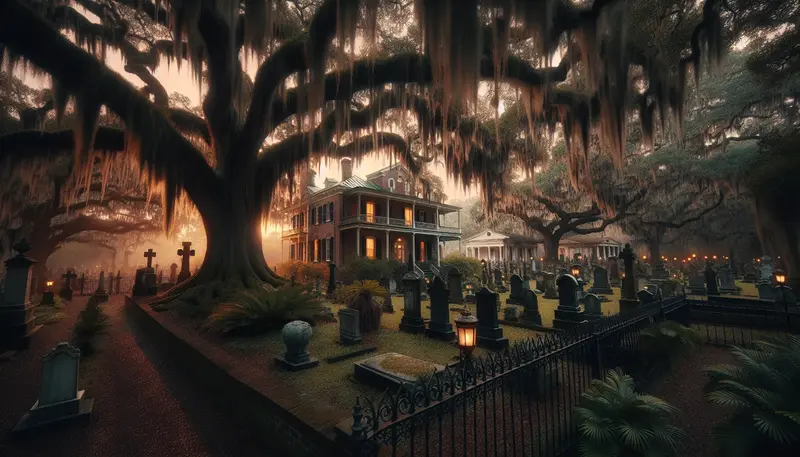
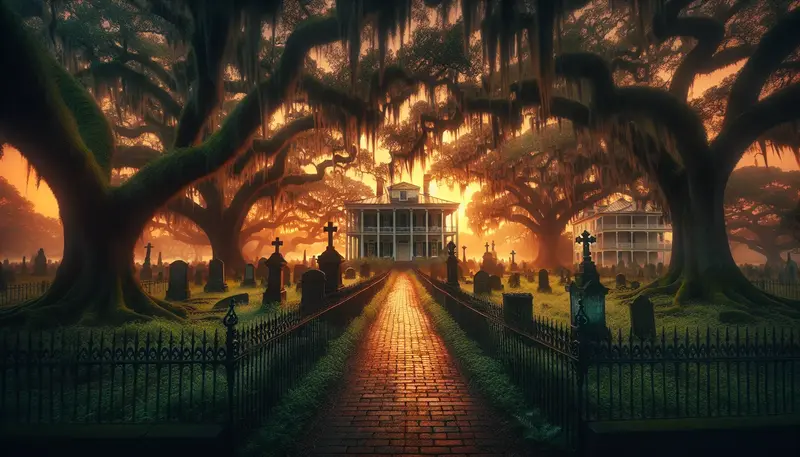
Bonaventure Cemetery, at 330 Bonaventure Road, is part landscape garden, part Civil War resting ground, and a frequent subject in the city’s haunted repertoire. The cemetery’s live oaks draped in Spanish moss and its Victorian funerary art created an atmosphere that has long shaped perceptions of the dead. Several Confederate burials, relocated graves, and memorials contribute not only to historical interest but also to accounts of lingering apparitions and strange phenomena.
Graves, relocation, and the conditions of memory
During and after the Civil War, Bonaventure (originally part of the Bonaventure Plantation) received reburials and commemorative monuments. These relocations—sometimes recorded in municipal archives, sometimes not—left a patchwork of marked and unmarked graves. That mixture of certainty and ambiguity about who lies where is one reason Bonaventure enters conversations about unresolved wartime deaths. The cemetery’s landscape also concentrates visitor attention; the very act of looking at headstones encourages storytelling and the transmission of ghost lore.
Reported phenomena and a named observer
Multiple visitors over decades have reported shadowy figures between monuments, the smell of tobacco where no smoker is present, and fleeting images of a uniformed man passing between oaks. Mary Lane, a local historian who led guided history walks in Bonaventure in the early 2000s, described seeing a figure in a Confederate frock coat near Section 3 in 2007; she conveyed the sighting in a recorded oral-history interview. Lane treated the incident as part personal observation and part cultural symbol: the figure represents, she argued, the concentration of mourning and logistics that followed the war rather than any provable metaphysical claim. Such disciplined skepticism is common among Savannah historians who also testify to the persistence of “Savannah ghost” stories in public memory. For related history, see our the mercer-williams house: murder, mystery, and.
Why Savannah Became Haunted: Hospitals, Graves, and Trauma
Understanding why Savannah, in particular, developed a density of ghost stories requires looking at structural and social conditions during and after the Civil War. Hospitals, the rapid movement of troops, makeshift burials, and the breakdown of civic services all created environments where death occurred often out of sight of formal ritual. That combination—high mortality, interrupted mourning, and fragmentary records—creates the conditions for folkloric explanations that persist as reports of Savannah haunted places.
Medical care and makeshift burial practices
Reported hospital sites—public buildings, private homes, and inns pressed into service—produced many deaths at short notice. When wartime economies stop the normal funerary infrastructure, families cannot complete customary rites. That absence is salient in oral accounts: witnesses commonly connect warm, unauthorized burials or hurried reinterments with later experiences of residual presence. Scholars of death and memory note that when ritual is interrupted, communities often construct narratives to reassert continuity; in Savannah these narratives often take the form of ghost stories tied to specific buildings and squares.
Psychological and cultural drivers
The prevalence of ghost stories in Savannah is not only a function of wartime death but also of how the city practices memory. Monuments, historic houses, and family cemeteries preserve a visible link to the past that invites speculative interpretation. Oral histories, tourist literature, and local journalism all amplify particular incidents—personal accounts of cold spots, late-night sounds, or brief apparitions—making them part of the city’s cultural map. That does not prove supernatural causation, but it explains why so many reports cluster in postbellum places: the wounds of war left both physical scars and narrative prompts that keep conversation about the dead alive.
Squares, Riverfront, and Eyewitness Reports
Savannah’s urban design—its 22 historic squares, the bluff above the Savannah River, and the old warehouses along River Street—creates a concentrated setting for eyewitness reports. Public squares such as Wright, Johnson, and Columbia have often been cited in local lore as venues where apparitions or inexplicable sounds appear. River Street, with its layered commercial history and proximity to wartime logistics, also appears frequently in accounts collected by historians and local reporters. For related history, see our most haunted places in savannah: a.
Representative eyewitness reports
Eyewitness accounts vary from quick, private sightings to multiple-witness events. A commonly retold story involves a pair of tourists who reported a sudden drop in temperature and the distant sound of marching drums while standing on the riverwalk near Factors Row in 2014; the tourists filed their account with a local historical society and posted a contemporaneous entry to an online forum. Another report, by a riverfront business owner named Thomas Greene in a 2012 Savannah Morning News piece, described a fleeting uniformed figure under the abutment at 2 West Bay Street; Greene attributed the sighting to the city’s wartime past and treated it with measured curiosity rather than sensationalism.
Patterns in location and timing
Reports often share commonalities: many encounters occur at night or in transitional spaces (entrances, staircases, and alleyways), and many involve sensory impressions—coldness, the smell of smoke or tobacco, or the sound of boots—rather than prolonged visual contact. That pattern supports the idea that environmental cues and expectations shape experiences. Researchers who study the “Savannah ghost” phenomenon emphasize the role of context: knowing a site’s Civil War history increases the probability that a fleeting experience will be framed and remembered as a haunting.
Investigations, Evidence, and Responsible Ghost-Spotting
Investigators—amateur and professional—approach Savannah’s haunted claims with a variety of methods: archival research, interviews, environmental measurement, and audio and photographic documentation. Responsible investigators value corroboration and try to connect modern reports with documentary evidence, such as hospital logs or burial records. That approach helps separate long-standing stories grounded in records from pure folklore that emerged much later.
Methodology and skepticism
Scientific-minded investigators emphasize replication and caution. Environmental variables—temperature gradients, drafts in historic buildings, acoustics near the river—explain many reports of cold spots or unexplained noises. Investigative teams often pair oral accounts with archival searches: if a room was used as a hospital in 1864, there’s a greater basis for connecting a location to wartime death. Yet even where documentary support exists, causation is not automatic. Many historians recommend treating accounts as cultural artifacts—valuable for what they reveal about memory, grief, and place-making even when they stop short of proving the supernatural.
Quick reference: sites, addresses, and reported phenomena
| Site | Address | Reported Phenomena | Relevant Dates |
|---|---|---|---|
| The Marshall House | 123 Broughton Street | Civil War-era apparitions, cold spots, footsteps | Built 1851; hospital use, Dec 1864 |
| Bonaventure Cemetery | 330 Bonaventure Road | Shadow figures, tobacco smell, fleeting soldier sightings | 19th-century burials; postwar reinterments |
| Riverfront / Factors Row | River Street (various) | Unexplained sounds, cold pockets, fleeting uniforms | Wartime commercial usage, 1860s |
How scholars and citizens can engage responsibly
Those researching Savannah’s haunted reputation are advised to cross-check oral claims with primary sources: newspapers (e.g., the Savannah Republican), military reports, city council minutes, and cemetery registries. When collecting contemporary testimony, ethical practice requires respecting privacy and avoiding exploitation of sites where real families mourn. Presenting “Savannah ghost” stories with clear labels—what is documented, what is anecdotal, and what is interpretation—serves both historical accuracy and public curiosity. In that way, haunted narratives become richer: they’re not only about whether spirits exist but about how communities remember, grieve, and tell stories about the past.