Two Boys Enter the Tower
Edward V was twelve years old when his father Edward IV died on April 9, 1483. The boy-king was traveling from Ludlow to London for his coronation when his uncle Richard, Duke of Gloucester, intercepted the party at Stony Stratford and took custody of the child. Edward entered the Tower of London in mid-May — a routine arrangement, as English monarchs traditionally stayed in the Tower before their coronation. His nine-year-old brother Richard, Duke of York, joined him in June after being surrendered by their mother, Elizabeth Woodville, who had taken sanctuary in Westminster Abbey.
This article is part of our Tower Of London History collection.
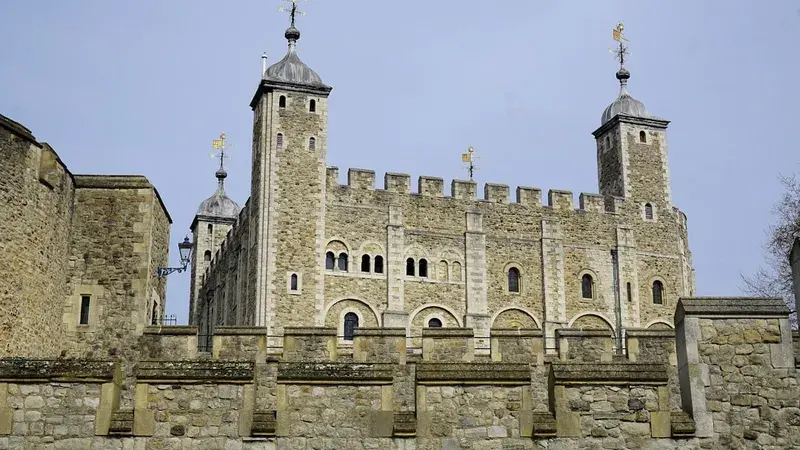
The boys were seen playing in the Tower grounds and gardens during the summer of 1483. Witnesses reported them shooting arrows, playing together in the inner ward, and appearing at windows. Then the sightings became less frequent. By late summer, the princes had disappeared entirely from public view. No reliable account places them alive after September 1483. They were never seen again.
Their uncle Richard had himself declared king on June 26, 1483, claiming that Edward IV's marriage to Elizabeth Woodville was invalid — making both princes illegitimate and ineligible for the throne. The coronation of Richard III took place on July 6. The question that has consumed historians for over five centuries is straightforward: what happened to the boys after their uncle no longer needed them alive?
The Case Against Richard III
Richard III is the traditional suspect, and the circumstantial case against him is substantial. He had the clearest motive — the princes were the primary threat to his claim to the throne. He had opportunity — the boys were held in a fortress under his direct control. He had means — the Constable of the Tower served at his pleasure. And the boys disappeared during a period when Richard exercised unchallenged authority over their custody.
Sir Thomas More, writing approximately 30 years after the events, provided the most detailed account of the murders. According to More, Richard ordered Sir James Tyrrell to kill the princes. Tyrrell delegated the task to Miles Forest and John Dighton, who smothered the boys with pillows as they slept, then buried the bodies at the foot of a staircase. More claimed to have obtained this account from Tyrrell's confession before his execution in 1502 for an unrelated treason. For related history, see our anne boleyn's execution at the tower.
More's account has problems. He was writing decades after the events, serving the Tudor court that had every reason to vilify Richard III. His narrative contains demonstrable errors about the Tower's layout and chronology. No independent confirmation of Tyrrell's confession has been found in surviving records. More himself never claimed the account was definitive — he presented it as the most credible version available, while acknowledging uncertainty about the details. The account reads less like sworn testimony and more like the best reconstruction a careful historian could assemble from available sources.
Alternative Suspects
Henry VII, who defeated Richard III at Bosworth Field in 1485 and took the throne, had motive equal to Richard's. Henry's claim derived partly from his marriage to Elizabeth of York, the princes' sister. If the princes lived, his wife's brothers had a stronger claim to the throne than Henry himself. Henry never produced the princes or their bodies after taking the Tower. He never publicly accused Richard of their murder. And he waited until 1502 — nearly 20 years after the disappearance — to execute James Tyrrell, the man More later identified as the instrument of the killing.
Henry Stafford, Duke of Buckingham, has been proposed as a third suspect. Buckingham served as Richard III's closest ally during the usurpation before turning against him in a failed rebellion in October 1483. He had access to the Tower, a distant claim to the throne, and a demonstrated willingness to act violently for political advantage. His rebellion failed, and he was executed in November 1483, taking any knowledge of the princes' fate with him.
Some historians have argued that the princes survived — that they were smuggled out of the Tower and lived under assumed identities. Perkin Warbeck, who claimed to be the younger prince Richard and led a rebellion against Henry VII in the 1490s, was eventually captured and confessed to being an impostor from Tournai in Flanders. Whether that confession was truthful or coerced remains debatable. Henry VII treated Warbeck with surprising leniency before eventually executing him in 1499 — behavior that some historians read as evidence that Henry was not entirely certain Warbeck was lying. For related history, see our the ravens of the tower of.
The Bones in the Staircase
In 1674, workmen demolishing a staircase leading to the Chapel of the White Tower discovered a wooden chest buried approximately ten feet below ground level. The chest contained the bones of two children. Charles II, accepting them as the remains of the princes, ordered them placed in a marble urn designed by Christopher Wren and interred in the Henry VII Lady Chapel at Westminster Abbey. The urn's inscription attributes the murder to Richard III.
The bones were examined once, in 1933, by William Wright, a professor of anatomy at the London Hospital. Wright concluded that the bones belonged to two children of approximately the right ages — one around 12-13 and one around 10. He noted possible evidence of suffocation in the form of a bloodstain on the facial bones of the elder child, though this finding has been disputed. The examination predated radiocarbon dating, DNA analysis, and modern forensic osteology. By today's standards, it was preliminary at best.
Repeated requests to re-examine the bones using modern techniques have been denied by the Abbey. Philippa Langley, the amateur historian who led the successful search for Richard III's remains under a Leicester car park in 2012, has campaigned publicly for DNA testing. Mitochondrial DNA from the bones could be compared against known descendants of the princes' maternal line. The Abbey's refusal — based on concerns about disturbing royal remains and setting precedent — has frustrated historians who argue that the technology to resolve a 540-year mystery exists and is being withheld for institutional rather than scientific reasons.
Richard III's Remains and What They Revealed
The 2012 discovery of Richard III's skeleton under a Leicester car park transformed the study of the princes. DNA analysis confirmed the identification beyond reasonable doubt. The skeleton showed severe scoliosis, matching historical descriptions of Richard's uneven shoulders, and perimortem injuries consistent with death in battle. The discovery demonstrated that modern science could reveal medieval mysteries — making the Abbey's refusal to test the princes' bones all the more frustrating to researchers.
The Richard III discovery also energized the Ricardian movement — a community of historians, enthusiasts, and descendants who argue that Richard has been unfairly villainized by Tudor propaganda. The Richard III Society, founded in 1924, maintains that the evidence for Richard's guilt in the princes' disappearance is insufficient for conviction. They note that the Tudor dynasty had every reason to blame Richard for the murder and the means to fabricate evidence supporting that narrative.
The mystery endures because the evidence permits multiple narratives. The Tower of London held countless prisoners whose fates are well documented. The princes' disappearance is exceptional precisely because it left so little trace — no bodies, no confession that survives independent verification, no witness account that does not come filtered through partisan interests. The case remains open in every sense that matters, and every generation of historians finds in the silence exactly the story it wants to tell.