
12 Tours · 8 Articles
Dublin Ghost Tours
Dublin was founded by Vikings in 841 AD and has been accumulating ghosts ever since. The city's thousand-year history encompasses Norse raids, Norman conquest, English colonization, famine, rebellion, and civil war. Beneath the Georgian facades and cobblestoned streets lie medieval crypts, Viking burial grounds, and the mass graves of plague victims. Dublin's dead are not historical abstractions—they are physically present, preserved in church vaults that remain open to visitors.
St. Michan's Church on Church Street contains crypts where the naturally dry, limestone-rich atmosphere has mummified remains dating back 400 years. Visitors can stand face to face with bodies that retain skin, hair, and fingernails. These are not curated museum exhibits—they are the actual dead, lying in their original coffins in the vaults where they were interred. No other city in the British Isles offers such direct physical contact with its historical dead.
Dublin is also the birthplace of Bram Stoker, whose 1897 novel Dracula drew on the city's Gothic architecture, his childhood illness, and his mother's terrifying accounts of the 1832 cholera epidemic that devastated Sligo. The literary ghost tradition in Dublin extends from Stoker through Sheridan Le Fanu, Oscar Wilde, and W.B. Yeats, all of whom engaged with the supernatural in ways shaped by their Irish upbringing.
Why Dublin Is Haunted
The Great Famine of 1845-1852 reduced Ireland's population by approximately 25% through death and emigration. Dublin, while less affected than rural areas, served as a departure point for hundreds of thousands of desperate emigrants. The city's workhouses were overwhelmed, and mass burials occurred at sites throughout the metropolitan area. Glasnevin Cemetery, established in 1832, eventually received over 1.5 million burials.
The 1916 Easter Rising, during which Irish republicans seized key buildings in central Dublin and held them against British forces for six days, left bullet-scarred buildings still visible on O'Connell Street and around the Four Courts. The subsequent executions of 14 rebel leaders at Kilmainham Gaol transformed the jail from a symbol of British oppression into a shrine of Irish independence. The Irish Civil War of 1922-23 added another layer of violent death to Dublin's already bloody history.
Plague struck Dublin repeatedly between the 14th and 17th centuries. The Black Death arrived in 1348, and subsequent outbreaks continued to devastate the city for 300 years. Cabbage Garden cemetery in the Liberties, originally a Huguenot burial ground, became an overflow burial site during plague outbreaks. Many of Dublin's medieval burial grounds were built over without relocation of remains, a pattern common to rapidly developing European cities.
Medieval Dublin Tours
Dublin's medieval core survives in fragments scattered through the modern city. Christ Church Cathedral, founded in 1030, contains a crypt dating to the original Viking-era construction—the oldest surviving structure in Dublin. The crypt has been in continuous use for nearly a thousand years and contains artifacts ranging from a mummified cat and rat (trapped in a pipe for centuries) to stocks used for public punishment.
St. Audoen's Church, the only surviving medieval parish church in Dublin, dates to the 12th century and sits atop the old city wall. Its graveyard contains burials spanning 800 years, and the church's tower offers views across the medieval Liberties neighborhood. The adjacent St. Audoen's Arch is the only surviving gate of the old walled city.
“Dublin’s medieval quarter has been continuously inhabited since Norse Vikings founded the city in 841 AD.”
Walking tours through medieval Dublin cover approximately one mile through the Liberties and around Christ Church, passing sites where Viking settlements, Norman fortifications, and medieval plague pits lie beneath contemporary streets. Guides familiar with archaeological discoveries can point to specific locations where excavations have revealed the layers of Dublin's past.
Church Crypt Tours
St. Michan's Church vaults are Dublin's most viscerally haunting experience. The limestone walls absorb moisture and create naturally preservative conditions that have mummified remains for up to 400 years. Visitors descend into the vaults to view open caskets containing remarkably preserved bodies—including a figure tradition identifies as a Crusader, standing nearly seven feet tall with hands and feet intact.
Until recently, visitors could touch the Crusader's hand for luck. The practice was discontinued after a body was vandalized in 2019, but the vaults remain accessible by guided tour. The experience of standing inches from centuries-old remains in their original burial location is unique to Dublin and impossible to replicate in museum settings.
Christ Church Cathedral's crypt, the largest medieval crypt in Britain and Ireland, extends the full length of the cathedral above. Beyond the famous cat-and-rat exhibit, the crypt contains medieval tiles, the tabernacle and candlesticks used during the brief reign of King James II, and archaeological fragments from the cathedral's thousand-year history. The crypt's atmosphere is markedly colder than the cathedral above, a fact guides note for both architectural and atmospheric reasons.
Kilmainham Gaol
Kilmainham Gaol operated as a prison from 1796 to 1924, holding participants in virtually every significant Irish rebellion during that period: the 1798 Rising, the 1803 Emmet Rebellion, the Young Irelander Revolt of 1848, the Fenian Rising of 1867, and the 1916 Easter Rising. The jail's conditions were notoriously harsh—unheated cells, a single candle for light, and up to five prisoners sharing a cell designed for one.
LEADERS EXECUTED AFTER THE EASTER RISING
The execution of 14 Easter Rising leaders in the jail's stonebreaker's yard between May 3 and May 12, 1916, transformed Irish public opinion. James Connolly, too badly wounded to stand, was strapped to a chair to face the firing squad. Joseph Plunkett married Grace Gifford in the prison chapel hours before his execution. These events are presented in extraordinary detail during the jail's guided tours, which are among the most visited heritage sites in Ireland.
Staff and visitors have reported unexplained phenomena in the jail since it was restored as a museum in the 1960s. Cold spots in the execution yard, sounds in empty cell blocks, and a general atmosphere of unease in the older wing are frequently noted. Whether attributed to ghosts or to the weight of documented history, Kilmainham's atmosphere affects visitors in ways that few heritage sites can match.
Haunted Pub Tours
The Brazen Head on Bridge Street Lower, established in 1198, claims to be the oldest pub in Ireland. The building's medieval foundations, low ceilings, and labyrinthine layout create an atmosphere that requires no theatrical enhancement. Robert Emmet, executed for leading the 1803 rebellion, reportedly used the pub as a meeting point. Documented ghost reports include a spectral figure in the courtyard and unexplained sounds from the upper floors.
The Gravediggers (officially John Kavanagh's) on Prospect Square in Glasnevin sits adjacent to Glasnevin Cemetery. Gravediggers would signal for pints through a slot in the cemetery wall, and the pub served them without their having to leave the grounds. The pub has operated continuously since 1833 and maintains its original Victorian interior.
Dublin's haunted pub crawls typically wind through Temple Bar, the Liberties, and along the Liffey quays, combining Ireland's pub culture with storytelling traditions that predate the written word. The quality of storytelling varies, but Dublin's best ghost tour guides draw on a tradition of oral narrative that is itself a form of cultural heritage.
Literary Ghost Tours
Dublin's literary heritage intersects with its ghost tradition at nearly every point. Sheridan Le Fanu, who lived at 18 Merrion Square, wrote "Carmilla" (1872)—a vampire novella that predated and influenced Bram Stoker's Dracula. Le Fanu's stories of supernatural Dublin drew on the city's atmosphere of decay and religious anxiety in ways that remain eerily recognizable to modern visitors.
BRAM STOKER PUBLISHED DRACULA
Bram Stoker grew up in Clontarf, attended Trinity College, and worked as a theatre critic in Dublin before moving to London. Literary ghost tours trace the Dublin locations that influenced his work—from the Gothic atmosphere of St. Patrick's Cathedral to the Marsh's Library, where chained books create an atmosphere straight from a Victorian horror novel.
Oscar Wilde's childhood home at 1 Merrion Square is now a cultural center. W.B. Yeats, whose poetry drew extensively on Irish fairy lore and supernatural tradition, lived at multiple Dublin addresses. Tours connecting these literary figures to their city create a unique intersection of cultural heritage and ghost storytelling that distinguishes Dublin from other haunted destinations.
<!-- Mobile Tour Cards (hidden on desktop where sidebar shows) -->
<TourGrid tours={tours} />

Related Reading
Explore Dublin Articles
In-depth guides to Dublin's haunted history, famous ghosts, and dark legends.
Bram Stoker's Dublin: Where Dracula Was Born
Explore Bram Stoker's Dublin: 15 Marino Crescent, Trinity College, cathedrals, Georgian squares, ghost lore and walking stops that shaped Dracula's.
The Hellfire Club: Dublin's Most Sinister Legend
Explore Dublin's Hellfire Club: from 18th-century hunting lodge to notorious ruin—history, folklore, eyewitness accounts, investigations, and visitor.
Kilmainham Gaol: Dublin's Most Haunted Building
Kilmainham Gaol: explore its tragic history, recurring ghost reports, skeptical explanations, and practical visitor tips at Dublin's most famous haunted.
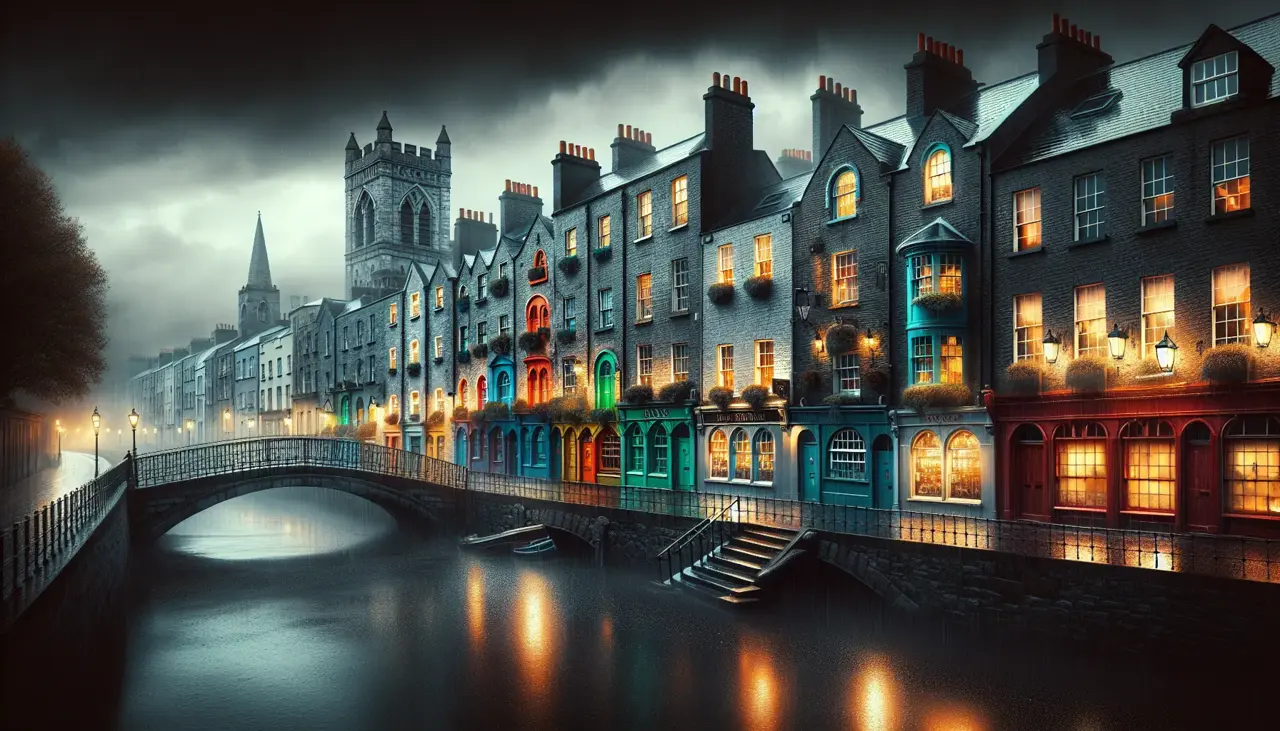
Most Haunted Places in Dublin
Explore Dublin's dark side: a guide to the city's most haunted sites including Kilmainham Gaol, Dublin Castle, Trinity College, and the Hellfire Club.
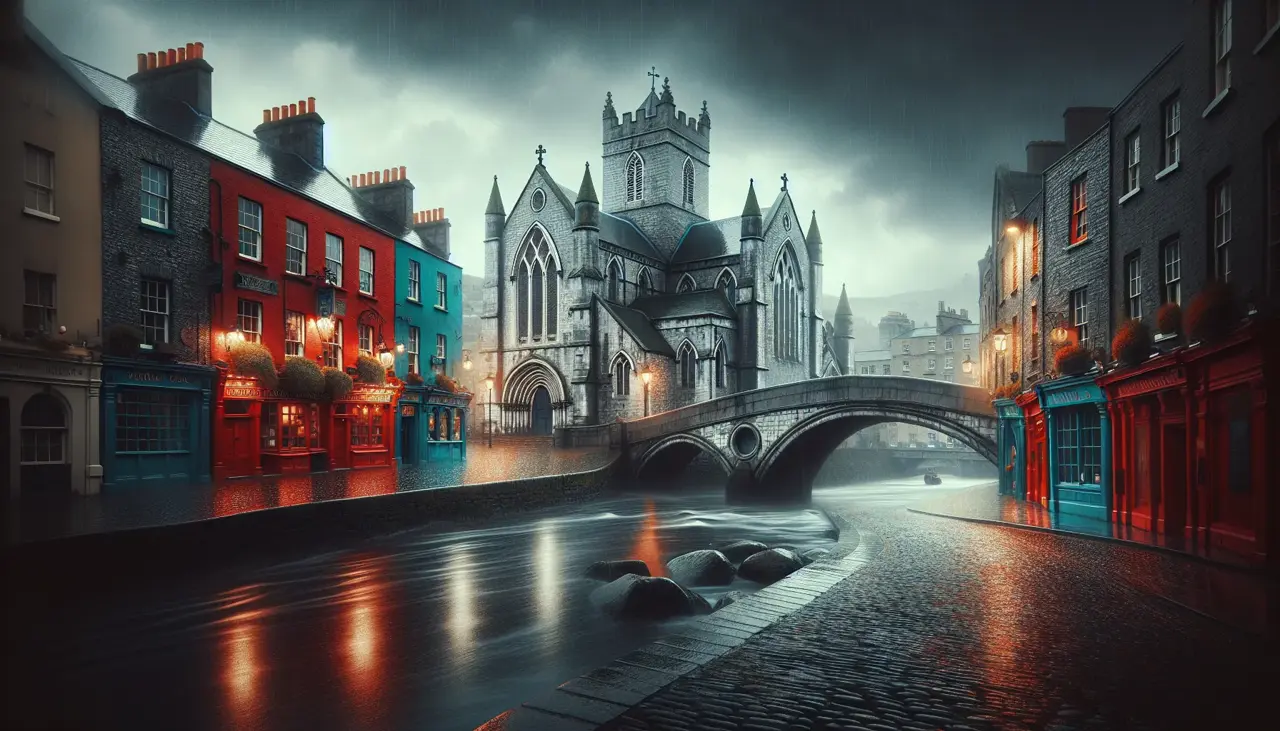
St. Michan's Church: Dublin's 800-Year-Old Mummies
St. Michan's Church vaults in Dublin reveal centuries-old mummies, layered history, conservation efforts, folklore, and visiting etiquette.
Common Questions
Frequently Asked Questions
Are Dublin ghost tours family-friendly?
Keep Exploring
Explore More Haunted Cities
Discover ghost tours in other historic cities.