The Master of Horror's Backyard
Stephen King has spent his career turning Maine into the most terrified state in American literature. Long before King, Washington Irving turned Tarrytown into Sleepy Hollow and gave America its first iconic horror setting. Derry, Castle Rock, Jerusalem's Lot, Haven — these fictional towns have become as real to readers as any place on a map, and every one of them is rooted in the actual geography of a state that King has called home for most of his life. Maine's combination of dense forests, isolated communities, harsh winters, and deeply rooted New England culture provided King with an inexhaustible supply of atmosphere, and the real places that inspired his fiction carry their own weight of genuine history and legitimate paranormal reputation.
This article is part of our Pop Culture Dark History collection.
Bangor — The Real Derry
King's fictional town of Derry — the setting of "It," "Insomnia," "Dreamcatcher," and several other novels — is a thinly disguised version of Bangor, where King has lived since 1980. The correspondences are unmistakable. Derry's Barrens are Bangor's actual wooded areas along the Kenduskeag Stream. The Derry Standpipe maps to Bangor's Thomas Hill Standpipe, a granite water tower that dominates the city's skyline. The canal system where Pennywise lurks reflects Bangor's real stormwater infrastructure.
King's own house on West Broadway — a Victorian mansion with a wrought-iron fence featuring bats and spiders — is Bangor's most-photographed residence. Tour buses stop daily, and fans pose at the gate in numbers that have occasionally tested the Kings' patience. The house isn't haunted in any traditional sense, but its appearance — red, imposing, with decorative ironwork that looks like it was designed by Tim Burton — makes it the perfect residence for America's horror laureate.
Bangor's genuine paranormal reputation centers on the older sections of the city. The historic district along Broadway and adjacent streets features nineteenth-century homes with documented histories of unexplained phenomena — footsteps in empty attics, doors that open on their own, cold spots in rooms with no drafts. The Kenduskeag Stream corridor, which King fictionalized as the entrance to Pennywise's lair, has its own reputation among locals for feelings of unease that predate the novel by decades.
The Stanley Hotel — King's Overnight Revelation
Though technically in Colorado, the story of The Shining and the Stanley Hotel is essential to understanding King's haunted geography. No discussion is complete without acknowledging the Stanley Hotel in Estes Park, where a single night's stay in 1974 produced "The Shining." King has described the experience as the most directly inspired creative moment of his career — the hotel's empty corridors, the sense of isolation, and a nightmare about his young son running from a fire hose combined to deliver an entire novel in a single flash of terror.
Mount Hope Cemetery — Bangor's City of the Dead
Mount Hope Cemetery, established in 1836, is the second-oldest garden cemetery in the United States and the real-world inspiration for elements of "Pet Sematary." The cemetery's rolling landscape, ancient trees, and ornate Victorian monuments create an atmosphere that King clearly absorbed — the fictional pet cemetery and the Micmac burial ground beyond it draw on the same New England tradition of burial grounds that blur the line between the decorative and the genuinely unsettling.
Mount Hope also served as a filming location for the 1989 "Pet Sematary" adaptation. The cemetery's central gate, winding paths, and older sections appear in the film, and visitors familiar with the movie can identify specific spots. The cemetery's paranormal reputation is modest but persistent — groundskeepers and visitors have reported seeing figures among the older monuments, hearing whispered conversations with no identifiable source, and experiencing cold spots concentrated around certain nineteenth-century family plots.
The Real Jerusalem's Lot — Durham and Beyond
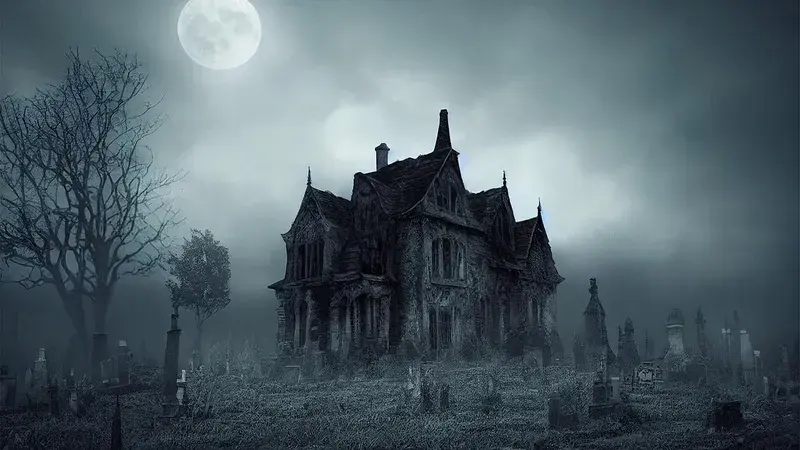
King's "Salem's Lot" — the vampire novel that established him as a major horror writer in 1975 — draws its setting from several Maine locations. The town of Durham, where King spent part of his childhood, contributes the rural isolation and small-town social dynamics. The fictional Marsten House, the hilltop Victorian where the vampire Barlow establishes his lair, is inspired by a real house in Durham that loomed over the town and frightened King as a boy.
King has described the house — long since demolished — as the single most important image of his creative life. A boarded-up, decaying Victorian on a hill, visible from below, suggesting secrets and darkness behind every sealed window. That image runs through his entire body of work, from the Marsten House to the Overlook Hotel to the houses in "It" and "Bag of Bones." Maine is full of such houses — abandoned, collapsing structures on rural roads that seem to watch you as you drive past.
The Real Castle Rock — Bridgton and Vicinity
Castle Rock, King's most frequently used fictional setting, draws from several western Maine communities. Bridgton, located on Long Lake in the foothills of the White Mountains, contributes geography and atmosphere. The town's combination of lakefront beauty and rural isolation — gorgeous in summer, bleak and unforgiving in winter — reflects Castle Rock's dual nature as a pleasant New England town with darkness running beneath the surface.
The region around Bridgton has generated its own folklore independent of King's fiction. Long Lake has a modest tradition of monster sightings, and the dense forests of the Lake Region have produced occasional reports of unidentified creatures, strange lights, and the kinds of unexplained sounds that rural Mainers tend to file under "things we don't talk about with outsiders."
Fort Knox — Not That One
Maine's Fort Knox — a granite fortress on the Penobscot River near Prospect, with no relation to the Kentucky gold depository — is one of the state's most actively investigated paranormal sites. The fort, built between 1844 and 1869 and never completed, served no combat role but housed troops during the Civil War and Spanish-American War. Its massive granite casemates, underground magazines, and spiral staircases create an environment that practically demands ghost stories.
Paranormal investigators have documented an extensive catalogue of phenomena at the fort — voices in the underground passages, shadow figures moving through the gun emplacements, cold spots in the powder magazines, and unexplained equipment malfunctions concentrated in specific areas. The fort hosts regular paranormal investigation events and operates as a state historic site with seasonal tours that include after-dark programming.
Why Maine Works
King has explained his attachment to Maine in terms that make intuitive sense to anyone who has spent time there. The state's geography creates isolation naturally — dense forest, long winters, communities separated by miles of two-lane road through trees that block the sky. The culture is insular, skeptical of outsiders, and marked by a dry Yankee stoicism that processes tragedy through understatement rather than drama. "Things happen," a Mainer might say about a house where three people died under mysterious circumstances, and that would be the end of the discussion.
That combination — physical isolation, cultural reticence, and a landscape that turns hostile for six months of the year — creates fertile ground for horror fiction and for genuine paranormal experience alike. King didn't invent Maine's darkness. He recognized it, named it, and gave it a narrative structure that readers worldwide could access. But the darkness was there before he started writing, and it will be there long after. The forests are old, the houses are older, and whatever lives in both has no intention of leaving.