The Building That Became a Character
Architect Henry Janeway Hardenbergh, who would later design the Plaza Hotel, conceived the Dakota as a self-contained community for New York’s upper class. Construction took three years, from 1880 to 1884, at a cost of approximately $2 million — roughly $60 million in today’s dollars. The building contained sixty-five apartments ranging from four to twenty rooms, along with a dining room, playroom, gymnasium, and private electric generating plant — amenities that were revolutionary for residential architecture in the 1880s. The builder, Edward Cabot Clark, president of the Singer Sewing Machine Company, died before the Dakota’s completion, but his investment established the Upper West Side as a viable luxury residential neighborhood and inspired a wave of apartment construction along Central Park West.
This article is part of our Pop Culture Dark History collection.
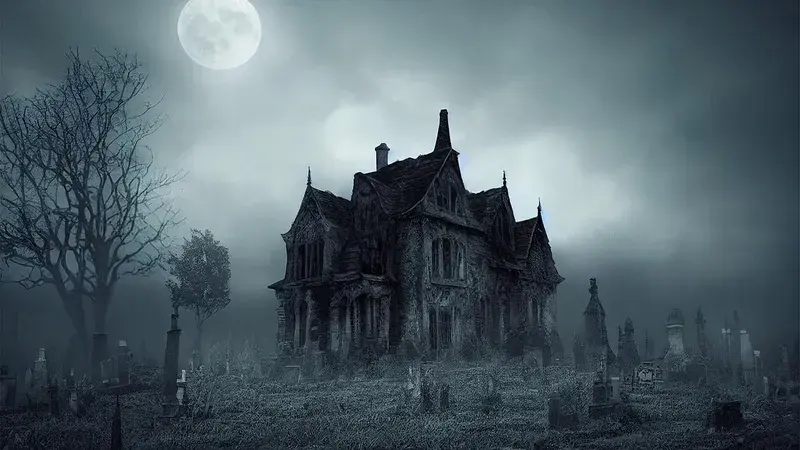
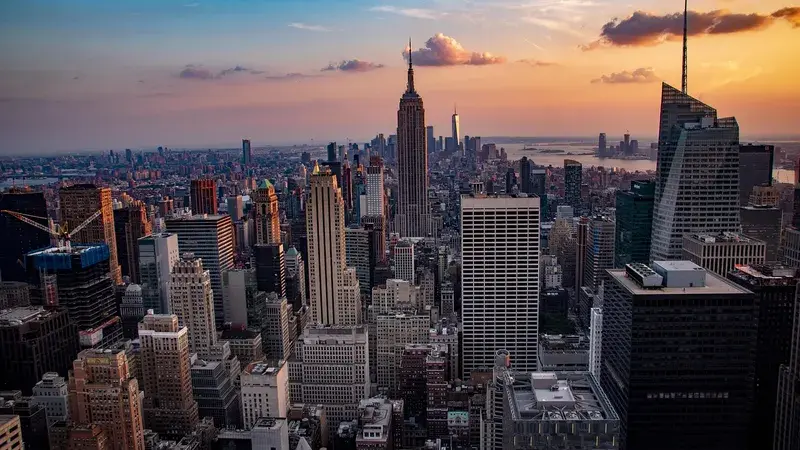
The Dakota apartment building at 1 West 72nd Street in Manhattan has been one of New York City's most prestigious addresses since it opened in 1884. Henry Hardenbergh designed it in the German Renaissance style, with turrets, gables, dormers, and a central courtyard that gives the building the feel of a European fortress transplanted to the Upper West Side. Residents over the years have included Leonard Bernstein, Judy Garland, Lauren Bacall, and John Lennon, who was shot and killed outside its entrance in December 1980. But in the cultural imagination, the Dakota is inseparable from one work of fiction — Roman Polanski's 1968 film "Rosemary's Baby," which used the building as the exterior of the Bramford, the fictional apartment house where a young woman discovers her neighbors have made a deal with the devil involving her unborn child.
Ira Levin's Novel
Ira Levin published "Rosemary's Baby" in 1967, and the novel was a cultural earthquake. Levin used the framework of a domestic thriller — a young wife in a new apartment, an attentive but increasingly suspicious husband, elderly neighbors who are a little too interested in her pregnancy — and layered a satanic conspiracy underneath that readers didn't fully recognize until it was too late. The horror worked because it was embedded in the mundane details of upper-middle-class Manhattan life: dinner parties, decorating choices, pregnancy symptoms, neighborhood gossip.
While some scholars have suggested Levin drew partial inspiration from the Alwyn Court Apartments at 180 West 58th Street — a Renaissance-style building decorated with terracotta dragons — or the Osborne at 57th and 7th Avenue, Levin primarily based the Bramford on the Dakota, borrowing its Gothic architecture, its reputation for exclusivity, and its aura of old New York money. The building's physical isolation — when it was constructed, the Upper West Side was so sparsely developed that critics joked it might as well be in the Dakota Territory, which is how it got its name — made it the perfect setting for a story about urban paranoia and the feeling of being trapped in a luxurious cage.
Polanski's Film
Roman Polanski's film adaptation, released in 1968, is widely regarded as one of the greatest horror films ever made. The film was the second installment in what critics call Polanski's "apartment trilogy," following Repulsion (1965) and preceding The Tenant (1976) — three films exploring urban paranoia within the walls of residential buildings. Polanski shot the exterior scenes at the actual Dakota, including the now-famous opening shot that tilts up the building's facade as Mia Farrow and John Cassavetes approach for the first time. The Dakota's management cooperated reluctantly — they weren't enthusiastic about their building being associated with devil worship, but Polanski's reputation and the production's professionalism ultimately won them over. For related history, see our the amityville horror: separating truth from.
The interiors were shot on soundstages, but Polanski studied the Dakota's actual apartments to ensure the set design captured the building's distinctive character — high ceilings, dark wood paneling, rooms that felt grand but slightly oppressive, hallways that seemed to stretch longer than they should. The result was a fictional apartment that felt authentically Dakota-esque, which reinforced the film's central trick: making the supernatural feel like it could happen in the most ordinary — or in this case, the most enviably ordinary — of settings.
Mia Farrow's performance as Rosemary Woodhouse defined a new kind of horror protagonist — not a screaming victim but a woman whose growing awareness of her situation is conveyed through increasingly desperate attempts to maintain normalcy. The film's most disturbing quality isn't the satanic ritual or the demon-child revelation — it's the systematic gaslighting Rosemary endures from every person she trusts, a theme that resonated powerfully with feminist critics and has only gained relevance over time.
The Dakota's Real Dark History
The Dakota didn't need Polanski's film to develop a reputation for darkness. The building has been the subject of ghost stories and supernatural rumors since well before "Rosemary's Baby" was published. The Dakota was added to the National Register of Historic Places in 1972 and designated a National Historic Landmark in 1976. According to paranormal historian John Harries, residents and visitors have reported seeing a young girl with blonde hair and a ball bouncing through the corridors — an apparition that predates any film association. Maintenance workers have described encountering figures in nineteenth-century clothing in the basement and service areas. One recurring apparition — described as a short man with a long nose, wire-frame glasses, and a frock coat — reportedly matches Edward Cabot Clark, the builder who died before the Dakota was completed. Lennon himself reported paranormal experiences during his years at the Dakota, including an apparition he dubbed the \"Crying Lady Ghost\" in the hallways and a UFO sighting from his apartment window, and multiple residents over the decades have reported unexplained sounds, cold spots, and the feeling of being watched in certain apartments.
The building's most tragic association came on December 8, 1980, when Mark David Chapman shot John Lennon four times in the back — outside the building where Lennon lived and died — as Lennon returned home from a recording session. Lennon died at Roosevelt Hospital shortly after. The killing sent shockwaves through the world and permanently added a layer of real violence to the Dakota's already complex mythology. The spot where Lennon fell, just inside the building's archway entrance, became an unofficial memorial. Across the street in Central Park, Strawberry Fields — a landscaped memorial area donated by Yoko Ono — draws thousands of visitors daily.
The Curse of Rosemary's Baby
The production of "Rosemary's Baby" generated its own mythology of misfortune that horror fans have dissected for decades. The film's composer, Krzysztof Komeda, suffered a brain injury under mysterious circumstances shortly after completing the score and died in 1969. Producer William Castle, as documented in his 1976 autobiography Step Right Up!, received death threats and suffered a near-fatal kidney failure that he attributed to a curse. Polanski's pregnant wife Sharon Tate was murdered by the Manson Family in August 1969, barely a year after the film's release — a coincidence so grotesque that it seemed to validate the film's own themes of pregnancy, evil, and vulnerability. For related history, see our the best horror movies based on.
Whether these events constitute a genuine curse or simply the kind of statistical clustering that conspiracy-minded thinking finds everywhere is a matter of personal conviction. What's undeniable is that the tragedies reinforced the film's cultural impact and made "Rosemary's Baby" feel less like entertainment and more like a dark prophecy. The film's tagline — "Pray for Rosemary's Baby" — took on an unintended resonance that no marketing campaign could have engineered.
The Dakota in Popular Culture
The Dakota's appearance in "Rosemary's Baby" established it as a cultural symbol that extends far beyond the film. The building has appeared in dozens of subsequent films, television shows, and novels, nearly always carrying connotations of wealth, secrecy, and menace. Jack Finney's time-travel novel "Time and Again" uses the Dakota as a setting. The building appears in "Vanilla Sky," "The Brave One," and numerous other productions that exploit its Gothic exterior and exclusive reputation.
The building's co-op board is famously selective — Madonna was reportedly turned down for an apartment, as were other celebrities deemed insufficiently discreet for the building's culture. That exclusivity, combined with the building's physical grandeur and its accumulated layers of dark history, creates an aura that no amount of architectural analysis can fully explain. The Dakota simply feels like a place where extraordinary things happen, for good and ill.
Visiting the Dakota
The Dakota is a private residential building and does not offer public tours. Visitors can view the exterior from West 72nd Street and Central Park West, photograph the distinctive entrance gate where Lennon was killed, and visit Strawberry Fields directly across the street in Central Park. The Imagine mosaic at the center of Strawberry Fields draws a steady stream of visitors year-round, and musicians frequently gather there to perform Lennon's songs.
The surrounding Upper West Side neighborhood offers context for understanding the Dakota's place in New York's geography. The American Museum of Natural History sits a few blocks north. Lincoln Center is a short walk south. The neighborhood's elegant brownstones and tree-lined streets provide the same kind of affluent normalcy that Levin exploited in his novel — the sense that terrible things can happen behind beautiful facades, and that the most dangerous conspiracies are the ones hidden in plain sight among people who seem perfectly respectable.