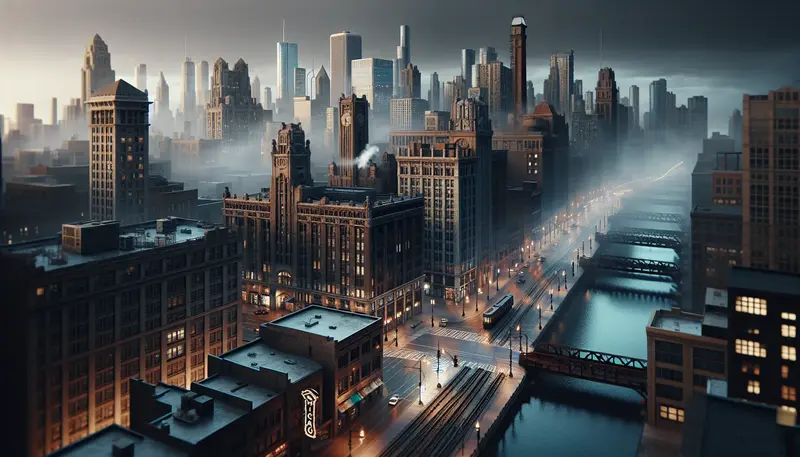
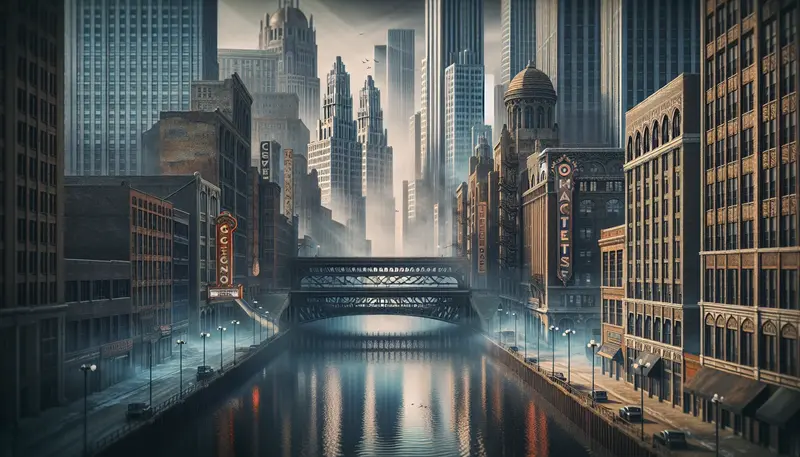
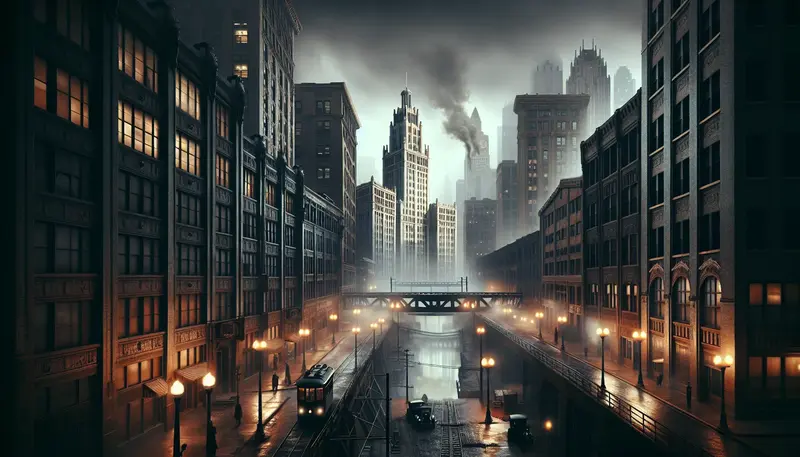
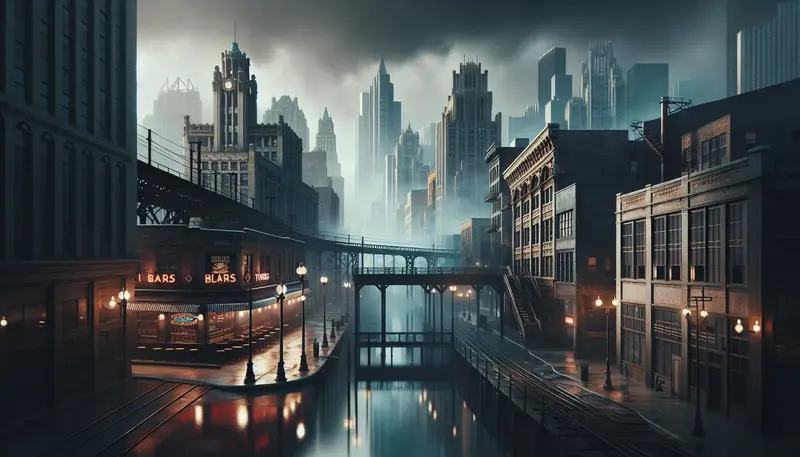
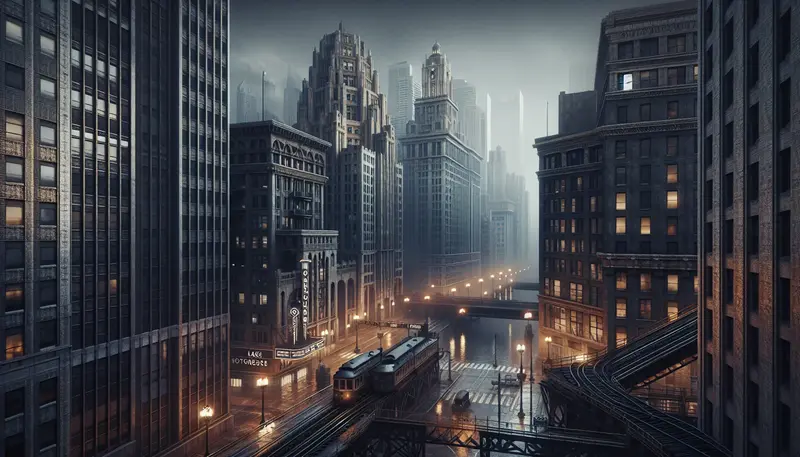
On the evening of October 8, 1871, a fire started in or near the barn of Patrick O'Leary and his wife Catherine O'Leary at 137 DeKoven Street on Chicago's West Side. By the time it burned itself out on October 10, 1871, two days later, the Great Chicago Fire had killed an estimated 300 people, destroyed approximately 17,500 buildings across 3.3 square miles, and left 100,000 residents homeless—roughly one-third of Chicago's population of approximately 300,000.
The official death toll of 300 recorded by Chicago authorities is almost certainly an undercount. Many victims were incinerated beyond identification. Others drowned in the Chicago River or Lake Michigan while fleeing the flames. Entire families of recent immigrants—primarily German, Irish, and Scandinavian—living in wooden tenements with no official records, simply disappeared. The true number of dead will never be known, with some historians estimating as many as 2,000 people perished.
What is known is that the city that rose from those ashes never fully left its dead behind. The ghosts of the Great Fire are among Chicago's most persistent hauntings, embedded in the few surviving structures and the ground beneath the rebuilt city. The same year that the Great Fire reshaped Chicago's relationship to its dead, another disaster would follow: in 1903, the theatre fire would claim 602 lives in just fifteen minutes, cementing the city's pattern of catastrophic loss.
Two Days of Destruction
The conditions for catastrophe had been building for months. Chicago in 1871 was a city built almost entirely of wood—houses, sidewalks, streets, and even some bridges were constructed from lumber. A severe summer drought during 1871 had left the city dangerously parched with water levels low in the Chicago River. The Chicago Fire Department, exhausted from fighting a major blaze on the evening of October 7, was already depleted when the alarm came at approximately 9:00 PM from the O'Leary neighborhood on the West Side.
The fire moved northeast from DeKoven Street, driven by strong winds off the prairie reaching speeds of 20-30 mph. It jumped the south branch of the Chicago River around midnight on October 8-9, then the main branch by early morning on October 9, consuming the downtown area and pushing toward Lake Michigan. The courthouse, where fire alarms were coordinated, burned. The waterworks, which supplied the city's hydrants, burned. The firefighters were left battling a firestorm with no coordination and no water.
Residents fled toward Lake Michigan. Thousands waded into the water and stood for hours, watching their city burn. Others crowded onto bridges that eventually caught fire themselves. The heat was so intense that stone buildings exploded and iron rails twisted like ribbons. At the Sands, a notorious red-light district north of the river, entire blocks vanished in minutes.
The fire burned until rain began falling on the evening of October 9. By then, an area of 3.3 square miles—the entire central city—was ash.
The Dead and the Missing
Recovery of the dead began immediately but proved nearly impossible in many areas. The heat had been sufficient to calcify bone, leaving nothing identifiable. Wells and basements, where residents had sought shelter, became tombs. The ruins smoldered for weeks, preventing thorough searches.Mass graves were established in what is now Lincoln Park—which itself had been a cemetery before being converted to parkland. The movement of bodies from the old City Cemetery (now Lincoln Park) had been underway since the 1860s, but the process was incomplete when the fire hit. An unknown number of remains were never exhumed. Today, visitors to Lincoln Park walk above the unmarked graves of thousands, both from the original cemetery and the fire's aftermath.
The Chicago Historical Society building—one of the few fireproof structures in the city—survived the blaze but lost its entire collection of city records. Birth certificates, death records, property deeds, and census data were destroyed. The identities of many fire victims were lost along with the documents that proved they had existed.
Haunted Landmarks
The Chicago Water Tower on North Michigan Avenue stands as the most visible survivor of the fire. Built of Joliet limestone in 1869 and completed just two years before the fire, it withstood the inferno that leveled everything around it. Designed by architect William W. Boyington, the tower reaches 154 feet in height. The tower's most famous ghost story—a pump operator who reportedly hanged himself inside rather than face the approaching flames—has been told since the 1870s, making it one of Chicago's oldest continuous ghost narratives.
Whether the hanging actually occurred remains unverified. Fire records were destroyed, and no contemporary account confirms the story. But night watchmen and maintenance workers have reported seeing a figure through the tower's windows for over 150 years. The consistency of these reports across generations of workers with no connection to each other is, at minimum, notable.
The O'Leary cottage at 137 DeKoven Street—where the fire allegedly started—was one of the few structures in the neighborhood to survive the blaze (the fire burned northeast, away from its origin point). The cottage was demolished in 1956. The Chicago Fire Academy now occupies the site. Firefighters training there have reported cold spots, the smell of smoke when no fire is burning, and an oppressive atmosphere in the basement area—directly above where the O'Leary barn once stood.
Lincoln Park: Walking Over the Dead
Before it became Chicago's premier public park, Lincoln Park was the City Cemetery—the primary burial ground for Chicago's dead from the 1840s through the 1860s. When the city began converting the land to parkland in the 1870s, the plan was to relocate all remains to cemeteries outside the city limits. The relocation was never completed. While prominent families moved their relatives, thousands of unmarked graves belonging to immigrants, paupers, and Civil War soldiers were left in place. Conservative estimates suggest at least 12,000 bodies remain buried beneath Lincoln Park, with some estimates reaching 40,000 or more. Construction projects in the park periodically uncover human remains—most recently in the 1990s during utility work.
The fire complicated matters further. Additional victims were buried in the park in the chaotic days following the disaster, many in unmarked mass graves. Today, joggers and tourists pass within feet of the dead without knowing it. Reports of apparitions in Lincoln Park—particularly near the former cemetery boundaries—have been documented since the 1880s.
The Rebuilt City
Chicago rebuilt with extraordinary speed. By 1873—just two years after the fire—the city had largely risen from its ashes, this time in brick and stone rather than wood. But the rebuilding literally buried the past. To improve drainage and prevent future flooding, City Engineer Ellis Sylvester Chesbrough's plan raised the street grade by four to fourteen feet in many areas throughout the central business district. Entire first floors became basements. Buildings were jacked up on screws while new foundations were built beneath them.This means that modern Chicago sits atop the ruins of the burned city. Beneath the sidewalks and basements of the Loop lie the remnants of the 1871 city—crushed buildings, abandoned streets, and, almost certainly, undiscovered remains of fire victims who were never recovered.
Several buildings in the downtown area that incorporate pre-fire foundations have generated persistent reports of unusual phenomena—sounds emanating from below street level, cold drafts rising through floors, and the faint smell of smoke in spaces sealed for over a century. Whether these are genuine paranormal phenomena or the natural consequences of old buildings settling above buried ruins is a question each visitor must answer for themselves.
Legacy of Fire
The Great Chicago Fire did not just kill 300 people and destroy a city. It created a template for how Chicago relates to its dead. The city's response—bury the ruins, build on top, move forward—established a pattern that would repeat with the Eastland Disaster, the gangster wars, and every subsequent tragedy. Chicago does not tear down and memorialize. It builds over and continues.
The ghosts, if they exist, are a consequence of this approach. A city that buries its past rather than confronting it creates the conditions for that past to resurface—literally, in the case of Lincoln Park's uncovered graves, and figuratively, in the persistent reports of phenomena at locations connected to the fire.
The Water Tower stands on Michigan Avenue, surrounded by luxury retail and tourist traffic, looking exactly as it did when everything around it burned. It is both a monument to survival and a reminder that beneath Chicago's gleaming surface, the ashes of 1871 remain.